
About This Book
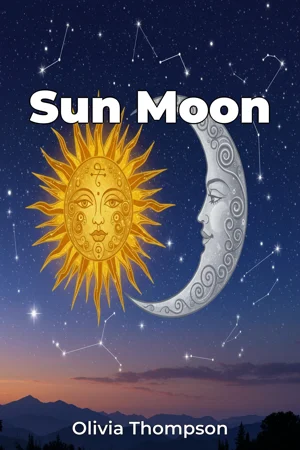
Have you ever considered the profound impact that the sun and moon have had on shaping human spirituality and religious thought across diverse cultures? "Sun Moon" explores the multifaceted roles these celestial bodies play in religious traditions around the world, offering a comprehensive look into their symbolic meanings and spiritual significance. This book delves into the heart of humanity's relationship with the cosmos, examining how ancient civilizations and modern religions alike have woven the sun and moon into their creation myths, rituals, and belief systems. The central argument of "Sun Moon" is that the sun and moon, beyond their astronomical functions, serve as potent symbols that reflect fundamental aspects of the human experience, such as life and death, light and darkness, and the cyclical nature of time. This perspective is crucial for understanding the diversity of religious expression and the shared human quest for meaning. The book will examine this across a global scale. "Sun Moon" unfolds in three major sections. First, it introduces the foundational concepts, exploring the astronomical properties of the sun and moon and their earliest representations in human culture, from prehistoric cave paintings to ancient Egyptian solar deities. Second, it delves into specific religious traditions, examining the roles of the sun and moon in indigenous religions, Hinduism, Buddhism, Judaism, Christianity, and Islam. This section features detailed analyses of relevant scriptures, myths, and religious practices, supported by historical and anthropological research. This includes analysis of relevant scriptures, myths, and religious practices. Third, the book synthesizes the findings, offering a comparative analysis of the diverse interpretations of the sun and moon, and explores their continuing relevance in contemporary spirituality and art. It addresses questions such as the evolution of solar and lunar symbolism over time and the persistence of these symbols in the modern world. The book's arguments are supported by a wide range of evidence, including archaeological findings, textual analysis of religious scriptures, ethnographic studies, and comparative mythology. A unique aspect of this research is the incorporation of astronomical data to understand the alignment of religious sites and the timing of religious festivals, providing a scientific complement to the cultural analysis. "Sun Moon" connects to other fields such as anthropology, art history, and astronomy. Its exploration of religious symbolism intersects with anthropological studies of ritual and belief, while its analysis of artistic representations of the sun and moon contributes to art historical scholarship. The integration of astronomical data offers a unique interdisciplinary approach, bridging the gap between science and religion. The book adopts a tone that is both scholarly and accessible, aiming for a balanced approach that caters to both academic readers and those with a general interest in religion and spirituality. It is intended for students of religious studies, cultural history, and comparative mythology, as well as anyone seeking a deeper understanding of the spiritual dimensions of the natural world. The scope of "Sun Moon" is intentionally broad, encompassing a wide range of religious traditions and cultural contexts. However, it is limited to the study of the sun and moon as symbols within these traditions, rather than attempting a comprehensive overview of each religion. The information in "Sun Moon" has practical applications for readers interested in interfaith dialogue, cultural awareness, and personal spiritual exploration. By understanding the shared symbolism of the sun and moon across different religions, readers can gain insights into common human values and perspectives.
Have you ever considered the profound impact that the sun and moon have had on shaping human spirituality and religious thought across diverse cultures? "Sun Moon" explores the multifaceted roles these celestial bodies play in religious traditions around the world, offering a comprehensive look into their symbolic meanings and spiritual significance. This book delves into the heart of humanity's relationship with the cosmos, examining how ancient civilizations and modern religions alike have woven the sun and moon into their creation myths, rituals, and belief systems. The central argument of "Sun Moon" is that the sun and moon, beyond their astronomical functions, serve as potent symbols that reflect fundamental aspects of the human experience, such as life and death, light and darkness, and the cyclical nature of time. This perspective is crucial for understanding the diversity of religious expression and the shared human quest for meaning. The book will examine this across a global scale. "Sun Moon" unfolds in three major sections. First, it introduces the foundational concepts, exploring the astronomical properties of the sun and moon and their earliest representations in human culture, from prehistoric cave paintings to ancient Egyptian solar deities. Second, it delves into specific religious traditions, examining the roles of the sun and moon in indigenous religions, Hinduism, Buddhism, Judaism, Christianity, and Islam. This section features detailed analyses of relevant scriptures, myths, and religious practices, supported by historical and anthropological research. This includes analysis of relevant scriptures, myths, and religious practices. Third, the book synthesizes the findings, offering a comparative analysis of the diverse interpretations of the sun and moon, and explores their continuing relevance in contemporary spirituality and art. It addresses questions such as the evolution of solar and lunar symbolism over time and the persistence of these symbols in the modern world. The book's arguments are supported by a wide range of evidence, including archaeological findings, textual analysis of religious scriptures, ethnographic studies, and comparative mythology. A unique aspect of this research is the incorporation of astronomical data to understand the alignment of religious sites and the timing of religious festivals, providing a scientific complement to the cultural analysis. "Sun Moon" connects to other fields such as anthropology, art history, and astronomy. Its exploration of religious symbolism intersects with anthropological studies of ritual and belief, while its analysis of artistic representations of the sun and moon contributes to art historical scholarship. The integration of astronomical data offers a unique interdisciplinary approach, bridging the gap between science and religion. The book adopts a tone that is both scholarly and accessible, aiming for a balanced approach that caters to both academic readers and those with a general interest in religion and spirituality. It is intended for students of religious studies, cultural history, and comparative mythology, as well as anyone seeking a deeper understanding of the spiritual dimensions of the natural world. The scope of "Sun Moon" is intentionally broad, encompassing a wide range of religious traditions and cultural contexts. However, it is limited to the study of the sun and moon as symbols within these traditions, rather than attempting a comprehensive overview of each religion. The information in "Sun Moon" has practical applications for readers interested in interfaith dialogue, cultural awareness, and personal spiritual exploration. By understanding the shared symbolism of the sun and moon across different religions, readers can gain insights into common human values and perspectives.
"Sun Moon" explores the pervasive influence of the sun and moon on global spirituality and religious traditions. By examining their symbolic meanings across cultures, the book reveals how these celestial bodies have shaped creation myths, rituals, and belief systems. One intriguing aspect is the astronomical alignment of religious sites, reflecting ancient civilizations' deep connection to the cosmos. The book emphasizes that the sun and moon symbolize fundamental human experiences like life and death, offering a lens for understanding diverse religious expressions. The book unfolds in three sections, beginning with the astronomical properties of the sun and moon and their earliest cultural representations. It then examines their roles in various religious traditions, including indigenous religions, Hinduism, Christianity, and Islam, drawing from scriptures, myths, and historical research. Finally, the book synthesizes these findings, presenting a comparative analysis of solar and lunar symbolism and their relevance in contemporary spirituality. This approach provides readers with a comprehensive understanding of religious symbolism and cultural history.
Book Details
ISBN
9788235272126
Publisher
Publifye AS
Your Licenses
You don't own any licenses for this book
Purchase a license below to unlock this book and download the EPUB.
Purchase License
Select a tier to unlock this book
Need bulk licensing?
Contact us for enterprise agreements.