
About This Book
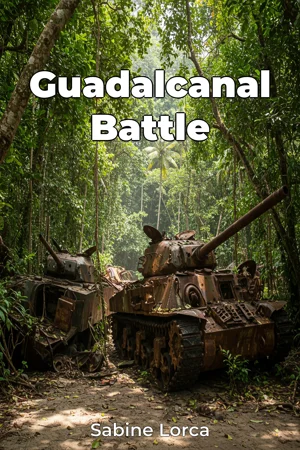
What if one brutal campaign could alter the trajectory of an entire war? "Guadalcanal Battle" explores the pivotal six-month struggle for Guadalcanal Island in the Solomon Islands, a campaign whose outcome irrevocably shifted the balance of power in the Pacific Theater of World War II. This book delves into the strategic importance of Guadalcanal, the brutal realities faced by combatants on both sides, and the long-term ramifications of the battle, providing a comprehensive analysis essential for understanding the complexities of the Pacific War. This book highlights the themes of strategic importance, military innovation, and human cost. Guadalcanal's strategic value stemmed from its potential to serve as a Japanese airbase, threatening Allied supply lines to Australia. Capturing and holding the island, therefore, became imperative for the Allied forces. The battle forced military innovation as both sides adapted to the challenging jungle terrain and naval warfare conditions. Above all, the narrative underscores the immense human cost—the physical and psychological toll on the soldiers, sailors, and airmen who fought and died in this unforgiving environment. Understanding these themes unlocks a deeper comprehension of the choices, sacrifices, and consequences inherent in this brutal campaign. "Guadalcanal Battle" contends that the battle was not merely a tactical victory but a strategic turning point that revealed the limitations of Japanese expansion and galvanized the Allied war effort. This argument is crucial because it contextualizes Guadalcanal within the larger narrative of World War II, demonstrating its impact on subsequent campaigns and the ultimate Allied victory. The book unfolds in three major sections. It begins by establishing the historical context, detailing the geopolitical landscape of the Pacific in 1942 and explaining the initial Japanese advances. The second section meticulously chronicles the land, sea, and air battles, analyzing the tactics, leadership, and logistical challenges faced by both sides. Key engagements, such as the Battle of Tenaru, the Battle of Cape Esperance, and the Naval Battle of Guadalcanal, are examined in detail. Finally, the book concludes by assessing the battle's impact. The strategic, political, and social consequences are explored, including the shift in momentum, the evolution of military doctrine, and the psychological impact on the combatants. The analysis relies on a range of primary and secondary sources, including archival documents, official military reports, personal diaries, and eyewitness accounts. Furthermore, the book incorporates recent scholarship and draws upon statistical analysis of casualty figures, equipment losses, and logistical data to provide a comprehensive and evidence-based account. The study connects to fields such as political science through the analysis of strategic decision-making, psychology through the exploration of combat stress and trauma, and economics through the examination of the war's impact on resource allocation and industrial production. These interdisciplinary connections enrich the book's argument, offering a broader understanding of the battle's complexities. "Guadalcanal Battle" offers a detailed examination of the strategies employed by both sides, scrutinizing leadership decisions, logistical operations, and tactical adaptations. The book maintains a professional and accessible writing style. The intended audience includes military history enthusiasts, students of World War II, and anyone seeking a deeper understanding of the Pacific War. The book adheres to the conventions of military history, providing detailed maps, timelines, and appendices to enhance the reader's understanding. While the book focuses primarily on the military aspects of the battle, it acknowledges the significant impact on the indigenous population of Guadalcanal. The lessons learned from Guadalcanal, such as the importance of air superiority, the challenges of jungle warfare, and the critical role of logistics, remain relevant to modern military strategy and operational planning. The battle's profound impact on the lives of those who fought there continues to be a subject of ongoing discussion and reflection. "Guadalcanal Battle" contributes to this dialogue by offering a detailed, nuanced, and evidence-based account of one of the most important battles in World War II.
What if one brutal campaign could alter the trajectory of an entire war? "Guadalcanal Battle" explores the pivotal six-month struggle for Guadalcanal Island in the Solomon Islands, a campaign whose outcome irrevocably shifted the balance of power in the Pacific Theater of World War II. This book delves into the strategic importance of Guadalcanal, the brutal realities faced by combatants on both sides, and the long-term ramifications of the battle, providing a comprehensive analysis essential for understanding the complexities of the Pacific War. This book highlights the themes of strategic importance, military innovation, and human cost. Guadalcanal's strategic value stemmed from its potential to serve as a Japanese airbase, threatening Allied supply lines to Australia. Capturing and holding the island, therefore, became imperative for the Allied forces. The battle forced military innovation as both sides adapted to the challenging jungle terrain and naval warfare conditions. Above all, the narrative underscores the immense human cost—the physical and psychological toll on the soldiers, sailors, and airmen who fought and died in this unforgiving environment. Understanding these themes unlocks a deeper comprehension of the choices, sacrifices, and consequences inherent in this brutal campaign. "Guadalcanal Battle" contends that the battle was not merely a tactical victory but a strategic turning point that revealed the limitations of Japanese expansion and galvanized the Allied war effort. This argument is crucial because it contextualizes Guadalcanal within the larger narrative of World War II, demonstrating its impact on subsequent campaigns and the ultimate Allied victory. The book unfolds in three major sections. It begins by establishing the historical context, detailing the geopolitical landscape of the Pacific in 1942 and explaining the initial Japanese advances. The second section meticulously chronicles the land, sea, and air battles, analyzing the tactics, leadership, and logistical challenges faced by both sides. Key engagements, such as the Battle of Tenaru, the Battle of Cape Esperance, and the Naval Battle of Guadalcanal, are examined in detail. Finally, the book concludes by assessing the battle's impact. The strategic, political, and social consequences are explored, including the shift in momentum, the evolution of military doctrine, and the psychological impact on the combatants. The analysis relies on a range of primary and secondary sources, including archival documents, official military reports, personal diaries, and eyewitness accounts. Furthermore, the book incorporates recent scholarship and draws upon statistical analysis of casualty figures, equipment losses, and logistical data to provide a comprehensive and evidence-based account. The study connects to fields such as political science through the analysis of strategic decision-making, psychology through the exploration of combat stress and trauma, and economics through the examination of the war's impact on resource allocation and industrial production. These interdisciplinary connections enrich the book's argument, offering a broader understanding of the battle's complexities. "Guadalcanal Battle" offers a detailed examination of the strategies employed by both sides, scrutinizing leadership decisions, logistical operations, and tactical adaptations. The book maintains a professional and accessible writing style. The intended audience includes military history enthusiasts, students of World War II, and anyone seeking a deeper understanding of the Pacific War. The book adheres to the conventions of military history, providing detailed maps, timelines, and appendices to enhance the reader's understanding. While the book focuses primarily on the military aspects of the battle, it acknowledges the significant impact on the indigenous population of Guadalcanal. The lessons learned from Guadalcanal, such as the importance of air superiority, the challenges of jungle warfare, and the critical role of logistics, remain relevant to modern military strategy and operational planning. The battle's profound impact on the lives of those who fought there continues to be a subject of ongoing discussion and reflection. "Guadalcanal Battle" contributes to this dialogue by offering a detailed, nuanced, and evidence-based account of one of the most important battles in World War II.
"Guadalcanal Battle" explores the brutal six-month campaign for Guadalcanal Island, a pivotal struggle in the Pacific Theater of World War II. The book details the island's strategic importance, highlighting how it could have served as a Japanese airbase threatening Allied supply lines to Australia. The narrative also underscores the immense human cost, examining the physical and psychological toll on soldiers in the unforgiving jungle environment. The book argues that the battle marked a strategic turning point, revealing the limitations of Japanese expansion and galvanizing the Allied war effort. It unfolds in three parts: establishing historical context, chronicling the land, sea, and air battles, and assessing the battle's strategic, political, and social consequences. Incorporating primary and secondary sources, the book offers a comprehensive, evidence-based account valuable to military history enthusiasts and anyone seeking a deeper understanding of the Pacific War.
Book Details
ISBN
9788235272065
Publisher
Publifye AS
Your Licenses
You don't own any licenses for this book
Purchase a license below to unlock this book and download the EPUB.
Purchase License
Select a tier to unlock this book
Need bulk licensing?
Contact us for enterprise agreements.