
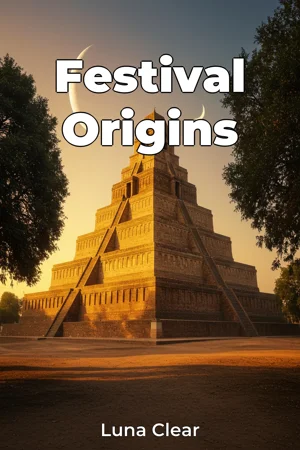
About This Book
Where do our celebrations come from? 'Festival Origins' delves into the complex tapestry of seasonal festivals, tracing their factual beginnings within the framework of diverse mythological systems. This exploration is crucial because understanding the roots of these celebrations provides insight into the evolution of human cultures, beliefs, and social structures. We will examine how ancient societies marked the passage of time, honored their deities, and maintained social cohesion through ritual and observance, offering a factual counterpoint to romanticized or generalized accounts of festival development. This book examines the intersection of history and religion through the lens of seasonal observances. We will explore the astronomical underpinnings of many festivals, demonstrating how solstices, equinoxes, and other celestial events shaped early belief systems, and further, how these systems translated into ritual practice. We will also delve into the agricultural significance of festivals, exploring how planting and harvesting cycles influenced the timing and content of celebrations in agrarian societies. Recognizing the importance of both astronomical and agricultural influences allows for a more nuanced understanding of festival origins. 'Festival Origins' argues that seasonal festivals are not simply spontaneous expressions of joy or tradition, but rather, are carefully constructed and often politically charged events designed to reinforce social order and legitimize power structures. This argument challenges simplistic understandings of festivals as purely religious or cultural phenomena, highlighting their role in shaping and maintaining societal hierarchies. The book is organized into three distinct sections. First, we introduce the concept of seasonal time and its influence on early mythologies across various cultures, establishing a foundational understanding of how societies perceived and measured time. Second, we examine specific examples of seasonal festivals from different regions of the world, including ancient Mesopotamia, Egypt, Greece, and Rome, analyzing their historical development and religious significance. This section will serve to illustrate our central argument, drawing on evidence from archaeological records, ancient texts, and comparative mythology. Third, we explore the evolution of these festivals over time, tracing their transformations and adaptations as societies changed and religious beliefs evolved. We will conclude by discussing the implications of this research for understanding contemporary festivals and their continuing role in shaping cultural identity. The research presented in 'Festival Origins' draws upon a wide range of primary and secondary sources, including archaeological reports, ancient texts (translated into English), comparative mythological studies, and historical analyses of religious practices. A key element will be the careful analysis of festival calendars and ritual texts and a comparative approach to identify common patterns and unique variations across different cultures. The book benefits from an interdisciplinary approach, connecting history, religious studies, and anthropology. By examining festivals through these different lenses, we gain a more complete understanding of their origins and significance. Further, astronomy offers factual corroboration of temporal links to ritual beginnings. 'Festival Origins' aims for an accessible yet scholarly tone. The book is intended for anyone interested in history, religion, mythology, or cultural studies, and also appeals to those with a general interest in learning about the origins of festivals and celebrations. While the book avoids overly technical jargon, it will present complex ideas in a clear and engaging manner. The scope of 'Festival Origins' is intentionally broad, covering a range of cultures and historical periods, but it focuses primarily on ancient civilizations in the Near East and Mediterranean regions. Future research could expand this scope to include other parts of the world, such as Asia and the Americas. The content also has real-world implications, offering insights into the ongoing evolution of festivals, and enabling readers to understand the complex historical and cultural forces that shape the celebrations we participate in today. This understanding can foster greater appreciation for cultural diversity and encourage critical reflection on the meaning and purpose of festivals in modern society.
Where do our celebrations come from? 'Festival Origins' delves into the complex tapestry of seasonal festivals, tracing their factual beginnings within the framework of diverse mythological systems. This exploration is crucial because understanding the roots of these celebrations provides insight into the evolution of human cultures, beliefs, and social structures. We will examine how ancient societies marked the passage of time, honored their deities, and maintained social cohesion through ritual and observance, offering a factual counterpoint to romanticized or generalized accounts of festival development. This book examines the intersection of history and religion through the lens of seasonal observances. We will explore the astronomical underpinnings of many festivals, demonstrating how solstices, equinoxes, and other celestial events shaped early belief systems, and further, how these systems translated into ritual practice. We will also delve into the agricultural significance of festivals, exploring how planting and harvesting cycles influenced the timing and content of celebrations in agrarian societies. Recognizing the importance of both astronomical and agricultural influences allows for a more nuanced understanding of festival origins. 'Festival Origins' argues that seasonal festivals are not simply spontaneous expressions of joy or tradition, but rather, are carefully constructed and often politically charged events designed to reinforce social order and legitimize power structures. This argument challenges simplistic understandings of festivals as purely religious or cultural phenomena, highlighting their role in shaping and maintaining societal hierarchies. The book is organized into three distinct sections. First, we introduce the concept of seasonal time and its influence on early mythologies across various cultures, establishing a foundational understanding of how societies perceived and measured time. Second, we examine specific examples of seasonal festivals from different regions of the world, including ancient Mesopotamia, Egypt, Greece, and Rome, analyzing their historical development and religious significance. This section will serve to illustrate our central argument, drawing on evidence from archaeological records, ancient texts, and comparative mythology. Third, we explore the evolution of these festivals over time, tracing their transformations and adaptations as societies changed and religious beliefs evolved. We will conclude by discussing the implications of this research for understanding contemporary festivals and their continuing role in shaping cultural identity. The research presented in 'Festival Origins' draws upon a wide range of primary and secondary sources, including archaeological reports, ancient texts (translated into English), comparative mythological studies, and historical analyses of religious practices. A key element will be the careful analysis of festival calendars and ritual texts and a comparative approach to identify common patterns and unique variations across different cultures. The book benefits from an interdisciplinary approach, connecting history, religious studies, and anthropology. By examining festivals through these different lenses, we gain a more complete understanding of their origins and significance. Further, astronomy offers factual corroboration of temporal links to ritual beginnings. 'Festival Origins' aims for an accessible yet scholarly tone. The book is intended for anyone interested in history, religion, mythology, or cultural studies, and also appeals to those with a general interest in learning about the origins of festivals and celebrations. While the book avoids overly technical jargon, it will present complex ideas in a clear and engaging manner. The scope of 'Festival Origins' is intentionally broad, covering a range of cultures and historical periods, but it focuses primarily on ancient civilizations in the Near East and Mediterranean regions. Future research could expand this scope to include other parts of the world, such as Asia and the Americas. The content also has real-world implications, offering insights into the ongoing evolution of festivals, and enabling readers to understand the complex historical and cultural forces that shape the celebrations we participate in today. This understanding can foster greater appreciation for cultural diversity and encourage critical reflection on the meaning and purpose of festivals in modern society.
"Festival Origins" explores the historical and religious roots of seasonal festivals, revealing how these celebrations are deeply intertwined with mythology and ancient civilizations. It examines how early societies marked time, honored deities, and maintained social order through rituals, offering a factual perspective on festival development. Many festivals have astronomical origins, linked to solstices and equinoxes, while others find their basis in agricultural cycles like planting and harvesting. The book argues that festivals are not merely spontaneous traditions but carefully constructed events that reinforce social structures. Examining ancient Mesopotamia, Egypt, Greece, and Rome, it analyzes historical development and religious significance, drawing on archaeological records and ancient texts. The book progresses by first introducing seasonal time, then examining specific festivals across different regions, and finally tracing their evolution over time. By connecting history, religious studies, and anthropology, "Festival Origins" provides a comprehensive understanding of these celebrations. Its interdisciplinary approach and accessible tone make it valuable for anyone interested in cultural identity, ritual, or the history of religion. This exploration fosters a greater appreciation for cultural diversity and encourages critical reflection on the meaning and purpose of festivals today.
Book Details
ISBN
9788235272041
Publisher
Publifye AS
Your Licenses
You don't own any licenses for this book
Purchase a license below to unlock this book and download the EPUB.
Purchase License
Select a tier to unlock this book
Need bulk licensing?
Contact us for enterprise agreements.