
About This Book
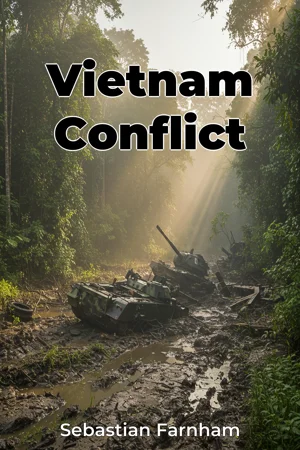
How did a localized conflict in Southeast Asia evolve into a deeply divisive war that consumed the United States for over a decade, leaving an indelible mark on American society and foreign policy? "Vietnam Conflict" delves into the multifaceted aspects of the United States' involvement in Vietnam, exploring the intricate military strategies employed, the complex political landscape that shaped the conflict, and the far-reaching consequences that continue to resonate today. This book examines the Vietnam War as a pivotal event, not just in American history, but also in the broader context of Cold War politics and global power dynamics. This book addresses three key topics: the evolution of U.S. military strategy in Vietnam, the political machinations both in Washington and Saigon that influenced the war's trajectory, and the lasting impact of the conflict on American society and political thought. These topics are vital for understanding the complexities of modern warfare and the challenges of interventionist foreign policy. To fully grasp the intricacies of the Vietnam War, this book provides essential historical context, tracing the roots of Vietnamese nationalism, French colonialism, and the domino theory that fueled American intervention. Readers will gain an understanding of the Geneva Accords of 1954, the rise of Ho Chi Minh, and the escalating involvement of the United States throughout the 1960s. The central argument of "Vietnam Conflict" posits that the U.S. involvement in Vietnam was a product of Cold War anxieties, flawed strategic assumptions, and a fundamental misunderstanding of Vietnamese culture and political aspirations. This argument challenges conventional narratives by examining previously overlooked factors that contributed to the ultimate failure of American policy in the region. The book unfolds in a structured manner, beginning with an introduction to the historical context and key players involved. It then develops its central argument through detailed analysis of the military strategies employed, from search and destroy missions to the strategic bombing campaigns. Following this, the book explores the political dimensions, examining the role of presidential administrations, congressional debates, and the anti-war movement in shaping the conflict's outcome. The book culminates with an assessment of the long-term consequences of the war, including its influence on American foreign policy, its impact on veteran affairs, and its legacy in popular culture. To support its arguments, "Vietnam Conflict" draws on a wide range of evidence, including declassified government documents, military records, firsthand accounts from veterans and civilians, and scholarly analyses of the war. The book offers a fresh perspective by incorporating recently available archival material. "Vietnam Conflict" connects to several other fields of study, including political science (analyzing foreign policy decision-making), sociology (examining the social impact of the war), and cultural studies (exploring the war's representation in literature, film, and music). These interdisciplinary connections enrich the book's analysis and provide a more comprehensive understanding of the war's significance. This book offers a balanced and nuanced viewpoint, avoiding simplistic narratives and engaging with the complexities of the conflict. It examines the perspectives of all parties involved, including American policymakers, Vietnamese civilians, and soldiers on both sides of the conflict. Targeting a broad audience, including students, history enthusiasts, and anyone interested in understanding the dynamics of modern warfare. This book offers valuable insights for readers seeking to understand this important chapter in global history. As a work of military and political history, "Vietnam Conflict" adheres to the standards of academic rigor, ensuring historical accuracy and objectivity in its analysis. The book's scope is limited to the direct involvement of the United States in the Vietnam War, focusing primarily on the period from the 1950s to the 1970s. While acknowledging the broader regional context, the book does not delve into the internal politics of neighboring countries in detail. The lessons learned from the Vietnam War have practical applications for contemporary foreign policy challenges, offering insights into the complexities of intervention, the importance of cultural understanding, and the limitations of military power. "Vietnam Conflict" addresses ongoing debates surrounding the war, including discussions about the justification for American involvement, the effectiveness of U.S. military strategies, and the ethical implications of the conflict.
How did a localized conflict in Southeast Asia evolve into a deeply divisive war that consumed the United States for over a decade, leaving an indelible mark on American society and foreign policy? "Vietnam Conflict" delves into the multifaceted aspects of the United States' involvement in Vietnam, exploring the intricate military strategies employed, the complex political landscape that shaped the conflict, and the far-reaching consequences that continue to resonate today. This book examines the Vietnam War as a pivotal event, not just in American history, but also in the broader context of Cold War politics and global power dynamics. This book addresses three key topics: the evolution of U.S. military strategy in Vietnam, the political machinations both in Washington and Saigon that influenced the war's trajectory, and the lasting impact of the conflict on American society and political thought. These topics are vital for understanding the complexities of modern warfare and the challenges of interventionist foreign policy. To fully grasp the intricacies of the Vietnam War, this book provides essential historical context, tracing the roots of Vietnamese nationalism, French colonialism, and the domino theory that fueled American intervention. Readers will gain an understanding of the Geneva Accords of 1954, the rise of Ho Chi Minh, and the escalating involvement of the United States throughout the 1960s. The central argument of "Vietnam Conflict" posits that the U.S. involvement in Vietnam was a product of Cold War anxieties, flawed strategic assumptions, and a fundamental misunderstanding of Vietnamese culture and political aspirations. This argument challenges conventional narratives by examining previously overlooked factors that contributed to the ultimate failure of American policy in the region. The book unfolds in a structured manner, beginning with an introduction to the historical context and key players involved. It then develops its central argument through detailed analysis of the military strategies employed, from search and destroy missions to the strategic bombing campaigns. Following this, the book explores the political dimensions, examining the role of presidential administrations, congressional debates, and the anti-war movement in shaping the conflict's outcome. The book culminates with an assessment of the long-term consequences of the war, including its influence on American foreign policy, its impact on veteran affairs, and its legacy in popular culture. To support its arguments, "Vietnam Conflict" draws on a wide range of evidence, including declassified government documents, military records, firsthand accounts from veterans and civilians, and scholarly analyses of the war. The book offers a fresh perspective by incorporating recently available archival material. "Vietnam Conflict" connects to several other fields of study, including political science (analyzing foreign policy decision-making), sociology (examining the social impact of the war), and cultural studies (exploring the war's representation in literature, film, and music). These interdisciplinary connections enrich the book's analysis and provide a more comprehensive understanding of the war's significance. This book offers a balanced and nuanced viewpoint, avoiding simplistic narratives and engaging with the complexities of the conflict. It examines the perspectives of all parties involved, including American policymakers, Vietnamese civilians, and soldiers on both sides of the conflict. Targeting a broad audience, including students, history enthusiasts, and anyone interested in understanding the dynamics of modern warfare. This book offers valuable insights for readers seeking to understand this important chapter in global history. As a work of military and political history, "Vietnam Conflict" adheres to the standards of academic rigor, ensuring historical accuracy and objectivity in its analysis. The book's scope is limited to the direct involvement of the United States in the Vietnam War, focusing primarily on the period from the 1950s to the 1970s. While acknowledging the broader regional context, the book does not delve into the internal politics of neighboring countries in detail. The lessons learned from the Vietnam War have practical applications for contemporary foreign policy challenges, offering insights into the complexities of intervention, the importance of cultural understanding, and the limitations of military power. "Vietnam Conflict" addresses ongoing debates surrounding the war, including discussions about the justification for American involvement, the effectiveness of U.S. military strategies, and the ethical implications of the conflict.
"Vietnam Conflict" explores the complex history of U.S. involvement in Vietnam, examining the war's profound impact on American society and foreign policy during the Cold War era. The book analyzes how the U.S. military strategy evolved, influenced by political factors in both Washington and Saigon. It provides historical context, tracing Vietnamese nationalism, French colonialism, and the domino theory, to understand the Geneva Accords and Ho Chi Minh's rise. The book argues that Cold War anxieties and flawed assumptions significantly contributed to the U.S. failure, challenging conventional narratives by examining overlooked factors. The book unfolds systematically, beginning with historical context and key players. It analyzes military strategies like search and destroy missions and bombing campaigns, then explores the political dimensions, including presidential administrations and the anti-war movement. It uses declassified documents, military records, and firsthand accounts to support its arguments. The book concludes with an assessment of the war's long-term consequences, including its influence on American foreign policy and its impact on veteran affairs. Targeting students and history enthusiasts, this book offers insights into modern warfare complexities and interventionist foreign policy challenges. It provides a balanced viewpoint, avoiding simplistic narratives and engaging with the conflict's complexities, making it a valuable resource for understanding this pivotal chapter in global history.
Book Details
ISBN
9788235271921
Publisher
Publifye AS
Your Licenses
You don't own any licenses for this book
Purchase a license below to unlock this book and download the EPUB.
Purchase License
Select a tier to unlock this book
Need bulk licensing?
Contact us for enterprise agreements.