
About This Book
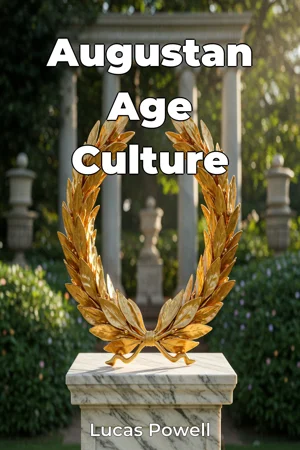
How did Emperor Augustus transform Rome from a war-torn republic to a glorious empire, and how did literature serve as a crucial tool in this transformation? This book, "Augustan Age Culture," delves into the intricate relationship between literature and power during the reign of Augustus, exploring how writers reflected and shaped the political messaging, aesthetic ideals, and evolving imperial identity of Rome. This period marks a pivotal moment in Roman history, not only for its political stability but also for the flourishing of artistic and literary expression. Understanding the Augustan Age is essential for anyone seeking to grasp the foundations of Western culture and the enduring influence of Roman thought. The study centers on three main topics: the deliberate cultivation of a new "golden age" through literature, the propagation of Augustan ideology through various literary forms, and the construction of a distinct Roman imperial identity. The book provides historical context, outlining the transition from the late Republic’s civil wars to the establishment of the Principate under Augustus. Familiarity with key figures like Virgil, Horace, and Ovid, while helpful, is not necessary. The book itself will provide detailed introductions to their works and significance. The central argument is that Augustan literature was not merely a reflection of the era but an active agent in shaping it. Augustus strategically employed poets and writers to legitimize his rule, promote his vision of Roman greatness, and instill a sense of unity and purpose within the burgeoning empire. "Augustan Age Culture" is structured to provide a comprehensive overview of this complex topic. It begins by introducing the political and social landscape of Augustan Rome, examining Augustus's rise to power and his efforts to restore order and stability after decades of conflict. The subsequent chapters delve into specific literary works and genres, analyzing how they were used to propagate Augustan ideology. Virgil's *Aeneid*, for instance, is examined as a foundational text for Roman identity, while Horace's odes are considered for their celebration of Augustan peace and prosperity. Ovid's works are explored for how they both adhered to and subverted Augustan ideals. The book investigates the roles of writers as active participants in the construction of Augustan culture and considers the implications. The book concludes by exploring the lasting legacy of Augustan literature and its enduring influence on Western art, literature, and political thought. The analysis is supported by close readings of primary source texts, drawing on recent scholarship in classical studies, literary criticism, and cultural history. Detailed textual analysis of poems, prose, and historical documents is presented. This book connects to various fields, including political science (examining the use of propaganda and power), art history (analyzing the visual representations of Augustan ideals), and comparative literature (exploring the influence of Augustan literature on later works). This book offers a fresh perspective by examining the Augustan Age through the lens of cultural production, highlighting the symbiotic relationship between literature and power. It emphasizes the agency of writers in shaping the cultural landscape of the era, moving beyond simplistic notions of propaganda to explore the complex and nuanced ways in which literature contributed to the construction of Augustan identity. The book adopts an academic yet accessible tone, making it suitable for both scholars and general readers interested in Roman history and literature. The target audience includes students of classical studies, history, and literature, as well as anyone interested in the cultural and political history of Rome. It will be valuable to those seeking a deeper understanding of the Augustan Age and its lasting impact on Western civilization. As a work of historical and literary analysis, this book adheres to the conventions of academic scholarship, providing detailed notes, bibliography, and index. The scope is intentionally focused on the literary culture of Augustan Rome, excluding detailed analyses of architecture or other art forms, although these are referenced where relevant to the literary themes. The understanding of Augustan propaganda techniques can be applied to the analysis of modern political messaging and the construction of national identities. The book addresses ongoing debates regarding the extent to which Augustan literature was truly representative of Roman society or simply a tool of imperial power. It acknowledges the complexities of the Augustan Age and the challenges of interpreting literary works within their historical context.
How did Emperor Augustus transform Rome from a war-torn republic to a glorious empire, and how did literature serve as a crucial tool in this transformation? This book, "Augustan Age Culture," delves into the intricate relationship between literature and power during the reign of Augustus, exploring how writers reflected and shaped the political messaging, aesthetic ideals, and evolving imperial identity of Rome. This period marks a pivotal moment in Roman history, not only for its political stability but also for the flourishing of artistic and literary expression. Understanding the Augustan Age is essential for anyone seeking to grasp the foundations of Western culture and the enduring influence of Roman thought. The study centers on three main topics: the deliberate cultivation of a new "golden age" through literature, the propagation of Augustan ideology through various literary forms, and the construction of a distinct Roman imperial identity. The book provides historical context, outlining the transition from the late Republic’s civil wars to the establishment of the Principate under Augustus. Familiarity with key figures like Virgil, Horace, and Ovid, while helpful, is not necessary. The book itself will provide detailed introductions to their works and significance. The central argument is that Augustan literature was not merely a reflection of the era but an active agent in shaping it. Augustus strategically employed poets and writers to legitimize his rule, promote his vision of Roman greatness, and instill a sense of unity and purpose within the burgeoning empire. "Augustan Age Culture" is structured to provide a comprehensive overview of this complex topic. It begins by introducing the political and social landscape of Augustan Rome, examining Augustus's rise to power and his efforts to restore order and stability after decades of conflict. The subsequent chapters delve into specific literary works and genres, analyzing how they were used to propagate Augustan ideology. Virgil's *Aeneid*, for instance, is examined as a foundational text for Roman identity, while Horace's odes are considered for their celebration of Augustan peace and prosperity. Ovid's works are explored for how they both adhered to and subverted Augustan ideals. The book investigates the roles of writers as active participants in the construction of Augustan culture and considers the implications. The book concludes by exploring the lasting legacy of Augustan literature and its enduring influence on Western art, literature, and political thought. The analysis is supported by close readings of primary source texts, drawing on recent scholarship in classical studies, literary criticism, and cultural history. Detailed textual analysis of poems, prose, and historical documents is presented. This book connects to various fields, including political science (examining the use of propaganda and power), art history (analyzing the visual representations of Augustan ideals), and comparative literature (exploring the influence of Augustan literature on later works). This book offers a fresh perspective by examining the Augustan Age through the lens of cultural production, highlighting the symbiotic relationship between literature and power. It emphasizes the agency of writers in shaping the cultural landscape of the era, moving beyond simplistic notions of propaganda to explore the complex and nuanced ways in which literature contributed to the construction of Augustan identity. The book adopts an academic yet accessible tone, making it suitable for both scholars and general readers interested in Roman history and literature. The target audience includes students of classical studies, history, and literature, as well as anyone interested in the cultural and political history of Rome. It will be valuable to those seeking a deeper understanding of the Augustan Age and its lasting impact on Western civilization. As a work of historical and literary analysis, this book adheres to the conventions of academic scholarship, providing detailed notes, bibliography, and index. The scope is intentionally focused on the literary culture of Augustan Rome, excluding detailed analyses of architecture or other art forms, although these are referenced where relevant to the literary themes. The understanding of Augustan propaganda techniques can be applied to the analysis of modern political messaging and the construction of national identities. The book addresses ongoing debates regarding the extent to which Augustan literature was truly representative of Roman society or simply a tool of imperial power. It acknowledges the complexities of the Augustan Age and the challenges of interpreting literary works within their historical context.
"Augustan Age Culture" explores the pivotal role of literature in shaping the Roman Empire under Augustus. This book examines how writers like Virgil, Horace, and Ovid were instrumental in crafting a new "golden age," promoting Augustan ideology, and solidifying a distinct Roman identity. Augustus strategically used literature as political propaganda to legitimize his rule and instill unity, demonstrating the profound connection between cultural production and imperial power. The book illuminates how the *Aeneid* became a foundational text for Roman identity, while Horace's odes celebrated the era's peace and prosperity. The book progresses systematically, first establishing the historical and social context of Augustan Rome, then delving into specific literary works and genres to analyze their role in propagating Augustan ideology. By providing detailed textual analysis and drawing on recent scholarship, "Augustan Age Culture" offers readers a comprehensive understanding of this complex era. This approach highlights the agency of writers in shaping their culture, presenting a nuanced view beyond simple propaganda.
Book Details
ISBN
9788235271723
Publisher
Publifye AS
Your Licenses
You don't own any licenses for this book
Purchase a license below to unlock this book and download the EPUB.
Purchase License
Select a tier to unlock this book
Need bulk licensing?
Contact us for enterprise agreements.