
About This Book
How did a succession of dynasties transform a small settlement on the Nile into one of the world's great metropolises: Cairo? "Cairo Dynasties" explores the rich and complex history of this vibrant city through the lens of its ruling families, examining their political maneuvers, architectural legacies, and enduring impact on the Egyptian landscape. The book addresses three central concepts: the consolidation of power by successive dynasties, the tangible expressions of this power in Cairo's architectural marvels, and the continuous reshaping of Egyptian identity through these evolving political and cultural forces. Understanding these dynamics is crucial for grasping not only Cairo's historical trajectory but also the broader patterns of power, identity, and urban development in the pre-modern and modern Middle East. This book provides a comprehensive historical context, charting Cairo’s evolution from its founding through the rise and fall of the Fatimid, Ayyubid, Mamluk, and Muhammad Ali dynasties and beyond. It assumes a basic understanding of Islamic history and geography but provides necessary background information on key events and figures. The central argument posits that Cairo's dynasties, while often engaged in conflict and competition, collectively contributed to a unique urban identity characterized by resilience, religious diversity, and an enduring legacy of artistic and intellectual achievement. This argument is significant because it moves beyond a simplistic narrative of conquest and decline, highlighting the complex and often contradictory forces that shaped Cairo into the city it is today. "Cairo Dynasties" is structured chronologically, beginning with the establishment of Cairo as a new capital under the Fatimids. The book details the unique characteristics of each dynastic period. First, it introduces the rise of each dynasty, detailing the political and military strategies they employed to seize control. Second, it examines the architectural projects undertaken by each dynasty, analyzing how these structures reflected their political ambitions, religious beliefs, and cultural values. Third, it explores how these projects affected Cairo's urban landscape and its inhabitants. Finally, the book summarizes the legacy of each dynasty, assessing its lasting impact on Cairo's identity and place in the world. The book culminates by demonstrating how Cairo’s historical development offers valuable insights into contemporary urban challenges and the interplay of power, culture, and identity in the modern world. The arguments presented are supported by a range of primary and secondary sources, including historical chronicles, architectural surveys, archaeological reports, and travel accounts. It also draws on recent scholarship in urban history, art history, and Islamic studies to provide a nuanced and interdisciplinary perspective. "Cairo Dynasties" connects to several other fields of study including political science (analyzing power dynamics), sociology (examining urban societies), and art history (interpreting architectural styles). This book offers a fresh perspective by focusing on the interconnectedness of political power, architectural expression, and urban transformation over several centuries. Unlike traditional histories that focus solely on political events or architectural styles, "Cairo Dynasties" seeks to integrate these elements into a holistic narrative of Cairo's development. The book adopts a scholarly yet accessible tone, aiming to engage both academic and general readers interested in history, architecture, and Middle Eastern studies. It employs clear and concise language, avoiding jargon and technical terms whenever possible. The intended audience includes students, researchers, travelers, and anyone with an interest in Cairo, Egypt, or the history of the Islamic world. The book will appeal to readers who seek a deeper understanding of Cairo's past and its relevance to the present. As a work of non-fiction history, "Cairo Dynasties" adheres to the conventions of scholarly research, including accurate citations, balanced interpretations, and a commitment to presenting evidence-based arguments. While the book strives for comprehensive coverage, it acknowledges certain limitations in scope. It focuses primarily on the major dynasties that ruled Cairo, offering less detailed accounts of smaller or less influential ruling groups. The information in "Cairo Dynasties" can be applied practically by urban planners, architects, and policymakers seeking to understand the historical forces that have shaped Cairo's urban environment. It can also inform cultural heritage preservation efforts and tourism initiatives. The book addresses ongoing debates regarding the interpretation of Cairo's historical monuments and the legacy of colonialism in shaping the city's urban fabric. By presenting multiple perspectives and engaging with current scholarship, "Cairo Dynasties" contributes to a nuanced and informed discussion of these complex issues.
How did a succession of dynasties transform a small settlement on the Nile into one of the world's great metropolises: Cairo? "Cairo Dynasties" explores the rich and complex history of this vibrant city through the lens of its ruling families, examining their political maneuvers, architectural legacies, and enduring impact on the Egyptian landscape. The book addresses three central concepts: the consolidation of power by successive dynasties, the tangible expressions of this power in Cairo's architectural marvels, and the continuous reshaping of Egyptian identity through these evolving political and cultural forces. Understanding these dynamics is crucial for grasping not only Cairo's historical trajectory but also the broader patterns of power, identity, and urban development in the pre-modern and modern Middle East. This book provides a comprehensive historical context, charting Cairo’s evolution from its founding through the rise and fall of the Fatimid, Ayyubid, Mamluk, and Muhammad Ali dynasties and beyond. It assumes a basic understanding of Islamic history and geography but provides necessary background information on key events and figures. The central argument posits that Cairo's dynasties, while often engaged in conflict and competition, collectively contributed to a unique urban identity characterized by resilience, religious diversity, and an enduring legacy of artistic and intellectual achievement. This argument is significant because it moves beyond a simplistic narrative of conquest and decline, highlighting the complex and often contradictory forces that shaped Cairo into the city it is today. "Cairo Dynasties" is structured chronologically, beginning with the establishment of Cairo as a new capital under the Fatimids. The book details the unique characteristics of each dynastic period. First, it introduces the rise of each dynasty, detailing the political and military strategies they employed to seize control. Second, it examines the architectural projects undertaken by each dynasty, analyzing how these structures reflected their political ambitions, religious beliefs, and cultural values. Third, it explores how these projects affected Cairo's urban landscape and its inhabitants. Finally, the book summarizes the legacy of each dynasty, assessing its lasting impact on Cairo's identity and place in the world. The book culminates by demonstrating how Cairo’s historical development offers valuable insights into contemporary urban challenges and the interplay of power, culture, and identity in the modern world. The arguments presented are supported by a range of primary and secondary sources, including historical chronicles, architectural surveys, archaeological reports, and travel accounts. It also draws on recent scholarship in urban history, art history, and Islamic studies to provide a nuanced and interdisciplinary perspective. "Cairo Dynasties" connects to several other fields of study including political science (analyzing power dynamics), sociology (examining urban societies), and art history (interpreting architectural styles). This book offers a fresh perspective by focusing on the interconnectedness of political power, architectural expression, and urban transformation over several centuries. Unlike traditional histories that focus solely on political events or architectural styles, "Cairo Dynasties" seeks to integrate these elements into a holistic narrative of Cairo's development. The book adopts a scholarly yet accessible tone, aiming to engage both academic and general readers interested in history, architecture, and Middle Eastern studies. It employs clear and concise language, avoiding jargon and technical terms whenever possible. The intended audience includes students, researchers, travelers, and anyone with an interest in Cairo, Egypt, or the history of the Islamic world. The book will appeal to readers who seek a deeper understanding of Cairo's past and its relevance to the present. As a work of non-fiction history, "Cairo Dynasties" adheres to the conventions of scholarly research, including accurate citations, balanced interpretations, and a commitment to presenting evidence-based arguments. While the book strives for comprehensive coverage, it acknowledges certain limitations in scope. It focuses primarily on the major dynasties that ruled Cairo, offering less detailed accounts of smaller or less influential ruling groups. The information in "Cairo Dynasties" can be applied practically by urban planners, architects, and policymakers seeking to understand the historical forces that have shaped Cairo's urban environment. It can also inform cultural heritage preservation efforts and tourism initiatives. The book addresses ongoing debates regarding the interpretation of Cairo's historical monuments and the legacy of colonialism in shaping the city's urban fabric. By presenting multiple perspectives and engaging with current scholarship, "Cairo Dynasties" contributes to a nuanced and informed discussion of these complex issues.
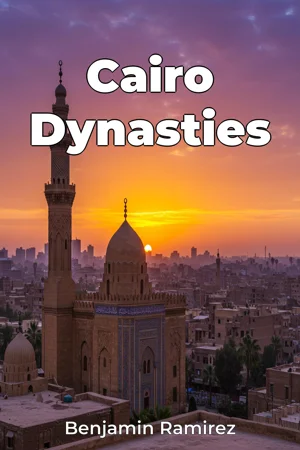
"Cairo Dynasties" explores how a succession of ruling families transformed Cairo from a modest Nile settlement into a major metropolis. The book examines the Fatimid, Ayyubid, Mamluk, and Muhammad Ali dynasties, revealing their political strategies, architectural innovations, and lasting impact on Egyptian identity. Dynastic power consolidation manifested tangibly in Cairo's architectural marvels, such as mosques and public works, reflecting their ambitions and beliefs. Furthermore, Cairo's unique urban identity, characterized by resilience and religious diversity, emerged from these complex historical forces. The book chronologically examines each dynasty, detailing their rise to power, significant architectural projects, and impact on Cairo's urban landscape. It argues that these dynasties collectively shaped Cairo's enduring legacy of artistic and intellectual achievement. By integrating political, architectural, and urban elements, "Cairo Dynasties" offers a holistic narrative of Cairo's development.
Book Details
ISBN
9788235271709
Publisher
Publifye AS
Your Licenses
You don't own any licenses for this book
Purchase a license below to unlock this book and download the EPUB.
Purchase License
Select a tier to unlock this book
Need bulk licensing?
Contact us for enterprise agreements.