
About This Book
Imagine a world where time itself is a tapestry woven from the threads of imperial power, religious devotion, and scientific observation. This book, *Byzantine Calendar*, delves into the highly distinctive timekeeping system of the Byzantine Empire, exploring how it became a structured calendar that reflected the convergence of Roman administrative practices, Christian liturgical needs, and astronomical understandings. This unique calendrical system was not merely a way to track the days, but a fundamental aspect of Byzantine identity and governance, shaping everything from agricultural cycles to religious festivals and even imperial policy. The book primarily focuses on three key areas. First, we examine the evolution of the Byzantine calendar from its Roman antecedents, highlighting the adaptations and modifications made to suit the empire's changing needs. Second, we explore the profound influence of the Christian faith on the calendar, detailing how the liturgical year and the commemoration of saints became central organizing principles. Third, we delve into the astronomical knowledge that underpinned the calendar's accuracy and its alignment with celestial events, examining both the theoretical understanding and the practical application of astronomy in Byzantine timekeeping. Understanding these topics is crucial because the Byzantine calendar offers a lens through which we can understand the Byzantine worldview, their interaction with the natural world, and the interplay between secular and sacred authority. The historical context for the Byzantine calendar is shaped by the transition from the Roman Empire to the Eastern Roman Empire, later known as the Byzantine Empire. The book will assume a basic understanding of Roman history and the early development of Christianity as background. The book’s central argument is that the Byzantine calendar was a dynamic and multifaceted system that served not only as a practical tool for measuring time but also as a potent symbol of imperial power, religious ideology, and scientific understanding. Its complex construction reveals the Byzantine Empire's commitment to harmonizing these various aspects of life, creating a cohesive cultural framework. *Byzantine Calendar* is structured in three distinct sections, starting with an introduction to the Roman roots of the Byzantine calendar and the initial adoption of Julian calendar practices. The first section analyses how the Romans structured a time system that the Byzantines adapted for their purposes. The second section of the book explores the Christianization of the calendar, focusing on the integration of liturgical cycles, the calculation of Easter, and the commemoration of saints. The culmination of the book demonstrates how astronomical knowledge was applied to refine and maintain the accuracy of the Byzantine calendar, ensuring its alignment with the celestial events and agricultural cycles. The final section explores broader implications, such as the impact of the Byzantine calendar on neighboring cultures and its legacy in modern timekeeping practices. The evidence presented relies on a variety of sources, including original Byzantine texts (chronicles, liturgical documents, and astronomical treatises), archaeological findings (inscriptions and calendar fragments), and secondary scholarly analyses. The book will also employ comparative analysis, contrasting the Byzantine calendar with other contemporary timekeeping systems to highlight its unique characteristics. The book connects to several other fields. Its study of astronomy intersects with the history of science; its exploration of liturgical cycles relates to religious studies; and its analysis of imperial decrees and administrative practices aligns with political history. This interdisciplinary approach enriches the book's argument by revealing the calendar's multifaceted significance and its role in shaping Byzantine society. What sets this book apart is its comprehensive approach to understanding the Byzantine calendar within its broader cultural and historical context. It will give a complete view of the time keeping system used by the Byzantines. The book is written in an academic but accessible style, aiming to engage both scholars and general readers interested in history, science, and religion. The target audience includes historians, classicists, theologians, students, and anyone with a general interest in Byzantine history, ancient science, or the history of timekeeping. The value lies in its comprehensive and accessible exploration of a complex and fascinating topic. As a work of non-fiction, this book is committed to presenting accurate and verifiable information, supported by evidence and scholarly analysis. The scope of this book is limited to the timekeeping system within the Byzantine Empire, primarily focusing on the period from the 4th to the 15th centuries. It does not attempt to provide a comprehensive history of the Byzantine Empire. The information presented in this book can be applied to various fields, including historical research, cultural studies, and even modern calendar design, providing insights into the cultural and scientific considerations that shape our perception and measurement of time. Finally, *Byzantine Calendar* provides a detailed examination of a complex system, offering new insights into the Byzantine worldview and its impact on history, culture, and science.
Imagine a world where time itself is a tapestry woven from the threads of imperial power, religious devotion, and scientific observation. This book, *Byzantine Calendar*, delves into the highly distinctive timekeeping system of the Byzantine Empire, exploring how it became a structured calendar that reflected the convergence of Roman administrative practices, Christian liturgical needs, and astronomical understandings. This unique calendrical system was not merely a way to track the days, but a fundamental aspect of Byzantine identity and governance, shaping everything from agricultural cycles to religious festivals and even imperial policy. The book primarily focuses on three key areas. First, we examine the evolution of the Byzantine calendar from its Roman antecedents, highlighting the adaptations and modifications made to suit the empire's changing needs. Second, we explore the profound influence of the Christian faith on the calendar, detailing how the liturgical year and the commemoration of saints became central organizing principles. Third, we delve into the astronomical knowledge that underpinned the calendar's accuracy and its alignment with celestial events, examining both the theoretical understanding and the practical application of astronomy in Byzantine timekeeping. Understanding these topics is crucial because the Byzantine calendar offers a lens through which we can understand the Byzantine worldview, their interaction with the natural world, and the interplay between secular and sacred authority. The historical context for the Byzantine calendar is shaped by the transition from the Roman Empire to the Eastern Roman Empire, later known as the Byzantine Empire. The book will assume a basic understanding of Roman history and the early development of Christianity as background. The book’s central argument is that the Byzantine calendar was a dynamic and multifaceted system that served not only as a practical tool for measuring time but also as a potent symbol of imperial power, religious ideology, and scientific understanding. Its complex construction reveals the Byzantine Empire's commitment to harmonizing these various aspects of life, creating a cohesive cultural framework. *Byzantine Calendar* is structured in three distinct sections, starting with an introduction to the Roman roots of the Byzantine calendar and the initial adoption of Julian calendar practices. The first section analyses how the Romans structured a time system that the Byzantines adapted for their purposes. The second section of the book explores the Christianization of the calendar, focusing on the integration of liturgical cycles, the calculation of Easter, and the commemoration of saints. The culmination of the book demonstrates how astronomical knowledge was applied to refine and maintain the accuracy of the Byzantine calendar, ensuring its alignment with the celestial events and agricultural cycles. The final section explores broader implications, such as the impact of the Byzantine calendar on neighboring cultures and its legacy in modern timekeeping practices. The evidence presented relies on a variety of sources, including original Byzantine texts (chronicles, liturgical documents, and astronomical treatises), archaeological findings (inscriptions and calendar fragments), and secondary scholarly analyses. The book will also employ comparative analysis, contrasting the Byzantine calendar with other contemporary timekeeping systems to highlight its unique characteristics. The book connects to several other fields. Its study of astronomy intersects with the history of science; its exploration of liturgical cycles relates to religious studies; and its analysis of imperial decrees and administrative practices aligns with political history. This interdisciplinary approach enriches the book's argument by revealing the calendar's multifaceted significance and its role in shaping Byzantine society. What sets this book apart is its comprehensive approach to understanding the Byzantine calendar within its broader cultural and historical context. It will give a complete view of the time keeping system used by the Byzantines. The book is written in an academic but accessible style, aiming to engage both scholars and general readers interested in history, science, and religion. The target audience includes historians, classicists, theologians, students, and anyone with a general interest in Byzantine history, ancient science, or the history of timekeeping. The value lies in its comprehensive and accessible exploration of a complex and fascinating topic. As a work of non-fiction, this book is committed to presenting accurate and verifiable information, supported by evidence and scholarly analysis. The scope of this book is limited to the timekeeping system within the Byzantine Empire, primarily focusing on the period from the 4th to the 15th centuries. It does not attempt to provide a comprehensive history of the Byzantine Empire. The information presented in this book can be applied to various fields, including historical research, cultural studies, and even modern calendar design, providing insights into the cultural and scientific considerations that shape our perception and measurement of time. Finally, *Byzantine Calendar* provides a detailed examination of a complex system, offering new insights into the Byzantine worldview and its impact on history, culture, and science.
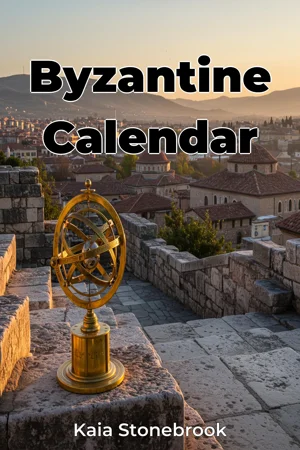
"Byzantine Calendar" explores the intricate timekeeping system of the Byzantine Empire, a blend of Roman administration, Christian liturgy, and astronomical science. More than just a way to track days, the calendar shaped Byzantine identity and governance, influencing everything from agriculture to imperial policy. The book reveals how the Byzantines adapted Roman calendar practices and integrated Christian religious cycles, like the calculation of Easter, into their daily lives. The book delves into the astronomical knowledge used to maintain the calendar's accuracy, linking celestial events to agricultural cycles. The Byzantine calendar wasn't static; it evolved to harmonize imperial power, religious ideology, and scientific understanding. This unique calendrical system offers insights into the Byzantine worldview and the interplay between secular and sacred authority. Beginning with the Roman roots of the Byzantine calendar, the book progresses through the Christianization of timekeeping, and culminates in an exploration of the astronomical knowledge applied to maintain its accuracy. Through original texts and archaeological findings, the book showcases the Byzantine Empire's commitment to harmonizing various aspects of life into a cohesive cultural framework.
Book Details
ISBN
9788235271563
Publisher
Publifye AS
Your Licenses
You don't own any licenses for this book
Purchase a license below to unlock this book and download the EPUB.
Purchase License
Select a tier to unlock this book
Need bulk licensing?
Contact us for enterprise agreements.