
About This Book
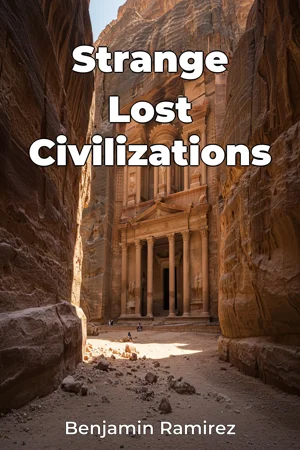
What if entire civilizations, flourishing with unique cultures and advanced knowledge, simply vanished, leaving behind only enigmatic ruins and unanswered questions? This book, "Strange Lost Civilizations," delves into the mysteries surrounding several such societies, exploring the evidence they left behind and the challenges they pose to our understanding of history. We examine why these disappearances matter, not only to historians and archaeologists but to anyone interested in the cyclical nature of human progress and the potential fragility of even the most established societies. This book argues that the study of vanished civilizations provides crucial insights into the complex interplay of environmental factors, social structures, technological advancements, and external pressures that shape the rise and fall of societies. By analyzing the archaeological record, deciphering fragmented texts, and re-evaluating established historical narratives, we can gain a deeper appreciation for the factors that contribute to both societal resilience and collapse. The book is divided into three primary sections. The first introduces the concept of "lost civilizations," defining the term and outlining the criteria used to identify and study them. This section also addresses the methodological challenges inherent in researching cultures that left behind limited or ambiguous records. The second and most substantial part of the book focuses on specific examples of vanished civilizations, including but not limited to: the Indus Valley Civilization, the Nabataean Kingdom, and the Ancestral Puebloans. Each case study will explore their history, culture, technological advancements, theories surrounding their demise, and the ongoing research that is attempting to unravel their mysteries. These case studies will present the available evidence, analyzing the strengths and weaknesses of competing explanations, and highlighting areas where further research is needed. The third section synthesizes the lessons learned from these case studies, drawing broader conclusions about the patterns of societal collapse and resilience. It considers the role of factors such as climate change, resource depletion, social inequality, and external conflict in the downfall of civilizations, and examines the implications of these lessons for contemporary society. The evidence presented in this book draws upon a wide range of sources, including archaeological excavations, epigraphic studies, paleoclimatology, and genetic analysis. We analyze architectural remains, artifacts, inscriptions, and environmental data to reconstruct the history and culture of these vanished civilizations. The book also engages with the scholarly debates surrounding these civilizations, presenting different interpretations of the available evidence and critically evaluating the methodologies used to study them. This book integrates knowledge from diverse fields, including archaeology, history, anthropology, environmental science, and climatology. By combining insights from these disciplines, we can gain a more holistic understanding of the complex factors that contributed to the demise of these civilizations. "Strange Lost Civilizations" adopts a narrative approach, presenting the information in an accessible and engaging manner. This book is aimed at general readers with an interest in history, archaeology, and the mysteries of the past, as well as students and researchers in related fields. It offers a comprehensive and up-to-date overview of the current state of knowledge about these vanished civilizations, while also highlighting the many unanswered questions that remain. The book's scope is limited to civilizations that experienced a significant decline or collapse, leaving behind tangible evidence of their existence. It does not cover purely mythical or legendary civilizations. This book will be of value to readers who seek a deeper understanding of the past, a broader perspective on the present, and a more informed vision of the future. It offers a cautionary tale about the fragility of civilization, but also a message of hope about the enduring power of human ingenuity and resilience. This book also acknowledges the ongoing debates and differing opinions within the academic community regarding the causes and circumstances surrounding the disappearance of these civilizations, encouraging readers to critically assess the information presented and form their own informed conclusions.
What if entire civilizations, flourishing with unique cultures and advanced knowledge, simply vanished, leaving behind only enigmatic ruins and unanswered questions? This book, "Strange Lost Civilizations," delves into the mysteries surrounding several such societies, exploring the evidence they left behind and the challenges they pose to our understanding of history. We examine why these disappearances matter, not only to historians and archaeologists but to anyone interested in the cyclical nature of human progress and the potential fragility of even the most established societies. This book argues that the study of vanished civilizations provides crucial insights into the complex interplay of environmental factors, social structures, technological advancements, and external pressures that shape the rise and fall of societies. By analyzing the archaeological record, deciphering fragmented texts, and re-evaluating established historical narratives, we can gain a deeper appreciation for the factors that contribute to both societal resilience and collapse. The book is divided into three primary sections. The first introduces the concept of "lost civilizations," defining the term and outlining the criteria used to identify and study them. This section also addresses the methodological challenges inherent in researching cultures that left behind limited or ambiguous records. The second and most substantial part of the book focuses on specific examples of vanished civilizations, including but not limited to: the Indus Valley Civilization, the Nabataean Kingdom, and the Ancestral Puebloans. Each case study will explore their history, culture, technological advancements, theories surrounding their demise, and the ongoing research that is attempting to unravel their mysteries. These case studies will present the available evidence, analyzing the strengths and weaknesses of competing explanations, and highlighting areas where further research is needed. The third section synthesizes the lessons learned from these case studies, drawing broader conclusions about the patterns of societal collapse and resilience. It considers the role of factors such as climate change, resource depletion, social inequality, and external conflict in the downfall of civilizations, and examines the implications of these lessons for contemporary society. The evidence presented in this book draws upon a wide range of sources, including archaeological excavations, epigraphic studies, paleoclimatology, and genetic analysis. We analyze architectural remains, artifacts, inscriptions, and environmental data to reconstruct the history and culture of these vanished civilizations. The book also engages with the scholarly debates surrounding these civilizations, presenting different interpretations of the available evidence and critically evaluating the methodologies used to study them. This book integrates knowledge from diverse fields, including archaeology, history, anthropology, environmental science, and climatology. By combining insights from these disciplines, we can gain a more holistic understanding of the complex factors that contributed to the demise of these civilizations. "Strange Lost Civilizations" adopts a narrative approach, presenting the information in an accessible and engaging manner. This book is aimed at general readers with an interest in history, archaeology, and the mysteries of the past, as well as students and researchers in related fields. It offers a comprehensive and up-to-date overview of the current state of knowledge about these vanished civilizations, while also highlighting the many unanswered questions that remain. The book's scope is limited to civilizations that experienced a significant decline or collapse, leaving behind tangible evidence of their existence. It does not cover purely mythical or legendary civilizations. This book will be of value to readers who seek a deeper understanding of the past, a broader perspective on the present, and a more informed vision of the future. It offers a cautionary tale about the fragility of civilization, but also a message of hope about the enduring power of human ingenuity and resilience. This book also acknowledges the ongoing debates and differing opinions within the academic community regarding the causes and circumstances surrounding the disappearance of these civilizations, encouraging readers to critically assess the information presented and form their own informed conclusions.
"Strange Lost Civilizations" explores the captivating phenomenon of societies that once thrived but ultimately vanished, leaving behind intriguing ruins and historical mysteries. The book examines several ancient civilizations, such as the Indus Valley Civilization, the Nabataean Kingdom, and the Ancestral Puebloans, to understand the factors contributing to their collapse. By studying these vanished civilizations, we gain insights into societal resilience, environmental factors, and the cyclical nature of human progress. The book adopts a narrative approach, guiding readers through archaeological evidence, fragmented texts, and re-evaluated historical narratives. It highlights the complex interplay between environmental challenges, social structures, and external pressures that shaped these societies' fates. For example, the book will demonstrate how climate change or resource depletion may have played a significant role in such societal collapses. Divided into three sections, the book first defines "lost civilizations" and the challenges of studying them. The second section presents detailed case studies of specific civilizations, exploring their history, culture, and the theories surrounding their demise. Finally, the book synthesizes lessons learned and draws broader conclusions about patterns of societal collapse, offering a valuable perspective on the fragility of civilization and its potential implications for our own future.
Book Details
ISBN
9788235271549
Publisher
Publifye AS
Your Licenses
You don't own any licenses for this book
Purchase a license below to unlock this book and download the EPUB.
Purchase License
Select a tier to unlock this book
Need bulk licensing?
Contact us for enterprise agreements.