
About This Book
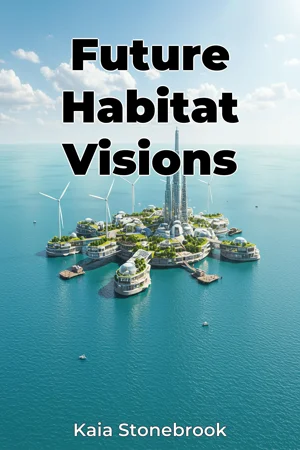
What if the next architectural frontier wasn't on Earth, but among the stars or floating above our oceans? "Future Habitat Visions" explores the architectural possibilities of life beyond our planet and innovative approaches to inhabiting aquatic environments, presenting a meticulously researched and visionary outlook on the future of human settlements. This book addresses two critical themes: extra-terrestrial architecture, specifically focusing on Mars colonies, and the potential of floating cities as a response to rising sea levels and overpopulation on Earth. These topics are not just theoretical exercises; they represent pressing needs driven by climate change, resource depletion, and the inherent human drive for exploration and expansion. Understanding the architectural challenges and opportunities in these areas is vital for architects, engineers, policymakers, and anyone concerned with the future of human civilization. To fully appreciate these future visions, some understanding of current architectural principles, material science, and environmental considerations is beneficial. The book provides a succinct overview of these prerequisite topics, ensuring accessibility for a broad audience while still providing depth for professionals. The central argument is that sustainable and innovative architectural design is paramount to the success of both Martian colonization and the establishment of viable floating cities. We contend that the application of advanced technologies, coupled with a keen understanding of ecological principles, is not only possible but essential for human survival and prosperity beyond Earth. The book begins by introducing the core concepts of closed-loop life support systems, radiation shielding, and in-situ resource utilization (ISRU) for Martian habitats, alongside an exploration of buoyant structure engineering, wave energy harnessing, and self-sufficient ecosystems for oceanic cities. It then delves into specific architectural designs, examining the structural integrity of pressurized environments on Mars, the psychological considerations of long-duration space habitation, the ethical implications of terraforming, and the socioeconomic challenges of funding and governing these ambitious projects. The floating cities section explores modular construction techniques, sustainable energy solutions, and the integration of aquaculture and marine resource management, highlighting the challenges of maintaining stability, preventing pollution, and creating equitable social structures in these environments. Support for our arguments comes from diverse sources, including NASA reports, scientific journals specializing in space exploration and marine engineering, architectural design studies, and economic feasibility analyses. The book also incorporates data from climate change models and demographic projections to underscore the urgency of exploring these alternative habitats. A unique aspect includes interviews with leading researchers, architects, and engineers who are actively involved in these groundbreaking fields. "Future Habitat Visions" connects architecture with diverse fields such as aerospace engineering, marine biology, and environmental science. These interdisciplinary connections enhance the book's argument by demonstrating the complex interplay of factors that must be considered when designing for extreme environments. The book's unique perspective lies in its holistic approach, integrating technological innovation with ethical considerations and social responsibility. It moves beyond purely technical solutions, emphasizing the importance of creating inclusive, sustainable, and resilient communities in both Martian colonies and floating cities. Written in a clear and accessible style, "Future Habitat Visions" aims to engage a broad audience, including architecture students, practicing architects, engineers, scientists, policymakers, and anyone with an interest in the future of human civilization. Its value lies in providing a comprehensive and forward-thinking exploration of the architectural possibilities of life beyond Earth and in our oceans. The book's scope encompasses architectural concepts, material innovations, and socio-economic implications of both Mars colonization and floating city development. The book does not delve deeply into the political aspects of space law or international maritime law, but focuses primarly on the built environment. The concepts discussed have tangible real-world applications. The technologies developed for closed-loop life support systems, radiation shielding, and sustainable energy production can be adapted for use in terrestrial environments, addressing challenges related to climate change, resource scarcity, and disaster relief. The book also addresses ongoing debates within the scientific and architectural communities, such as the ethical considerations of terraforming Mars, the potential environmental impacts of large-scale floating structures, and the social equity concerns related to access and resource distribution in these futuristic habitats. By presenting a balanced and nuanced discussion of these controversies, the book encourages critical thinking and informed decision-making.
What if the next architectural frontier wasn't on Earth, but among the stars or floating above our oceans? "Future Habitat Visions" explores the architectural possibilities of life beyond our planet and innovative approaches to inhabiting aquatic environments, presenting a meticulously researched and visionary outlook on the future of human settlements. This book addresses two critical themes: extra-terrestrial architecture, specifically focusing on Mars colonies, and the potential of floating cities as a response to rising sea levels and overpopulation on Earth. These topics are not just theoretical exercises; they represent pressing needs driven by climate change, resource depletion, and the inherent human drive for exploration and expansion. Understanding the architectural challenges and opportunities in these areas is vital for architects, engineers, policymakers, and anyone concerned with the future of human civilization. To fully appreciate these future visions, some understanding of current architectural principles, material science, and environmental considerations is beneficial. The book provides a succinct overview of these prerequisite topics, ensuring accessibility for a broad audience while still providing depth for professionals. The central argument is that sustainable and innovative architectural design is paramount to the success of both Martian colonization and the establishment of viable floating cities. We contend that the application of advanced technologies, coupled with a keen understanding of ecological principles, is not only possible but essential for human survival and prosperity beyond Earth. The book begins by introducing the core concepts of closed-loop life support systems, radiation shielding, and in-situ resource utilization (ISRU) for Martian habitats, alongside an exploration of buoyant structure engineering, wave energy harnessing, and self-sufficient ecosystems for oceanic cities. It then delves into specific architectural designs, examining the structural integrity of pressurized environments on Mars, the psychological considerations of long-duration space habitation, the ethical implications of terraforming, and the socioeconomic challenges of funding and governing these ambitious projects. The floating cities section explores modular construction techniques, sustainable energy solutions, and the integration of aquaculture and marine resource management, highlighting the challenges of maintaining stability, preventing pollution, and creating equitable social structures in these environments. Support for our arguments comes from diverse sources, including NASA reports, scientific journals specializing in space exploration and marine engineering, architectural design studies, and economic feasibility analyses. The book also incorporates data from climate change models and demographic projections to underscore the urgency of exploring these alternative habitats. A unique aspect includes interviews with leading researchers, architects, and engineers who are actively involved in these groundbreaking fields. "Future Habitat Visions" connects architecture with diverse fields such as aerospace engineering, marine biology, and environmental science. These interdisciplinary connections enhance the book's argument by demonstrating the complex interplay of factors that must be considered when designing for extreme environments. The book's unique perspective lies in its holistic approach, integrating technological innovation with ethical considerations and social responsibility. It moves beyond purely technical solutions, emphasizing the importance of creating inclusive, sustainable, and resilient communities in both Martian colonies and floating cities. Written in a clear and accessible style, "Future Habitat Visions" aims to engage a broad audience, including architecture students, practicing architects, engineers, scientists, policymakers, and anyone with an interest in the future of human civilization. Its value lies in providing a comprehensive and forward-thinking exploration of the architectural possibilities of life beyond Earth and in our oceans. The book's scope encompasses architectural concepts, material innovations, and socio-economic implications of both Mars colonization and floating city development. The book does not delve deeply into the political aspects of space law or international maritime law, but focuses primarly on the built environment. The concepts discussed have tangible real-world applications. The technologies developed for closed-loop life support systems, radiation shielding, and sustainable energy production can be adapted for use in terrestrial environments, addressing challenges related to climate change, resource scarcity, and disaster relief. The book also addresses ongoing debates within the scientific and architectural communities, such as the ethical considerations of terraforming Mars, the potential environmental impacts of large-scale floating structures, and the social equity concerns related to access and resource distribution in these futuristic habitats. By presenting a balanced and nuanced discussion of these controversies, the book encourages critical thinking and informed decision-making.
"Future Habitat Visions" explores groundbreaking architectural solutions for life beyond Earth and in our oceans. It examines the potential of Mars colonies and floating cities as responses to climate change, resource depletion, and overpopulation. The book highlights the necessity of sustainable and innovative design, integrating advanced technologies with ecological principles for successful human settlements in extreme environments. The book begins by introducing vital concepts like closed-loop life support systems for Martian habitats and buoyant structure engineering for oceanic cities. It then progresses into specific architectural designs, discussing structural integrity, psychological considerations, ethical implications of terraforming, and socio-economic challenges. For example, radiation shielding on Mars mirrors the need for climate resilience here on Earth. This unique book connects architecture with aerospace engineering, marine biology, and environmental science. It offers a holistic approach that considers technological innovation, ethical responsibility, and the creation of inclusive, sustainable communities. By emphasizing sustainable architecture, innovative design, and in-situ resource utilization, the book provides a comprehensive vision for the future of human civilization.
Book Details
ISBN
9788235271204
Publisher
Publifye AS
Your Licenses
You don't own any licenses for this book
Purchase a license below to unlock this book and download the EPUB.
Purchase License
Select a tier to unlock this book
Need bulk licensing?
Contact us for enterprise agreements.