
About This Book
How did the unforgiving landscapes of arid regions shape the ingenuity of nomadic communities, particularly in their quest to preserve life's most basic necessity: food? "Desert Food Traditions" explores this very question, delving into the intricate and often surprising methods developed by these populations to thrive in environments where resources are scarce and the climate is a constant challenge. This book examines two key areas: the historical context of nomadic life in arid regions and the diverse range of food preservation techniques they employed. Understanding the migratory patterns, social structures, and resource management strategies of these communities is crucial to appreciating the significance of their food preservation methods. Furthermore, the book investigates the science behind these techniques, examining how methods like drying, salting, smoking, and fermentation inhibit spoilage and extend the shelf life of precious food resources. The narrative unfolds against the backdrop of some of the world's most challenging environments, from the Sahara Desert to the arid lands of Central Asia. No prior knowledge is required other than a general interest in history, culture, and food. The central argument is that nomadic communities, through a combination of necessity and observation, developed sophisticated and sustainable food preservation techniques that were essential for their survival and that these techniques continue to hold relevance in the modern world. "Desert Food Traditions" is structured to provide a comprehensive and insightful exploration of this topic. Initially, the book introduces the concept of food security within nomadic societies, outlining the inherent challenges posed by arid environments. It then develops its argument across three major sections. The first focuses on the early methods of food preservation, illustrating techniques of drying meat and grains, and storing them to survive through lean times. The second major section explores how dairy products and various forms of wild vegetation were preserved. The third section focuses on the cultural and social roles of food preservation. Finally, the book culminates by examining the legacy of these traditions, demonstrating their continued relevance in contemporary food practices and their potential applications for addressing food security challenges in arid regions today. The book provides information about the cultural significance of these traditions and their adaptation in settled societies. The evidence presented is drawn from a variety of sources, including archaeological findings, ethnographic studies, historical accounts, and contemporary scientific research. The book also incorporates insights from food science, anthropology, and environmental history to create a holistic understanding of the subject. "Desert Food Traditions" connects to other fields such as anthropology, environmental studies and nutrition science. By examining the nutritional content of preserved foods and the ecological impact of traditional food gathering practices, the book offers a broader perspective on the relationship between humans and their environment. This book distinguishes itself by taking a holistic approach, combining historical analysis with scientific insight to offer a comprehensive understanding of food preservation in nomadic communities. The writing style is accessible and engaging, aiming to inform and fascinate a broad audience of readers interested in history, culture, and food. The intended readership includes history enthusiasts, foodies, culinary historians, anthropologists, students, and anyone interested in sustainable living and traditional food practices. This book will be valuable to them because it offers a unique perspective on the ingenuity of human cultures in adapting to environmental challenges and offers insight into the historical roots of many contemporary food preservation methods. As a work of non-fiction falling within the genres of History and Cooking, "Desert Food Traditions" is committed to factual accuracy, thorough research, and clear presentation of information, in line with the conventions of these genres. The scope of the book is limited to nomadic communities in arid regions, with a focus on their traditional food preservation practices. While it may touch upon related topics, such as the impact of climate change on food security, its primary focus remains on the historical development and cultural significance of these traditions. The information contained in "Desert Food Traditions" can be applied in several ways. It offers insights into sustainable living practices, provides inspiration for innovative food preservation techniques, and raises awareness about the importance of preserving cultural heritage. While there is general agreement on the importance of food preservation for nomadic survival, debates persist regarding the specific origins and evolution of certain techniques.
How did the unforgiving landscapes of arid regions shape the ingenuity of nomadic communities, particularly in their quest to preserve life's most basic necessity: food? "Desert Food Traditions" explores this very question, delving into the intricate and often surprising methods developed by these populations to thrive in environments where resources are scarce and the climate is a constant challenge. This book examines two key areas: the historical context of nomadic life in arid regions and the diverse range of food preservation techniques they employed. Understanding the migratory patterns, social structures, and resource management strategies of these communities is crucial to appreciating the significance of their food preservation methods. Furthermore, the book investigates the science behind these techniques, examining how methods like drying, salting, smoking, and fermentation inhibit spoilage and extend the shelf life of precious food resources. The narrative unfolds against the backdrop of some of the world's most challenging environments, from the Sahara Desert to the arid lands of Central Asia. No prior knowledge is required other than a general interest in history, culture, and food. The central argument is that nomadic communities, through a combination of necessity and observation, developed sophisticated and sustainable food preservation techniques that were essential for their survival and that these techniques continue to hold relevance in the modern world. "Desert Food Traditions" is structured to provide a comprehensive and insightful exploration of this topic. Initially, the book introduces the concept of food security within nomadic societies, outlining the inherent challenges posed by arid environments. It then develops its argument across three major sections. The first focuses on the early methods of food preservation, illustrating techniques of drying meat and grains, and storing them to survive through lean times. The second major section explores how dairy products and various forms of wild vegetation were preserved. The third section focuses on the cultural and social roles of food preservation. Finally, the book culminates by examining the legacy of these traditions, demonstrating their continued relevance in contemporary food practices and their potential applications for addressing food security challenges in arid regions today. The book provides information about the cultural significance of these traditions and their adaptation in settled societies. The evidence presented is drawn from a variety of sources, including archaeological findings, ethnographic studies, historical accounts, and contemporary scientific research. The book also incorporates insights from food science, anthropology, and environmental history to create a holistic understanding of the subject. "Desert Food Traditions" connects to other fields such as anthropology, environmental studies and nutrition science. By examining the nutritional content of preserved foods and the ecological impact of traditional food gathering practices, the book offers a broader perspective on the relationship between humans and their environment. This book distinguishes itself by taking a holistic approach, combining historical analysis with scientific insight to offer a comprehensive understanding of food preservation in nomadic communities. The writing style is accessible and engaging, aiming to inform and fascinate a broad audience of readers interested in history, culture, and food. The intended readership includes history enthusiasts, foodies, culinary historians, anthropologists, students, and anyone interested in sustainable living and traditional food practices. This book will be valuable to them because it offers a unique perspective on the ingenuity of human cultures in adapting to environmental challenges and offers insight into the historical roots of many contemporary food preservation methods. As a work of non-fiction falling within the genres of History and Cooking, "Desert Food Traditions" is committed to factual accuracy, thorough research, and clear presentation of information, in line with the conventions of these genres. The scope of the book is limited to nomadic communities in arid regions, with a focus on their traditional food preservation practices. While it may touch upon related topics, such as the impact of climate change on food security, its primary focus remains on the historical development and cultural significance of these traditions. The information contained in "Desert Food Traditions" can be applied in several ways. It offers insights into sustainable living practices, provides inspiration for innovative food preservation techniques, and raises awareness about the importance of preserving cultural heritage. While there is general agreement on the importance of food preservation for nomadic survival, debates persist regarding the specific origins and evolution of certain techniques.
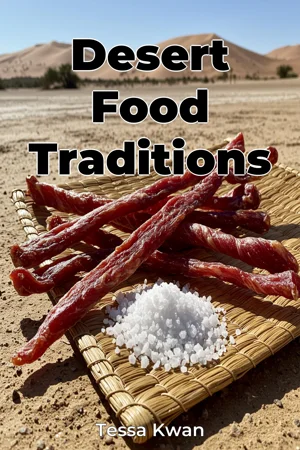
"Desert Food Traditions" explores the remarkable food preservation techniques developed by nomadic communities in arid regions. Facing constant challenges of scarce resources and harsh climates, these groups ingeniously devised methods like drying, salting, and fermentation to ensure food security. The book sheds light on how critical food preservation was to survival, with some techniques allowing communities to survive for extended periods with limited fresh resources. These sustainable practices, born out of necessity, showcase a deep understanding of the environment and resource management. The book progresses from the initial challenges of food security in nomadic societies to early preservation methods, preservation of dairy products and vegetation, and the cultural roles of food. By examining archaeological findings, historical accounts, and scientific research, the book offers a unique perspective on the cultural significance and continued relevance of these traditions. The narrative unfolds across diverse landscapes, highlighting how "Desert Food Traditions" links history with practical cooking knowledge.
Book Details
ISBN
9788235270979
Publisher
Publifye AS
Your Licenses
You don't own any licenses for this book
Purchase a license below to unlock this book and download the EPUB.
Purchase License
Select a tier to unlock this book
Need bulk licensing?
Contact us for enterprise agreements.