
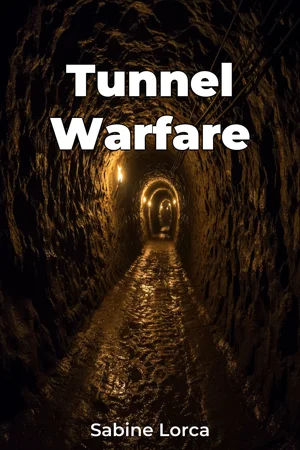
About This Book
Could the fate of nations truly rest beneath our feet? This book, *Tunnel Warfare*, delves into the hidden history and strategic significance of tunnels as instruments of military power, from antiquity to the present day. This examination is crucial because subterranean tactics represent a persistent, yet often overlooked, dimension of conflict that has shaped sieges, battles, and even entire wars. *Tunnel Warfare* explores three key themes. First, the evolution of tunneling techniques, tracing their development from rudimentary hand-dug passages used to undermine city walls to the complex, engineered underground networks of the modern era. Second, the psychological impact of tunnel warfare on both combatants and civilian populations, revealing the unique stresses and fears associated with fighting in the dark and the strategic exploitation of those fears. Third, the ethical considerations surrounding tunnel warfare, particularly concerning the targeting of subterranean infrastructure and the treatment of combatants encountered within tunnel systems. The history of tunnel warfare spans millennia, with examples found in ancient sieges, medieval fortifications, and both World Wars. Understanding the geological and engineering challenges inherent in tunnel construction, as well as the social and political factors that influence their use, provides essential context for evaluating their effectiveness. No prior specialized knowledge is required to grasp the core arguments; the book is designed to guide the reader through the historical context and technical aspects. The central argument of *Tunnel Warfare* is that subterranean warfare is not merely a tactical anomaly, but a recurring and adaptable strategy that reflects deeper trends in military technology, social engineering, and the evolving nature of conflict. This argument is important because it challenges conventional understandings of warfare, which often prioritize surface-level engagements, and highlights the enduring relevance of underground tactics in contemporary conflicts. The book begins by introducing the fundamental concepts of tunnel construction, detection, and combat. It then develops its central argument through three major sections. First, antiquity to the pre-industrial era, showing the early uses of tunnels to breach fortifications. Second, the industrial revolution forward, detailing how technology changed tunneling and counter-tunneling. Third, a study of modern uses of tunnels for asymmetrical warfare looking at insurgent and terrorist applications. It culminates by examining the future and ethics of subterranean combat. Evidence presented throughout the book is drawn from primary sources, including military manuals, archaeological reports, and eyewitness accounts. Secondary sources, such as scholarly articles and historical analyses, are also used to support the argument and provide context. The book also includes detailed maps and diagrams that illustrate key battles and tunnel systems. *Tunnel Warfare* connects to several other fields of study, including archaeology, engineering, and psychology. Archaeological evidence helps to reconstruct ancient tunnel systems and understand the techniques used to build them. Engineering principles are essential for understanding the structural integrity of tunnels and the challenges of excavating them. Psychological research sheds light on the mental and emotional toll of tunnel warfare on combatants and civilians. These connections enrich the book’s argument by providing a multidisciplinary perspective on subterranean warfare. This book offers a unique perspective by emphasizing the continuity and adaptability of tunnel warfare across different historical periods and geographical contexts. It challenges the notion that tunnel warfare is a niche phenomenon and demonstrates its enduring relevance as a strategic tool. The tone of the book is academic yet accessible, aiming to provide a comprehensive and engaging overview of the subject. The writing style is clear and concise, avoiding jargon and technical terms where possible. The target audience for this book includes military historians, students of military strategy, and anyone interested in the history of warfare. It is also relevant to defense professionals and policymakers who need to understand the strategic implications of tunnel warfare in contemporary conflicts. As military history, *Tunnel Warfare* adheres to the genre's expectations of factual accuracy, thorough research, and objective analysis. It avoids sensationalism and focuses on providing a balanced and nuanced account of the subject. The book's scope is limited to the strategic and tactical aspects of tunnel warfare, focusing primarily on its military applications. It does not delve into the social or cultural aspects of underground spaces. The information presented in this book can be applied in various ways. Military professionals can use it to develop strategies for countering tunnel warfare threats. Historians can use it to gain a deeper understanding of past conflicts. And policymakers can use it to make informed decisions about defense spending and military policy. The book addresses some of the ongoing debates surrounding tunnel warfare, such as the effectiveness of different counter-tunneling technologies and the ethical implications of targeting tunnel systems in populated areas.
Could the fate of nations truly rest beneath our feet? This book, *Tunnel Warfare*, delves into the hidden history and strategic significance of tunnels as instruments of military power, from antiquity to the present day. This examination is crucial because subterranean tactics represent a persistent, yet often overlooked, dimension of conflict that has shaped sieges, battles, and even entire wars. *Tunnel Warfare* explores three key themes. First, the evolution of tunneling techniques, tracing their development from rudimentary hand-dug passages used to undermine city walls to the complex, engineered underground networks of the modern era. Second, the psychological impact of tunnel warfare on both combatants and civilian populations, revealing the unique stresses and fears associated with fighting in the dark and the strategic exploitation of those fears. Third, the ethical considerations surrounding tunnel warfare, particularly concerning the targeting of subterranean infrastructure and the treatment of combatants encountered within tunnel systems. The history of tunnel warfare spans millennia, with examples found in ancient sieges, medieval fortifications, and both World Wars. Understanding the geological and engineering challenges inherent in tunnel construction, as well as the social and political factors that influence their use, provides essential context for evaluating their effectiveness. No prior specialized knowledge is required to grasp the core arguments; the book is designed to guide the reader through the historical context and technical aspects. The central argument of *Tunnel Warfare* is that subterranean warfare is not merely a tactical anomaly, but a recurring and adaptable strategy that reflects deeper trends in military technology, social engineering, and the evolving nature of conflict. This argument is important because it challenges conventional understandings of warfare, which often prioritize surface-level engagements, and highlights the enduring relevance of underground tactics in contemporary conflicts. The book begins by introducing the fundamental concepts of tunnel construction, detection, and combat. It then develops its central argument through three major sections. First, antiquity to the pre-industrial era, showing the early uses of tunnels to breach fortifications. Second, the industrial revolution forward, detailing how technology changed tunneling and counter-tunneling. Third, a study of modern uses of tunnels for asymmetrical warfare looking at insurgent and terrorist applications. It culminates by examining the future and ethics of subterranean combat. Evidence presented throughout the book is drawn from primary sources, including military manuals, archaeological reports, and eyewitness accounts. Secondary sources, such as scholarly articles and historical analyses, are also used to support the argument and provide context. The book also includes detailed maps and diagrams that illustrate key battles and tunnel systems. *Tunnel Warfare* connects to several other fields of study, including archaeology, engineering, and psychology. Archaeological evidence helps to reconstruct ancient tunnel systems and understand the techniques used to build them. Engineering principles are essential for understanding the structural integrity of tunnels and the challenges of excavating them. Psychological research sheds light on the mental and emotional toll of tunnel warfare on combatants and civilians. These connections enrich the book’s argument by providing a multidisciplinary perspective on subterranean warfare. This book offers a unique perspective by emphasizing the continuity and adaptability of tunnel warfare across different historical periods and geographical contexts. It challenges the notion that tunnel warfare is a niche phenomenon and demonstrates its enduring relevance as a strategic tool. The tone of the book is academic yet accessible, aiming to provide a comprehensive and engaging overview of the subject. The writing style is clear and concise, avoiding jargon and technical terms where possible. The target audience for this book includes military historians, students of military strategy, and anyone interested in the history of warfare. It is also relevant to defense professionals and policymakers who need to understand the strategic implications of tunnel warfare in contemporary conflicts. As military history, *Tunnel Warfare* adheres to the genre's expectations of factual accuracy, thorough research, and objective analysis. It avoids sensationalism and focuses on providing a balanced and nuanced account of the subject. The book's scope is limited to the strategic and tactical aspects of tunnel warfare, focusing primarily on its military applications. It does not delve into the social or cultural aspects of underground spaces. The information presented in this book can be applied in various ways. Military professionals can use it to develop strategies for countering tunnel warfare threats. Historians can use it to gain a deeper understanding of past conflicts. And policymakers can use it to make informed decisions about defense spending and military policy. The book addresses some of the ongoing debates surrounding tunnel warfare, such as the effectiveness of different counter-tunneling technologies and the ethical implications of targeting tunnel systems in populated areas.
"Tunnel Warfare" explores the often-overlooked world of subterranean conflict, revealing its profound impact on military history from ancient sieges to modern asymmetrical warfare. The book examines how tunneling techniques have evolved, from basic hand-dug passages used to undermine city walls to complex, engineered networks employed by insurgents and terrorist groups. It also highlights the psychological toll on soldiers and civilians facing the unique terrors of fighting in the dark, where the enemy could be anywhere. This study provides a unique perspective by emphasizing the continuity and adaptability of tunnel warfare across different eras. Ethical considerations, such as the targeting of underground infrastructure, are also addressed. By drawing on primary sources and archaeological findings, the book traces the use of tunnels from antiquity, through the industrial revolution and into the age of modern insurgent warfare. It culminates by examining the future and ethics of subterranean combat, making it valuable to those interested in military history, strategy, and the evolving nature of conflict.
Book Details
ISBN
9788235270764
Publisher
Publifye AS
Your Licenses
You don't own any licenses for this book
Purchase a license below to unlock this book and download the EPUB.
Purchase License
Select a tier to unlock this book
Need bulk licensing?
Contact us for enterprise agreements.