
About This Book
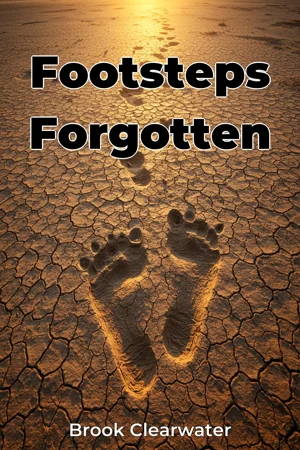
What if the ground beneath our feet could whisper tales of vanished civilizations, epic migrations, and the very evolution of humanity? "Footsteps Forgotten" invites you on a journey through time, deciphering the silent narratives etched into the Earth's surface. We explore the profound stories told by fossilized footprints and long-lost pathways, revealing ancient journeys and shedding light on pivotal moments in human history and prehistory. This book delves into the emerging field of ichnology – the study of trace fossils – expanding beyond dinosaur tracks to focus on the footprints left by our human ancestors and the animals that shaped their world. We examine ancient migration routes, not just as geographical paths, but as vital arteries of cultural exchange, technological diffusion, and genetic mixing. These seemingly simple impressions in stone and soil offer a unique window into the behaviors, social structures, and environmental adaptations of past populations. Understanding these forgotten footsteps requires a multidisciplinary approach, drawing from paleontology, archaeology, geology, and anthropology. We will provide the necessary historical and scientific context, offering clear explanations of geological dating methods, fossilization processes, and the principles of footprint analysis. No prior expertise is required; the book is crafted to be accessible to anyone with an interest in history, earth sciences, or the human story. "Footsteps Forgotten" argues that trace fossils, particularly footprints, provide a more direct and unfiltered record of past life than skeletal remains or artifacts alone. They capture fleeting moments in time, revealing not just who existed, but how they lived, moved, and interacted with their environment. Recognizing the significance of this often-overlooked evidence is crucial for a more complete understanding of our shared past. The book unfolds in three major sections. First, we introduce the fundamental concepts of ichnology and the geological processes that preserve footprints over millennia. We explore the methods used to identify, analyze, and interpret these traces, differentiating between human and animal tracks, and discerning individual behaviors from group activities. Second, we embark on a series of case studies, examining significant footprint sites around the world, from the hominin tracks of Laetoli in Tanzania to the ancient coastal pathways of Australia. Each case study will illustrate how footprint evidence has revolutionized our understanding of specific historical or prehistoric events. Finally, we synthesize these findings to present a broader picture of human migration patterns, technological advancements, and adaptations to changing environments, culminating in a discussion of the implications for understanding modern human behavior and challenges. The evidence presented draws from a wide range of sources, including published scientific papers, field reports, and original analyses of footprint sites. High-resolution photographs, detailed maps, and 3D models will visually enhance the reader's understanding of the evidence. We will include insights from leading researchers in the field, offering diverse perspectives on the interpretation of trace fossils. "Footsteps Forgotten" sits at the intersection of earth sciences, history, and geography. It connects to evolutionary biology through the study of hominin evolution, to climatology through the analysis of past environmental conditions, and to cultural studies through the exploration of ancient migration routes and cultural exchange. This interdisciplinary approach enriches the narrative and provides a more holistic understanding of the past. Our book offers a fresh perspective by focusing specifically on footprints as a primary source of historical and prehistoric information. While other books may touch on footprint evidence, "Footsteps Forgotten" makes it the central theme, providing a comprehensive and in-depth analysis. Written in a clear and engaging style, "Footsteps Forgotten" aims to inform and captivate a broad audience, including students, researchers, and anyone with a passion for history, archaeology, or earth sciences. The book provides valuable insights for readers interested in human evolution, ancient migrations, and the power of trace fossils to reveal hidden histories. As a work of non-fiction, this book respects the conventions of accuracy, objectivity, and evidence-based reasoning. While speculative interpretations are acknowledged, they are clearly distinguished from established facts. The scope of the book is global, encompassing footprint sites from around the world. However, we acknowledge the limitations in our knowledge and avoid making definitive claims where evidence is incomplete or contested. The insights gained from studying ancient footprints have practical applications in modern conservation efforts, helping us understand the impact of climate change on migration patterns and informing strategies for preserving vulnerable archaeological sites. The interpretation of fossilized tracks is not without its controversies. Differing opinions exist regarding the species identification of certain footprints, the reconstruction of past environments, and the dating of geological strata. We will address these debates openly, presenting different viewpoints and evaluating the evidence for each.
What if the ground beneath our feet could whisper tales of vanished civilizations, epic migrations, and the very evolution of humanity? "Footsteps Forgotten" invites you on a journey through time, deciphering the silent narratives etched into the Earth's surface. We explore the profound stories told by fossilized footprints and long-lost pathways, revealing ancient journeys and shedding light on pivotal moments in human history and prehistory. This book delves into the emerging field of ichnology – the study of trace fossils – expanding beyond dinosaur tracks to focus on the footprints left by our human ancestors and the animals that shaped their world. We examine ancient migration routes, not just as geographical paths, but as vital arteries of cultural exchange, technological diffusion, and genetic mixing. These seemingly simple impressions in stone and soil offer a unique window into the behaviors, social structures, and environmental adaptations of past populations. Understanding these forgotten footsteps requires a multidisciplinary approach, drawing from paleontology, archaeology, geology, and anthropology. We will provide the necessary historical and scientific context, offering clear explanations of geological dating methods, fossilization processes, and the principles of footprint analysis. No prior expertise is required; the book is crafted to be accessible to anyone with an interest in history, earth sciences, or the human story. "Footsteps Forgotten" argues that trace fossils, particularly footprints, provide a more direct and unfiltered record of past life than skeletal remains or artifacts alone. They capture fleeting moments in time, revealing not just who existed, but how they lived, moved, and interacted with their environment. Recognizing the significance of this often-overlooked evidence is crucial for a more complete understanding of our shared past. The book unfolds in three major sections. First, we introduce the fundamental concepts of ichnology and the geological processes that preserve footprints over millennia. We explore the methods used to identify, analyze, and interpret these traces, differentiating between human and animal tracks, and discerning individual behaviors from group activities. Second, we embark on a series of case studies, examining significant footprint sites around the world, from the hominin tracks of Laetoli in Tanzania to the ancient coastal pathways of Australia. Each case study will illustrate how footprint evidence has revolutionized our understanding of specific historical or prehistoric events. Finally, we synthesize these findings to present a broader picture of human migration patterns, technological advancements, and adaptations to changing environments, culminating in a discussion of the implications for understanding modern human behavior and challenges. The evidence presented draws from a wide range of sources, including published scientific papers, field reports, and original analyses of footprint sites. High-resolution photographs, detailed maps, and 3D models will visually enhance the reader's understanding of the evidence. We will include insights from leading researchers in the field, offering diverse perspectives on the interpretation of trace fossils. "Footsteps Forgotten" sits at the intersection of earth sciences, history, and geography. It connects to evolutionary biology through the study of hominin evolution, to climatology through the analysis of past environmental conditions, and to cultural studies through the exploration of ancient migration routes and cultural exchange. This interdisciplinary approach enriches the narrative and provides a more holistic understanding of the past. Our book offers a fresh perspective by focusing specifically on footprints as a primary source of historical and prehistoric information. While other books may touch on footprint evidence, "Footsteps Forgotten" makes it the central theme, providing a comprehensive and in-depth analysis. Written in a clear and engaging style, "Footsteps Forgotten" aims to inform and captivate a broad audience, including students, researchers, and anyone with a passion for history, archaeology, or earth sciences. The book provides valuable insights for readers interested in human evolution, ancient migrations, and the power of trace fossils to reveal hidden histories. As a work of non-fiction, this book respects the conventions of accuracy, objectivity, and evidence-based reasoning. While speculative interpretations are acknowledged, they are clearly distinguished from established facts. The scope of the book is global, encompassing footprint sites from around the world. However, we acknowledge the limitations in our knowledge and avoid making definitive claims where evidence is incomplete or contested. The insights gained from studying ancient footprints have practical applications in modern conservation efforts, helping us understand the impact of climate change on migration patterns and informing strategies for preserving vulnerable archaeological sites. The interpretation of fossilized tracks is not without its controversies. Differing opinions exist regarding the species identification of certain footprints, the reconstruction of past environments, and the dating of geological strata. We will address these debates openly, presenting different viewpoints and evaluating the evidence for each.
"Footsteps Forgotten" unveils Earth's hidden narratives by exploring ichnology, the study of trace fossils, focusing on fossil footprints. This unique approach sheds light on ancient migrations and pivotal moments in human evolution and prehistory. The book argues that footprints offer a direct record of past life, revealing how our ancestors moved, lived, and interacted with their environment. For example, the Laetoli footprints in Tanzania provide a snapshot of early hominin bipedalism, capturing a moment millions of years ago. It highlights the importance of these often-overlooked clues for understanding our shared past. The book provides a multidisciplinary perspective, drawing from earth sciences, paleontology, archaeology, geology, and anthropology, making it accessible to a broad audience. It emphasizes the significance of ancient migration routes as arteries of cultural exchange, technological diffusion, and genetic mixing. "Footsteps Forgotten" progresses through fundamental concepts, case studies of significant footprint sites, and a synthesis of findings to present a broader picture of human history. High-resolution photographs, maps, and 3D models visually enhance the reader's understanding. It begins by introducing the basics of footprint analysis and geological preservation, then delves into global case studies illustrating how footprint evidence has reshaped our understanding of specific historical or prehistoric events. The final section synthesizes these findings, discussing implications for understanding modern human behavior and challenges.
Book Details
ISBN
9788235270443
Publisher
Publifye AS
Your Licenses
You don't own any licenses for this book
Purchase a license below to unlock this book and download the EPUB.
Purchase License
Select a tier to unlock this book
Need bulk licensing?
Contact us for enterprise agreements.