
About This Book
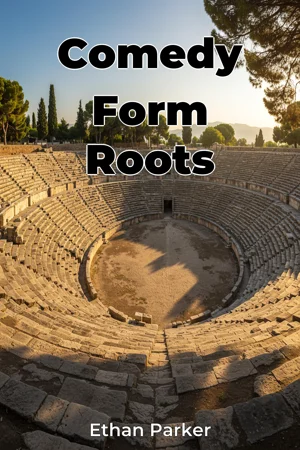
Why do we laugh, and why have humans throughout history found humor so essential? "Comedy Form Roots" explores the evolution of theatrical comedy across diverse cultures and eras, tracing the formal elements and recurring themes that define this enduring art form. This book is crucial because it delves into comedy's profound impact on social structures, political discourse, and artistic expression, demonstrating its power to both reflect and shape human experience. Two key topics examined within this work are the development of comedic archetypes and the shifting role of satire in different societies. The study of archetypes, such as the trickster or the fool, reveals fundamental aspects of human nature and social dynamics. Examining satire's varying applications, from ancient Greece to modern-day political commentary, highlights comedy’s capacity to critique power and challenge societal norms. To understand comedy's complex history, "Comedy Form Roots" draws upon a broad historical context, examining theatrical traditions from ancient Greece and Rome, Medieval Europe, Asian performance forms, and the development of modern Western comedy. A basic understanding of theatre history and literary analysis will enhance the reader's appreciation of the arguments presented. The central argument of "Comedy Form Roots" posits that while comedic forms vary significantly across cultures and time periods, a set of core elements consistently reappears, reflecting universal human concerns and social tensions. Understanding these elements provides a framework for analyzing and appreciating comedy in any context. The book unfolds in a structured manner. It begins with an introduction to fundamental comedic concepts and theories. The subsequent chapters delve into specific historical periods and cultural traditions, analyzing the development of comedic forms in each. These chapters explore how comedy has been used to subvert authority, negotiate social change, and express cultural identity. The book culminates in a synthesis of these diverse perspectives, demonstrating the underlying unity of comedic expression. “Comedy Form Roots” draws upon a wide range of primary sources, including play scripts, performance records, and critical essays from various historical periods. Secondary sources from theatre history, literary criticism, and cultural studies are also incorporated to provide a comprehensive understanding of the subject. The book embraces an interdisciplinary approach, connecting theatre history with sociology, political science, and anthropology. By examining comedy's social and political functions, the book sheds light on its broader cultural significance. Furthermore, it explores comedy’s connection to psychology, investigating the theories behind laughter and humor. What distinguishes this book is its comparative approach, analyzing comedic traditions from around the world to identify shared elements and unique cultural expressions. This perspective challenges Eurocentric views of comedy and offers a more inclusive understanding of its global history. The tone is academic yet accessible, designed to engage both scholars and students with an interest in theatre, humor, and cultural history. The writing style balances rigorous analysis with clear and engaging prose. The target audience includes students and scholars of theatre, performance studies, comparative literature, and cultural history, as well as anyone interested in the history and theory of comedy. The book is designed to be a valuable resource for both academic study and general intellectual exploration. As a work of non-fiction within the performing arts and history genres, "Comedy Form Roots" adheres to standards of scholarly rigor, including thorough research, accurate citations, and a balanced presentation of perspectives. The scope is broad, encompassing a wide range of historical periods and cultural traditions. However, the book focuses primarily on theatrical comedy, with limited attention given to other forms of comedic expression. The insights presented in "Comedy Form Roots" can be applied to the analysis of contemporary comedy, helping readers understand the historical roots of modern comedic forms and the social and political contexts in which they operate. The book engages with ongoing debates surrounding the definition and function of comedy, particularly regarding the role of humor in perpetuating or challenging social inequalities. It acknowledges the potential for comedy to be both subversive and conservative, and encourages readers to critically examine its impact on society.
Why do we laugh, and why have humans throughout history found humor so essential? "Comedy Form Roots" explores the evolution of theatrical comedy across diverse cultures and eras, tracing the formal elements and recurring themes that define this enduring art form. This book is crucial because it delves into comedy's profound impact on social structures, political discourse, and artistic expression, demonstrating its power to both reflect and shape human experience. Two key topics examined within this work are the development of comedic archetypes and the shifting role of satire in different societies. The study of archetypes, such as the trickster or the fool, reveals fundamental aspects of human nature and social dynamics. Examining satire's varying applications, from ancient Greece to modern-day political commentary, highlights comedy’s capacity to critique power and challenge societal norms. To understand comedy's complex history, "Comedy Form Roots" draws upon a broad historical context, examining theatrical traditions from ancient Greece and Rome, Medieval Europe, Asian performance forms, and the development of modern Western comedy. A basic understanding of theatre history and literary analysis will enhance the reader's appreciation of the arguments presented. The central argument of "Comedy Form Roots" posits that while comedic forms vary significantly across cultures and time periods, a set of core elements consistently reappears, reflecting universal human concerns and social tensions. Understanding these elements provides a framework for analyzing and appreciating comedy in any context. The book unfolds in a structured manner. It begins with an introduction to fundamental comedic concepts and theories. The subsequent chapters delve into specific historical periods and cultural traditions, analyzing the development of comedic forms in each. These chapters explore how comedy has been used to subvert authority, negotiate social change, and express cultural identity. The book culminates in a synthesis of these diverse perspectives, demonstrating the underlying unity of comedic expression. “Comedy Form Roots” draws upon a wide range of primary sources, including play scripts, performance records, and critical essays from various historical periods. Secondary sources from theatre history, literary criticism, and cultural studies are also incorporated to provide a comprehensive understanding of the subject. The book embraces an interdisciplinary approach, connecting theatre history with sociology, political science, and anthropology. By examining comedy's social and political functions, the book sheds light on its broader cultural significance. Furthermore, it explores comedy’s connection to psychology, investigating the theories behind laughter and humor. What distinguishes this book is its comparative approach, analyzing comedic traditions from around the world to identify shared elements and unique cultural expressions. This perspective challenges Eurocentric views of comedy and offers a more inclusive understanding of its global history. The tone is academic yet accessible, designed to engage both scholars and students with an interest in theatre, humor, and cultural history. The writing style balances rigorous analysis with clear and engaging prose. The target audience includes students and scholars of theatre, performance studies, comparative literature, and cultural history, as well as anyone interested in the history and theory of comedy. The book is designed to be a valuable resource for both academic study and general intellectual exploration. As a work of non-fiction within the performing arts and history genres, "Comedy Form Roots" adheres to standards of scholarly rigor, including thorough research, accurate citations, and a balanced presentation of perspectives. The scope is broad, encompassing a wide range of historical periods and cultural traditions. However, the book focuses primarily on theatrical comedy, with limited attention given to other forms of comedic expression. The insights presented in "Comedy Form Roots" can be applied to the analysis of contemporary comedy, helping readers understand the historical roots of modern comedic forms and the social and political contexts in which they operate. The book engages with ongoing debates surrounding the definition and function of comedy, particularly regarding the role of humor in perpetuating or challenging social inequalities. It acknowledges the potential for comedy to be both subversive and conservative, and encourages readers to critically examine its impact on society.
"Comedy Form Roots" explores the rich history of theatrical comedy, examining its evolution across diverse cultures and eras. It argues that despite variations, core elements consistently reappear, reflecting universal human concerns. The book traces the development of comedic archetypes, like the trickster, revealing fundamental aspects of human nature. It also examines how satire has been used from ancient Greece to modern political discourse to critique power and challenge societal norms. The book progresses systematically, starting with fundamental comedic concepts. Subsequent chapters delve into specific historical periods and cultural traditions, analyzing the development of comedic forms in each. By drawing upon play scripts, performance records, and critical essays, the book adopts an interdisciplinary approach, connecting theatre history with sociology, political science, and anthropology. This sheds light on comedy's broader cultural significance. What makes "Comedy Form Roots" unique is its comparative approach, analyzing comedic traditions from around the world. This perspective challenges Eurocentric views of comedy and offers a more inclusive understanding of its global history. This valuable resource is designed to engage scholars and students interested in theatre, humor, and cultural history, offering insights applicable to the analysis of contemporary comedy.
Book Details
ISBN
9788235270313
Publisher
Publifye AS
Your Licenses
You don't own any licenses for this book
Purchase a license below to unlock this book and download the EPUB.
Purchase License
Select a tier to unlock this book
Need bulk licensing?
Contact us for enterprise agreements.