
About This Book
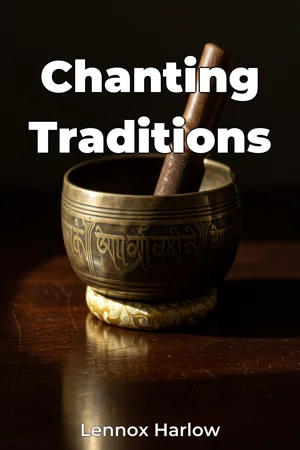
Have you ever wondered why chanting holds such a prominent place in diverse spiritual traditions across the globe? "Chanting Traditions" delves into the multifaceted role of rhythmic vocalizations in religious practices, exploring how these sacred sounds foster inner peace, community, and a profound connection to the divine. This book examines the significance of chanting not merely as a ritualistic act, but as a powerful tool for spiritual transformation and psychological well-being. We will be focusing on how chanting is used across different religions, the psychophysiological effect of rhythmic prayer, and the sacred nature of sound in spiritual practices. Understanding chanting requires appreciating both its historical roots and its contemporary relevance in a world increasingly seeking solace and meaning. "Chanting Traditions" presents the central argument that chanting, despite its diverse manifestations, serves as a universal language that unites humanity through shared spiritual experiences. It is a practice that transcends cultural and religious boundaries to tap into innate human capacities for rhythm, resonance, and transcendence. It asserts that the underlying mechanisms of chanting—rhythmic repetition, focused intention, and communal participation—create specific mental and physiological states conducive to spiritual connection and healing. The book begins by introducing the fundamental concepts of sound as sacred, exploring the etymological roots of "chanting" and its equivalents in various languages, and establishing a cross-cultural framework for understanding its diverse forms. It then proceeds to investigate specific chanting traditions within major world religions, including Hinduism, Buddhism, Christianity, Islam, and Judaism, analyzing their unique characteristics, historical development, and theological underpinnings. This section carefully examines variations in melodies, texts, and ritual contexts. The book further explores the psychophysiological effects of chanting, drawing upon research in neuroscience, psychology, and music therapy. It investigates how rhythmic vocalizations can modulate brainwave activity, reduce stress hormones, and promote states of relaxation and focused attention. It examines the relationship between chanting and mindfulness, as well as its potential therapeutic applications for conditions such as anxiety, depression, and chronic pain. The culmination of "Chanting Traditions" considers the contemporary relevance of chanting, discussing its role in interfaith dialogue, spiritual seeking, and the creation of supportive communities. It also explores potential adaptations of traditional chanting practices for modern contexts, such as secular mindfulness programs and therapeutic interventions. The book concludes with practical guidelines for incorporating chanting into one's personal spiritual practice, emphasizing the importance of intention, mindful awareness, and respect for tradition. The book draws upon a wide range of evidence, including historical texts, ethnographic studies, musical analyses, and scientific research. Data from field recordings of chanting ceremonies, interviews with practitioners, and quantitative measures of physiological responses will be included. "Chanting Traditions" connects to several interdisciplinary fields, including musicology, religious studies, psychology, and neuroscience. This interdisciplinary approach provides a holistic understanding of chanting by integrating insights from diverse perspectives. The book's unique perspective lies in its comparative analysis of chanting traditions across multiple religions and its synthesis of scientific and spiritual perspectives. It seeks to bridge the gap between ancient wisdom and contemporary research, providing both a scholarly exploration and a practical guide for spiritual seekers. The tone is informative, respectful, and accessible, designed to appeal to a broad audience of readers interested in spirituality, religion, music, and well-being. While grounded in scholarly research, the writing style avoids jargon and technical language, making the material engaging and understandable for non-experts. It presents its information in a conversational tone, fostering a sense of exploration and discovery. It is written for spiritual seekers, religious practitioners, healthcare professionals, and anyone interested in the power of sound and the intersection of religion and well-being. It offers valuable insights for individuals seeking to deepen their understanding of their own faith traditions, explore new spiritual practices, or utilize chanting as a tool for personal growth and healing. As a work of non-fiction within the genres of spirituality and religion, "Chanting Traditions" adheres to standards of accuracy, objectivity, and responsible representation. The scope of "Chanting Traditions" is broad, encompassing diverse religious traditions and scientific disciplines. However, it acknowledges the limitations of providing comprehensive coverage of every chanting tradition in the world, focusing instead on representative examples and key themes. The information in the book can be applied practically by readers in a variety of ways, from incorporating chanting into their daily routines to utilizing it as a therapeutic tool for stress reduction and emotional regulation. It also has implications for interfaith dialogue, promoting understanding and respect among different religious communities. While chanting is generally viewed positively within spiritual traditions, "Chanting Traditions" also addresses the complexities of its interpretation and use, including potential controversies related to cultural appropriation, ritual authenticity, and the commercialization of spiritual practices. It encourages readers to approach chanting with mindful awareness, respect for tradition, and a commitment to ethical practice.
Have you ever wondered why chanting holds such a prominent place in diverse spiritual traditions across the globe? "Chanting Traditions" delves into the multifaceted role of rhythmic vocalizations in religious practices, exploring how these sacred sounds foster inner peace, community, and a profound connection to the divine. This book examines the significance of chanting not merely as a ritualistic act, but as a powerful tool for spiritual transformation and psychological well-being. We will be focusing on how chanting is used across different religions, the psychophysiological effect of rhythmic prayer, and the sacred nature of sound in spiritual practices. Understanding chanting requires appreciating both its historical roots and its contemporary relevance in a world increasingly seeking solace and meaning. "Chanting Traditions" presents the central argument that chanting, despite its diverse manifestations, serves as a universal language that unites humanity through shared spiritual experiences. It is a practice that transcends cultural and religious boundaries to tap into innate human capacities for rhythm, resonance, and transcendence. It asserts that the underlying mechanisms of chanting—rhythmic repetition, focused intention, and communal participation—create specific mental and physiological states conducive to spiritual connection and healing. The book begins by introducing the fundamental concepts of sound as sacred, exploring the etymological roots of "chanting" and its equivalents in various languages, and establishing a cross-cultural framework for understanding its diverse forms. It then proceeds to investigate specific chanting traditions within major world religions, including Hinduism, Buddhism, Christianity, Islam, and Judaism, analyzing their unique characteristics, historical development, and theological underpinnings. This section carefully examines variations in melodies, texts, and ritual contexts. The book further explores the psychophysiological effects of chanting, drawing upon research in neuroscience, psychology, and music therapy. It investigates how rhythmic vocalizations can modulate brainwave activity, reduce stress hormones, and promote states of relaxation and focused attention. It examines the relationship between chanting and mindfulness, as well as its potential therapeutic applications for conditions such as anxiety, depression, and chronic pain. The culmination of "Chanting Traditions" considers the contemporary relevance of chanting, discussing its role in interfaith dialogue, spiritual seeking, and the creation of supportive communities. It also explores potential adaptations of traditional chanting practices for modern contexts, such as secular mindfulness programs and therapeutic interventions. The book concludes with practical guidelines for incorporating chanting into one's personal spiritual practice, emphasizing the importance of intention, mindful awareness, and respect for tradition. The book draws upon a wide range of evidence, including historical texts, ethnographic studies, musical analyses, and scientific research. Data from field recordings of chanting ceremonies, interviews with practitioners, and quantitative measures of physiological responses will be included. "Chanting Traditions" connects to several interdisciplinary fields, including musicology, religious studies, psychology, and neuroscience. This interdisciplinary approach provides a holistic understanding of chanting by integrating insights from diverse perspectives. The book's unique perspective lies in its comparative analysis of chanting traditions across multiple religions and its synthesis of scientific and spiritual perspectives. It seeks to bridge the gap between ancient wisdom and contemporary research, providing both a scholarly exploration and a practical guide for spiritual seekers. The tone is informative, respectful, and accessible, designed to appeal to a broad audience of readers interested in spirituality, religion, music, and well-being. While grounded in scholarly research, the writing style avoids jargon and technical language, making the material engaging and understandable for non-experts. It presents its information in a conversational tone, fostering a sense of exploration and discovery. It is written for spiritual seekers, religious practitioners, healthcare professionals, and anyone interested in the power of sound and the intersection of religion and well-being. It offers valuable insights for individuals seeking to deepen their understanding of their own faith traditions, explore new spiritual practices, or utilize chanting as a tool for personal growth and healing. As a work of non-fiction within the genres of spirituality and religion, "Chanting Traditions" adheres to standards of accuracy, objectivity, and responsible representation. The scope of "Chanting Traditions" is broad, encompassing diverse religious traditions and scientific disciplines. However, it acknowledges the limitations of providing comprehensive coverage of every chanting tradition in the world, focusing instead on representative examples and key themes. The information in the book can be applied practically by readers in a variety of ways, from incorporating chanting into their daily routines to utilizing it as a therapeutic tool for stress reduction and emotional regulation. It also has implications for interfaith dialogue, promoting understanding and respect among different religious communities. While chanting is generally viewed positively within spiritual traditions, "Chanting Traditions" also addresses the complexities of its interpretation and use, including potential controversies related to cultural appropriation, ritual authenticity, and the commercialization of spiritual practices. It encourages readers to approach chanting with mindful awareness, respect for tradition, and a commitment to ethical practice.
"Chanting Traditions" explores the profound role of rhythmic vocalizations in spiritual and religious practices worldwide. It argues that chanting transcends cultural boundaries, acting as a universal language that fosters inner peace and connection to the divine. The book uniquely bridges ancient wisdom with modern research, revealing how rhythmic repetition and focused intention create mental and physiological states conducive to spiritual connection and healing. Did you know that chanting can modulate brainwave activity and reduce stress hormones? Or that it's considered a sacred sound in many traditions? The book examines chanting traditions within major world religions like Hinduism, Buddhism, Christianity, Islam, and Judaism, analyzing their unique characteristics and historical development. It also delves into the psychophysiological effects of chanting, drawing upon neuroscience, psychology, and music therapy to highlight its potential benefits for psychological well-being and spiritual transformation. The book progresses from foundational concepts of sacred sound to specific religious traditions, then explores the science behind chanting's effects. Finally, it considers the practice's contemporary relevance, offering practical guidelines for incorporating chanting into daily spiritual practice and emphasizing mindfulness and respect for tradition.
Book Details
ISBN
9788235270221
Publisher
Publifye AS
Your Licenses
You don't own any licenses for this book
Purchase a license below to unlock this book and download the EPUB.
Purchase License
Select a tier to unlock this book
Need bulk licensing?
Contact us for enterprise agreements.