
About This Book
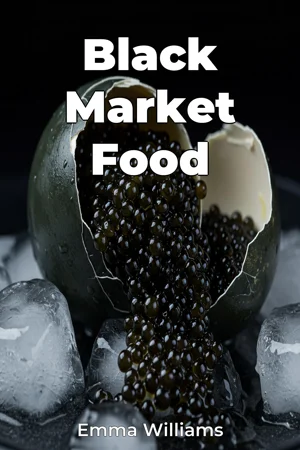
Imagine paying thousands of dollars for a single fish, risking imprisonment for a taste of cheese, or fueling international crime syndicates with your appetite. "Black Market Food" unveils the hidden world where rare and illegal delicacies become commodities, driving a global shadow economy. This book explores the intricate networks involved in the smuggling and sale of restricted foods, examining both the supply and demand that fuels this illicit market. We will delve into the economic, ethical, and environmental consequences of these activities, revealing how consumer desires intersect with criminal enterprise and conservation concerns. The core of the investigation will focus on: * **The Drivers of Demand:** What motivates consumers to seek out these prohibited items, and how do cultural beliefs, status symbols, and perceived health benefits contribute to the black market trade? * **The Mechanics of Smuggling:** How are these goods transported across borders, circumventing customs regulations and evading law enforcement? What are the innovative techniques and technologies employed by smugglers. * **The Impact on Sustainability:** How does the black market trade in food impact the environment, particularly endangered species and fragile ecosystems? "Black Market Food" argues that the illegal food trade is not merely a collection of isolated incidents but a significant global issue with far-reaching implications for conservation, public health, and international security. By tracing the journey of specific prohibited goods – from the Caspian Sea's dwindling sturgeon populations, source of black market caviar, to the remote corners of Southeast Asia where pangolins are poached for their meat and scales – we will demonstrate how consumer choices in one part of the world can have devastating consequences elsewhere. The book unfolds in three major sections. First, we will establish the legal frameworks and regulatory landscapes that define which foods are considered illegal and why. This section will provide the historical and political context necessary to understand the rise of the black market trade. Second, we will explore case studies of specific prohibited foods, detailing their origins, routes to market, and the individuals involved in their trade. This section will be supported by interviews with law enforcement officials, conservationists, and former smugglers, offering firsthand accounts of the operations and impacts of the illegal food trade. Finally, we will analyze the broader implications of the black market, considering its impact on biodiversity, public health, and global security. The information presented is based on extensive research of government reports, academic studies, and news articles, along with data obtained from organizations such as the World Wildlife Fund and Interpol. Additionally, the book incorporates insights gained from interviews with experts in food safety, conservation, and law enforcement. "Black Market Food" connects to fields such as criminology, environmental science, economics, and public health. By understanding the criminal networks involved, the ecological consequences, the economic incentives, and the potential health risks, readers will gain a more comprehensive perspective on this complex issue. This book offers a unique perspective by examining the intersection of consumer behavior, criminal activity, and environmental degradation within the context of the global food system. It is written in a narrative non-fiction style, blending factual reporting with compelling storytelling to engage a broad audience. The target audience includes readers interested in true crime, food culture, environmental issues, and international affairs. This book will be valuable to anyone seeking a deeper understanding of the hidden forces shaping our world. As a work of true crime and food writing, "Black Market Food" adheres to the conventions of thorough research, factual accuracy, and engaging storytelling. While the book aims to provide a global overview of the black market trade in food, it focuses primarily on specific case studies to illustrate the broader trends and challenges, and does not look at every single illegal food product worldwide. Understanding the dynamics of the black market food trade is crucial for policymakers, law enforcement agencies, and consumers alike. By shedding light on the operations of these illicit networks, we can empower individuals to make more informed choices and support efforts to combat environmental crime and protect public health. The illegal food trade is fraught with controversies, including debates over the effectiveness of current regulations, the ethical implications of consuming rare or endangered species, and the role of consumer demand in driving criminal enterprise. "Black Market Food" addresses these controversies head-on, presenting multiple perspectives and encouraging readers to critically examine their own assumptions and beliefs.
Imagine paying thousands of dollars for a single fish, risking imprisonment for a taste of cheese, or fueling international crime syndicates with your appetite. "Black Market Food" unveils the hidden world where rare and illegal delicacies become commodities, driving a global shadow economy. This book explores the intricate networks involved in the smuggling and sale of restricted foods, examining both the supply and demand that fuels this illicit market. We will delve into the economic, ethical, and environmental consequences of these activities, revealing how consumer desires intersect with criminal enterprise and conservation concerns. The core of the investigation will focus on: * **The Drivers of Demand:** What motivates consumers to seek out these prohibited items, and how do cultural beliefs, status symbols, and perceived health benefits contribute to the black market trade? * **The Mechanics of Smuggling:** How are these goods transported across borders, circumventing customs regulations and evading law enforcement? What are the innovative techniques and technologies employed by smugglers. * **The Impact on Sustainability:** How does the black market trade in food impact the environment, particularly endangered species and fragile ecosystems? "Black Market Food" argues that the illegal food trade is not merely a collection of isolated incidents but a significant global issue with far-reaching implications for conservation, public health, and international security. By tracing the journey of specific prohibited goods – from the Caspian Sea's dwindling sturgeon populations, source of black market caviar, to the remote corners of Southeast Asia where pangolins are poached for their meat and scales – we will demonstrate how consumer choices in one part of the world can have devastating consequences elsewhere. The book unfolds in three major sections. First, we will establish the legal frameworks and regulatory landscapes that define which foods are considered illegal and why. This section will provide the historical and political context necessary to understand the rise of the black market trade. Second, we will explore case studies of specific prohibited foods, detailing their origins, routes to market, and the individuals involved in their trade. This section will be supported by interviews with law enforcement officials, conservationists, and former smugglers, offering firsthand accounts of the operations and impacts of the illegal food trade. Finally, we will analyze the broader implications of the black market, considering its impact on biodiversity, public health, and global security. The information presented is based on extensive research of government reports, academic studies, and news articles, along with data obtained from organizations such as the World Wildlife Fund and Interpol. Additionally, the book incorporates insights gained from interviews with experts in food safety, conservation, and law enforcement. "Black Market Food" connects to fields such as criminology, environmental science, economics, and public health. By understanding the criminal networks involved, the ecological consequences, the economic incentives, and the potential health risks, readers will gain a more comprehensive perspective on this complex issue. This book offers a unique perspective by examining the intersection of consumer behavior, criminal activity, and environmental degradation within the context of the global food system. It is written in a narrative non-fiction style, blending factual reporting with compelling storytelling to engage a broad audience. The target audience includes readers interested in true crime, food culture, environmental issues, and international affairs. This book will be valuable to anyone seeking a deeper understanding of the hidden forces shaping our world. As a work of true crime and food writing, "Black Market Food" adheres to the conventions of thorough research, factual accuracy, and engaging storytelling. While the book aims to provide a global overview of the black market trade in food, it focuses primarily on specific case studies to illustrate the broader trends and challenges, and does not look at every single illegal food product worldwide. Understanding the dynamics of the black market food trade is crucial for policymakers, law enforcement agencies, and consumers alike. By shedding light on the operations of these illicit networks, we can empower individuals to make more informed choices and support efforts to combat environmental crime and protect public health. The illegal food trade is fraught with controversies, including debates over the effectiveness of current regulations, the ethical implications of consuming rare or endangered species, and the role of consumer demand in driving criminal enterprise. "Black Market Food" addresses these controversies head-on, presenting multiple perspectives and encouraging readers to critically examine their own assumptions and beliefs.
"Black Market Food" delves into the shadowy world of the illegal food trade, revealing how consumer desires fuel a global network of food smuggling, impacting both conservation and international security. Discover the surprising motivations behind seeking out prohibited delicacies and the innovative techniques used to transport these goods across borders, circumventing regulations. The book highlights how this isn't just isolated incidents but a significant issue affecting endangered species and fragile ecosystems. The book unfolds by first establishing the legal frameworks defining illegal foods, then exploring case studies with insights from law enforcement and conservationists. It examines the environmental impact, public health concerns, and global security implications of the black market. Through investigations into items like black market caviar from dwindling sturgeon populations and poached pangolins in Southeast Asia, "Black Market Food" demonstrates how consumer choices drive devastating consequences, blending true crime with food writing. The book connects criminology, environmental science, economics, and public health, providing a comprehensive perspective on this complex issue and empowering readers to make informed choices. By understanding the criminal networks, ecological consequences, and economic incentives, readers gain insight into the hidden forces shaping our world.
Book Details
ISBN
9788235270085
Publisher
Publifye AS
Your Licenses
You don't own any licenses for this book
Purchase a license below to unlock this book and download the EPUB.
Purchase License
Select a tier to unlock this book
Need bulk licensing?
Contact us for enterprise agreements.