
About This Book
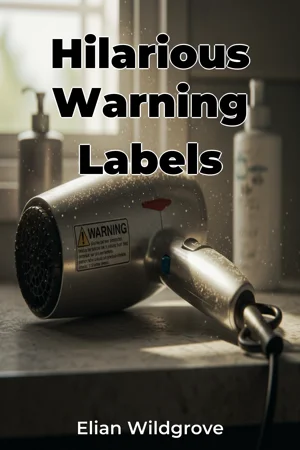
Have you ever wondered why your new hairdryer warns you not to use it while sleeping? Or why a box of Christmas lights cautions "For indoor or outdoor use only"? These seemingly absurd directives are not accidental; they are the carefully crafted products of a complex interplay between legal protection and marketing strategies. "Hilarious Warning Labels" delves into the curious world of product warnings, uncovering the motives behind labeling practices that often appear to state the obvious or defy common sense. This book explores two key topics: the legal landscape that compels companies to issue detailed warnings and the marketing considerations that influence the wording and placement of these labels. Understanding these factors provides insight into the risks that corporations seek to mitigate and the way they communicate those risks to consumers. These topics are crucial because they reflect a larger discussion about responsibility, liability, and the balance between protecting consumers and shielding businesses from litigation. The evolution of product liability law is essential to understanding the current prevalence of verbose warning labels. Landmark cases and changing legal standards have created an environment where companies face substantial financial risk if they fail to adequately warn consumers about potential hazards, even those that seem apparent. This legal pressure intersects with marketing concerns, as companies attempt to convey necessary warnings without alarming potential customers or damaging their brand image. The central argument of "Hilarious Warning Labels" is that the proliferation of nonsensical or excessively cautious warning labels is a direct consequence of the tension between legal risk aversion and marketing imperatives. This argument is important because it reveals how legal and business considerations shape consumer information in ways that are often counterintuitive and sometimes comical. The book begins by introducing the core concepts of product liability law and marketing risk communication. It then examines specific examples of warning labels across various product categories. Major sections include: a) The Legal Imperative: Exploring the legal framework that demands comprehensive warnings and the potential costs of non-compliance. b) The Marketing Minefield: Discussing how companies balance legal requirements with the need to maintain a positive brand image. c) The Absurdity Spectrum: Analyzing a wide range of labels, from repetitive directives to comical cautions, and categorizing them according to their underlying motivations. Evidence presented in "Hilarious Warning Labels" includes a compilation of actual warning labels collected from a variety of products, analyses of relevant court cases, and insights from interviews with legal and marketing professionals. The book also draws upon data from consumer behavior studies to examine how people perceive and react to different types of warnings. The book connects to several fields, including law, marketing, and consumer psychology. An understanding of legal principles is necessary to grasp the motivations behind elaborate warnings, while marketing theory illuminates the strategies companies use to mitigate risk and maintain consumer trust. Consumer psychology offers insights into how individuals process information and make decisions based on product labeling. What sets this book apart is its unique approach to analyzing warning labels not just as legal necessities but as cultural artifacts that reflect the anxieties and contradictions of modern society. It offers a critical yet humorous perspective on the way corporations communicate risk and shape consumer behavior. The writing is accessible and engaging, blending factual information with humorous anecdotes and real-world examples. The tone is conversational, aiming to inform and entertain readers while avoiding overly technical or academic jargon. "Hilarious Warning Labels" is intended for a broad audience, including business professionals, legal scholars, students, and anyone interested in the intersection of law, marketing, and consumer behavior. The book is valuable to those seeking to understand the complex factors that influence product labeling and the broader implications for corporate responsibility and consumer protection. The book focuses primarily on warning labels in the United States, acknowledging that legal and cultural contexts may vary in other countries. Future studies could expand the scope to include international comparisons. The information in this book can be applied practically by business owners seeking to develop effective warning labels that meet legal requirements and protect their brand image. It also empowers consumers to critically evaluate product warnings and make informed purchasing decisions. While most agree on the need for consumer safety, there is ongoing debate about how to balance this goal with the interests of businesses and the potential for frivolous lawsuits. "Hilarious Warning Labels" contributes to this conversation by shedding light on the complex forces that shape the messages we see on product packaging every day.
Have you ever wondered why your new hairdryer warns you not to use it while sleeping? Or why a box of Christmas lights cautions "For indoor or outdoor use only"? These seemingly absurd directives are not accidental; they are the carefully crafted products of a complex interplay between legal protection and marketing strategies. "Hilarious Warning Labels" delves into the curious world of product warnings, uncovering the motives behind labeling practices that often appear to state the obvious or defy common sense. This book explores two key topics: the legal landscape that compels companies to issue detailed warnings and the marketing considerations that influence the wording and placement of these labels. Understanding these factors provides insight into the risks that corporations seek to mitigate and the way they communicate those risks to consumers. These topics are crucial because they reflect a larger discussion about responsibility, liability, and the balance between protecting consumers and shielding businesses from litigation. The evolution of product liability law is essential to understanding the current prevalence of verbose warning labels. Landmark cases and changing legal standards have created an environment where companies face substantial financial risk if they fail to adequately warn consumers about potential hazards, even those that seem apparent. This legal pressure intersects with marketing concerns, as companies attempt to convey necessary warnings without alarming potential customers or damaging their brand image. The central argument of "Hilarious Warning Labels" is that the proliferation of nonsensical or excessively cautious warning labels is a direct consequence of the tension between legal risk aversion and marketing imperatives. This argument is important because it reveals how legal and business considerations shape consumer information in ways that are often counterintuitive and sometimes comical. The book begins by introducing the core concepts of product liability law and marketing risk communication. It then examines specific examples of warning labels across various product categories. Major sections include: a) The Legal Imperative: Exploring the legal framework that demands comprehensive warnings and the potential costs of non-compliance. b) The Marketing Minefield: Discussing how companies balance legal requirements with the need to maintain a positive brand image. c) The Absurdity Spectrum: Analyzing a wide range of labels, from repetitive directives to comical cautions, and categorizing them according to their underlying motivations. Evidence presented in "Hilarious Warning Labels" includes a compilation of actual warning labels collected from a variety of products, analyses of relevant court cases, and insights from interviews with legal and marketing professionals. The book also draws upon data from consumer behavior studies to examine how people perceive and react to different types of warnings. The book connects to several fields, including law, marketing, and consumer psychology. An understanding of legal principles is necessary to grasp the motivations behind elaborate warnings, while marketing theory illuminates the strategies companies use to mitigate risk and maintain consumer trust. Consumer psychology offers insights into how individuals process information and make decisions based on product labeling. What sets this book apart is its unique approach to analyzing warning labels not just as legal necessities but as cultural artifacts that reflect the anxieties and contradictions of modern society. It offers a critical yet humorous perspective on the way corporations communicate risk and shape consumer behavior. The writing is accessible and engaging, blending factual information with humorous anecdotes and real-world examples. The tone is conversational, aiming to inform and entertain readers while avoiding overly technical or academic jargon. "Hilarious Warning Labels" is intended for a broad audience, including business professionals, legal scholars, students, and anyone interested in the intersection of law, marketing, and consumer behavior. The book is valuable to those seeking to understand the complex factors that influence product labeling and the broader implications for corporate responsibility and consumer protection. The book focuses primarily on warning labels in the United States, acknowledging that legal and cultural contexts may vary in other countries. Future studies could expand the scope to include international comparisons. The information in this book can be applied practically by business owners seeking to develop effective warning labels that meet legal requirements and protect their brand image. It also empowers consumers to critically evaluate product warnings and make informed purchasing decisions. While most agree on the need for consumer safety, there is ongoing debate about how to balance this goal with the interests of businesses and the potential for frivolous lawsuits. "Hilarious Warning Labels" contributes to this conversation by shedding light on the complex forces that shape the messages we see on product packaging every day.
"Hilarious Warning Labels" explores the often-comical world of product warnings, revealing the tension between legal risk aversion and marketing tactics. Have you ever wondered why your hairdryer warns against use while sleeping or why Christmas lights specify "indoor or outdoor use only?" These seemingly absurd directives stem from companies navigating product liability law while striving to maintain a positive brand image. The book uniquely analyzes these labels as cultural artifacts, reflecting societal anxieties about risk and responsibility. The book delves into the evolution of product liability law, highlighting how landmark cases have led to increasingly verbose warnings. It also examines how companies balance legal requirements with marketing concerns, attempting to convey necessary information without scaring off consumers. Drawing on real-world examples, court cases, and interviews with legal and marketing professionals, "Hilarious Warning Labels" examines how legal and business considerations shape consumer information. The book begins by introducing core concepts of product liability law and marketing risk communication, proceeding to examine specific warning label examples across product categories. Major sections explore the legal imperative, the marketing minefield, and the spectrum of absurdity in warning labels. It offers a critical yet humorous perspective, making it valuable for business professionals, legal scholars, and anyone intrigued by the intersection of law, marketing, and consumer behavior.
Book Details
ISBN
9788235269997
Publisher
Publifye AS
Your Licenses
You don't own any licenses for this book
Purchase a license below to unlock this book and download the EPUB.
Purchase License
Select a tier to unlock this book
Need bulk licensing?
Contact us for enterprise agreements.