
About This Book
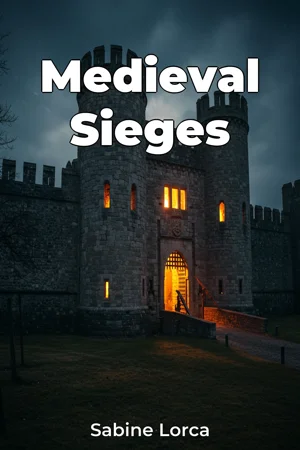
How did medieval armies breach seemingly impregnable fortresses? "Medieval Sieges" delves into the brutal realities of siege warfare from approximately 500 to 1500 AD, examining the strategies, technologies, and human cost associated with these pivotal conflicts. This book dissects not only the clash of arms but also the insidious roles of starvation, disease, and psychological manipulation in determining the outcomes of these protracted engagements. Understanding these multifaceted aspects of medieval sieges provides crucial insight into the dynamics of power, the evolution of military technology, and the social fabric of the era. The book's core focus lies in three significant areas: siege tactics and engineering, defensive innovations, and the impact of siege conditions on both besiegers and besieged. Siege tactics encompass the design and deployment of various siege engines, such as trebuchets, catapults, and battering rams, alongside the crucial roles of mining, tunneling, and scaling walls. Defensive innovations explore the architectural and technological responses to these offensive measures, including the development of concentric castles, machicolations, and improved gatehouse designs. The exploration of starvation, disease, and psychological warfare reveals the grim human realities of prolonged sieges, highlighting their ability to erode morale, decimate populations, and ultimately decide the fate of cities and their inhabitants. The narrative unfolds against the backdrop of shifting political landscapes, technological advancements, and evolving social structures. The book will reference specific historical examples, such as the sieges of Constantinople, Acre, and Orleans, to illustrate these concepts. These examples will serve as case studies, revealing the interplay between offensive and defensive strategies, logistical challenges, and the psychological toll on combatants and civilians alike. The central argument of "Medieval Sieges" is that the outcome of a siege was rarely determined solely by brute force. Success depended equally on logistical planning, engineering prowess, and the ability to exploit vulnerabilities in the enemy's defenses and morale. By analyzing these often-overlooked factors, the book offers a more nuanced understanding of siege warfare than traditional accounts that focus solely on battles and heroic figures. The book is structured to provide a comprehensive exploration of the subject. It begins by introducing the fundamental principles of medieval siege warfare, then systematically examines the various offensive and defensive technologies employed. Subsequent chapters analyze the impact of starvation and disease, and the role of psychological warfare tactics, before concluding with an assessment of the long-term consequences of sieges on medieval society. Primary source accounts, archaeological evidence, and contemporary illustrations will be used throughout to support the analysis and provide a vivid portrayal of the siege experience. The book will discuss specific fortifications and their design and construction, referencing the archaeological research and historical accounts concerning these fortifications. This book connects to other fields such as archaeology, sociology, and political science by considering the impact of sieges on the physical environment, social structures, and political power dynamics of the medieval world. It offers a distinctive perspective by integrating military history with social and cultural history, moving beyond a purely technical analysis of siege warfare to explore its broader human dimensions. The tone of the book is scholarly yet accessible, avoiding technical jargon while maintaining historical accuracy. It is intended for military history enthusiasts, students of medieval history, and general readers interested in learning more about this critical aspect of medieval warfare. While the book covers a broad geographical area, its primary focus is on sieges in Europe and the Near East. The book avoids speculation and focuses on verifiable historical data. Readers of "Medieval Sieges" will gain a deeper appreciation for the complexities of medieval warfare and the ingenuity of both attackers and defenders, as well as the long-lasting impact of these conflicts on the societies that endured them. The book will also clarify certain common misconceptions about siege warfare, presenting the nuanced picture of the strategies and realities of military action in the era.
How did medieval armies breach seemingly impregnable fortresses? "Medieval Sieges" delves into the brutal realities of siege warfare from approximately 500 to 1500 AD, examining the strategies, technologies, and human cost associated with these pivotal conflicts. This book dissects not only the clash of arms but also the insidious roles of starvation, disease, and psychological manipulation in determining the outcomes of these protracted engagements. Understanding these multifaceted aspects of medieval sieges provides crucial insight into the dynamics of power, the evolution of military technology, and the social fabric of the era. The book's core focus lies in three significant areas: siege tactics and engineering, defensive innovations, and the impact of siege conditions on both besiegers and besieged. Siege tactics encompass the design and deployment of various siege engines, such as trebuchets, catapults, and battering rams, alongside the crucial roles of mining, tunneling, and scaling walls. Defensive innovations explore the architectural and technological responses to these offensive measures, including the development of concentric castles, machicolations, and improved gatehouse designs. The exploration of starvation, disease, and psychological warfare reveals the grim human realities of prolonged sieges, highlighting their ability to erode morale, decimate populations, and ultimately decide the fate of cities and their inhabitants. The narrative unfolds against the backdrop of shifting political landscapes, technological advancements, and evolving social structures. The book will reference specific historical examples, such as the sieges of Constantinople, Acre, and Orleans, to illustrate these concepts. These examples will serve as case studies, revealing the interplay between offensive and defensive strategies, logistical challenges, and the psychological toll on combatants and civilians alike. The central argument of "Medieval Sieges" is that the outcome of a siege was rarely determined solely by brute force. Success depended equally on logistical planning, engineering prowess, and the ability to exploit vulnerabilities in the enemy's defenses and morale. By analyzing these often-overlooked factors, the book offers a more nuanced understanding of siege warfare than traditional accounts that focus solely on battles and heroic figures. The book is structured to provide a comprehensive exploration of the subject. It begins by introducing the fundamental principles of medieval siege warfare, then systematically examines the various offensive and defensive technologies employed. Subsequent chapters analyze the impact of starvation and disease, and the role of psychological warfare tactics, before concluding with an assessment of the long-term consequences of sieges on medieval society. Primary source accounts, archaeological evidence, and contemporary illustrations will be used throughout to support the analysis and provide a vivid portrayal of the siege experience. The book will discuss specific fortifications and their design and construction, referencing the archaeological research and historical accounts concerning these fortifications. This book connects to other fields such as archaeology, sociology, and political science by considering the impact of sieges on the physical environment, social structures, and political power dynamics of the medieval world. It offers a distinctive perspective by integrating military history with social and cultural history, moving beyond a purely technical analysis of siege warfare to explore its broader human dimensions. The tone of the book is scholarly yet accessible, avoiding technical jargon while maintaining historical accuracy. It is intended for military history enthusiasts, students of medieval history, and general readers interested in learning more about this critical aspect of medieval warfare. While the book covers a broad geographical area, its primary focus is on sieges in Europe and the Near East. The book avoids speculation and focuses on verifiable historical data. Readers of "Medieval Sieges" will gain a deeper appreciation for the complexities of medieval warfare and the ingenuity of both attackers and defenders, as well as the long-lasting impact of these conflicts on the societies that endured them. The book will also clarify certain common misconceptions about siege warfare, presenting the nuanced picture of the strategies and realities of military action in the era.
Medieval sieges, a critical aspect of military history, involved more than just brute force. From 500 to 1500 AD, siege warfare was a complex interplay of strategy, technology, and psychology. The success of a siege depended on logistical planning, engineering prowess, and exploiting vulnerabilities in the enemy's defenses. Starvation, disease, and psychological tactics were as crucial as battering rams and trebuchets in determining the outcome of these conflicts. "Medieval Sieges" explores the multifaceted nature of these engagements. It delves into siege tactics and engineering, defensive innovations like concentric castles, and the grim realities of starvation and disease. Specific historical examples, such as the sieges of Constantinople, Acre, and Orleans, illustrate the interplay between offensive and defensive strategies. The book progresses from fundamental principles to offensive and defensive technologies, psychological warfare, and long-term societal consequences. The book uncovers how sieges influenced military technology, power dynamics, and the social fabric of the era. It integrates military history with social and cultural history, providing a nuanced understanding of siege warfare, emphasizing the human dimensions of these prolonged and brutal conflicts.
Book Details
ISBN
9788235269959
Publisher
Publifye AS
Your Licenses
You don't own any licenses for this book
Purchase a license below to unlock this book and download the EPUB.
Purchase License
Select a tier to unlock this book
Need bulk licensing?
Contact us for enterprise agreements.