
About This Book
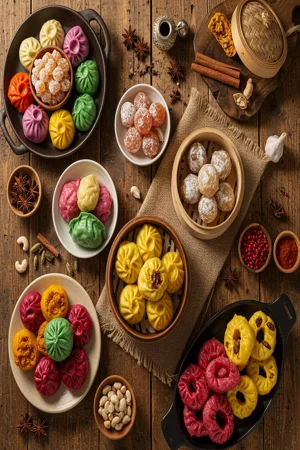
Have you ever wondered how a simple dish can tell the story of generations, weaving together cultural traditions, historical events, and community bonds? "Festive Foods" explores the rich tapestry of global celebrations through the lens of their most iconic dishes, revealing the stories behind the flavors that unite families and communities. This book examines how culinary traditions evolve, adapt, and persist across centuries and continents, offering insights into the diverse ways humans express joy, gratitude, and remembrance through food. "Festive Foods" investigates the significance of holiday meals in shaping cultural identity and preserving collective memory. We’ll delve into the historical context of specific celebratory foods, examining their origins, evolution, and symbolic meanings. Further, the book explores how these culinary traditions reflect social structures, economic conditions, and religious beliefs. The book's central argument is that festive foods are not merely sustenance, but powerful vehicles of cultural transmission and social cohesion. These meals act as tangible links to the past, reinforcing shared values and strengthening community bonds. Examining these culinary celebrations offers a unique and insightful window into understanding human history and cultural diversity. The book will begin by introducing the concept of festive foods as cultural artifacts. We will then explore three distinct categories of celebrations: harvest festivals exemplified by Thanksgiving feasts, New Year celebrations featuring Lunar New Year dumplings, and religious observances showcased through Diwali sweets. Each section will trace the origins of these celebrations, detail the specific foods associated with them, and analyze the cultural significance embedded within each dish. Finally, the book will culminate by considering the impact of globalization on festive foods, examining how these traditions are adapting to a rapidly changing world. The evidence presented in "Festive Foods" is drawn from a variety of sources, including historical cookbooks, anthropological studies, culinary histories, and firsthand accounts. We’ll analyze recipes and menus from different eras, examine archaeological evidence of food preparation, and incorporate insights from oral histories and ethnographic research. The research methodology involves a comparative analysis of culinary traditions across different cultures and time periods. "Festive Foods" connects to numerous academic fields, including anthropology, sociology, and religious studies. By exploring the cultural significance of food, the book contributes to anthropological understandings of ritual and symbolism. By examining the social dynamics surrounding festive meals, the book informs sociological perspectives on community formation and social cohesion. Finally, by investigating the role of food in religious observances, the book offers insights into the intersection of food and religious practice. This book offers a unique perspective by focusing on the intersection of food, history, and culture, moving beyond simple recipes to explore the rich narratives embedded within each festive meal. The approach is narrative non-fiction, blending historical research with engaging storytelling to bring the subject matter to life. The primary target audience is general readers with an interest in history, culture, and food. This book would also appeal to students and scholars in related fields, as well as culinary enthusiasts seeking a deeper understanding of the history and significance of their favorite dishes. "Festive Foods" aligns with the conventions of the 'History World, World History, Cooking' genres by providing factual information, historical context, and cross-cultural comparisons presented in an accessible and engaging manner. The scope of "Festive Foods" is global, encompassing a diverse range of cultural traditions and celebrations. However, the book's focus is limited to examining the cultural significance of food within celebratory contexts, and does not include an exhaustive culinary guide on the preparation of each dish. The information presented in "Festive Foods" can be applied practically by readers to enhance their understanding of cultural diversity, enrich their own holiday celebrations, and engage in more meaningful conversations about food and tradition. By understanding the stories behind festive foods, readers can develop a deeper appreciation for the culinary traditions that shape our world. While "Festive Foods" aims to present a balanced and nuanced perspective, it acknowledges that there are ongoing debates surrounding the authenticity and appropriation of cultural foods. The book addresses these issues by promoting cultural sensitivity and encouraging readers to engage with these traditions in a respectful and informed manner.
Have you ever wondered how a simple dish can tell the story of generations, weaving together cultural traditions, historical events, and community bonds? "Festive Foods" explores the rich tapestry of global celebrations through the lens of their most iconic dishes, revealing the stories behind the flavors that unite families and communities. This book examines how culinary traditions evolve, adapt, and persist across centuries and continents, offering insights into the diverse ways humans express joy, gratitude, and remembrance through food. "Festive Foods" investigates the significance of holiday meals in shaping cultural identity and preserving collective memory. We’ll delve into the historical context of specific celebratory foods, examining their origins, evolution, and symbolic meanings. Further, the book explores how these culinary traditions reflect social structures, economic conditions, and religious beliefs. The book's central argument is that festive foods are not merely sustenance, but powerful vehicles of cultural transmission and social cohesion. These meals act as tangible links to the past, reinforcing shared values and strengthening community bonds. Examining these culinary celebrations offers a unique and insightful window into understanding human history and cultural diversity. The book will begin by introducing the concept of festive foods as cultural artifacts. We will then explore three distinct categories of celebrations: harvest festivals exemplified by Thanksgiving feasts, New Year celebrations featuring Lunar New Year dumplings, and religious observances showcased through Diwali sweets. Each section will trace the origins of these celebrations, detail the specific foods associated with them, and analyze the cultural significance embedded within each dish. Finally, the book will culminate by considering the impact of globalization on festive foods, examining how these traditions are adapting to a rapidly changing world. The evidence presented in "Festive Foods" is drawn from a variety of sources, including historical cookbooks, anthropological studies, culinary histories, and firsthand accounts. We’ll analyze recipes and menus from different eras, examine archaeological evidence of food preparation, and incorporate insights from oral histories and ethnographic research. The research methodology involves a comparative analysis of culinary traditions across different cultures and time periods. "Festive Foods" connects to numerous academic fields, including anthropology, sociology, and religious studies. By exploring the cultural significance of food, the book contributes to anthropological understandings of ritual and symbolism. By examining the social dynamics surrounding festive meals, the book informs sociological perspectives on community formation and social cohesion. Finally, by investigating the role of food in religious observances, the book offers insights into the intersection of food and religious practice. This book offers a unique perspective by focusing on the intersection of food, history, and culture, moving beyond simple recipes to explore the rich narratives embedded within each festive meal. The approach is narrative non-fiction, blending historical research with engaging storytelling to bring the subject matter to life. The primary target audience is general readers with an interest in history, culture, and food. This book would also appeal to students and scholars in related fields, as well as culinary enthusiasts seeking a deeper understanding of the history and significance of their favorite dishes. "Festive Foods" aligns with the conventions of the 'History World, World History, Cooking' genres by providing factual information, historical context, and cross-cultural comparisons presented in an accessible and engaging manner. The scope of "Festive Foods" is global, encompassing a diverse range of cultural traditions and celebrations. However, the book's focus is limited to examining the cultural significance of food within celebratory contexts, and does not include an exhaustive culinary guide on the preparation of each dish. The information presented in "Festive Foods" can be applied practically by readers to enhance their understanding of cultural diversity, enrich their own holiday celebrations, and engage in more meaningful conversations about food and tradition. By understanding the stories behind festive foods, readers can develop a deeper appreciation for the culinary traditions that shape our world. While "Festive Foods" aims to present a balanced and nuanced perspective, it acknowledges that there are ongoing debates surrounding the authenticity and appropriation of cultural foods. The book addresses these issues by promoting cultural sensitivity and encouraging readers to engage with these traditions in a respectful and informed manner.
"Festive Foods" explores the fascinating intersection of food, history, and culture, revealing how celebratory dishes embody generations of cultural traditions and historical events. The book argues that these foods are more than just sustenance; they are powerful vehicles for transmitting cultural values and strengthening community bonds. For instance, holiday meals often act as tangible links to the past, reinforcing shared values. The book examines the origins, evolution, and symbolic meanings of festive foods across different cultures, from Thanksgiving feasts to Lunar New Year dumplings and Diwali sweets. It's approach blends historical research with engaging storytelling, making complex concepts accessible. The book progresses by introducing festive foods as cultural artifacts, then exploring celebrations categorized by harvest festivals, New Year celebrations, and religious observances. Ultimately, "Festive Foods" offers a unique perspective on world history, demonstrating how culinary traditions reflect social structures, economic conditions, and religious beliefs. By understanding the stories behind these dishes, readers gain a deeper appreciation for cultural diversity and the culinary traditions that shape our world.
Book Details
ISBN
9788235269836
Publisher
Publifye AS
Your Licenses
You don't own any licenses for this book
Purchase a license below to unlock this book and download the EPUB.
Purchase License
Select a tier to unlock this book
Need bulk licensing?
Contact us for enterprise agreements.