
About This Book
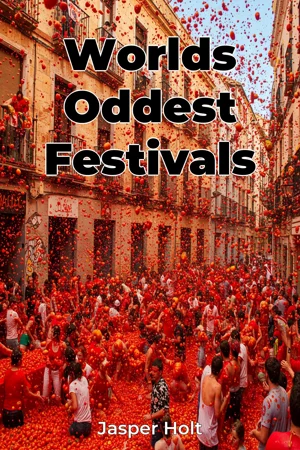
Have you ever wondered why people willingly throw tomatoes at each other or jump over bonfires? This book, "Worlds Oddest Festivals," delves into the origins, practices, and meanings behind some of the planet's most peculiar and intriguing celebrations. We will examine the cultural tapestry of humanity through the lens of its most unusual traditions, offering insights into history, anthropology, and the shared human experience. Two key topics explored are the historical contexts shaping these festivals and the anthropological significance they hold for the communities involved. Understanding the historical roots – be they religious, agricultural, or commemorative – allows us to appreciate the evolution of these events. Analyzing their anthropological relevance reveals their role in reinforcing social structures, expressing collective identities, and providing outlets for cultural expression. These topics are important because they challenge our preconceptions about ritual and celebration, prompting us to consider the diverse ways humans create meaning and connection. The book provides the context to understand that many festivals are rooted in ancient rituals tied to agricultural cycles and religious beliefs. Prior knowledge of basic world history and cultural anthropology is helpful, but not required, as these concepts will be explained throughout the book. Our central argument is that these so-called “odd” festivals are not merely bizarre anomalies, but rather vital expressions of cultural identity and historical memory, offering valuable insights into the human condition. We aim to demonstrate that by studying these unique events, we can gain a deeper understanding of the values, beliefs, and social structures of the cultures that celebrate them. The book begins by introducing the core concepts of cultural anthropology and festival studies. We then explore specific festivals across different regions, grouped thematically such as 'Festivals of Chaos and Mockery', 'Festivals of Remembrance and the Dead', and 'Festivals of Endurance and Pain'. Each section will examine the history, rituals, and contemporary significance of selected festivals. The book culminates in a discussion of the broader implications of these celebrations for understanding cultural diversity and the persistence of tradition in a rapidly changing world. Finally, we'll explore how to appreciate and approach seemingly foreign celebrations with respect and understanding. The evidence presented is drawn from a variety of sources, including historical records, ethnographic studies, and firsthand accounts. We will incorporate visual elements, such as photographs and illustrations, to enhance the reader's understanding and engagement. Primary source materials will be analyzed to provide a nuanced and accurate portrayal of each festival's cultural significance. This book connects to several disciplines beyond world history and anthropology. It touches upon sociology by examining social structures and group dynamics within festival contexts. Mythology and folklore are also relevant, as many festivals are rooted in ancient myths and legends. The book’s value is enhanced through these connections. "Worlds Oddest Festivals" offers a fresh perspective by moving beyond superficial descriptions to explore the underlying cultural logic of these celebrations. It combines rigorous research with engaging storytelling, making complex anthropological concepts accessible to a broad audience. The writing style balances scholarly rigor with an accessible and engaging narrative. The tone is informative and respectful, aiming to foster curiosity and understanding rather than sensationalism. The target audience includes general readers interested in world cultures, history enthusiasts, students of anthropology and sociology, and travelers seeking authentic cultural experiences. The book would be valuable to them because it offers a unique window into the diversity of human experience. As a work of non-fiction, "Worlds Oddest Festivals" adheres to principles of accuracy, objectivity, and source citation. It also embraces the genre's capacity for engaging storytelling and vivid description. The scope of the book encompasses a global selection of festivals, representing diverse cultures and historical periods. While we strive for broad coverage, it is impossible to include every unusual festival worldwide. The information in this book can be applied practically by travelers seeking to engage with different cultures respectfully and authentically. It can also be used by educators looking for engaging examples of cultural diversity for their students. While exploring these festivals, we will touch upon controversies surrounding cultural appropriation and the ethical considerations in documenting and participating in cultural events. The book addresses these issues with sensitivity and awareness.
Have you ever wondered why people willingly throw tomatoes at each other or jump over bonfires? This book, "Worlds Oddest Festivals," delves into the origins, practices, and meanings behind some of the planet's most peculiar and intriguing celebrations. We will examine the cultural tapestry of humanity through the lens of its most unusual traditions, offering insights into history, anthropology, and the shared human experience. Two key topics explored are the historical contexts shaping these festivals and the anthropological significance they hold for the communities involved. Understanding the historical roots – be they religious, agricultural, or commemorative – allows us to appreciate the evolution of these events. Analyzing their anthropological relevance reveals their role in reinforcing social structures, expressing collective identities, and providing outlets for cultural expression. These topics are important because they challenge our preconceptions about ritual and celebration, prompting us to consider the diverse ways humans create meaning and connection. The book provides the context to understand that many festivals are rooted in ancient rituals tied to agricultural cycles and religious beliefs. Prior knowledge of basic world history and cultural anthropology is helpful, but not required, as these concepts will be explained throughout the book. Our central argument is that these so-called “odd” festivals are not merely bizarre anomalies, but rather vital expressions of cultural identity and historical memory, offering valuable insights into the human condition. We aim to demonstrate that by studying these unique events, we can gain a deeper understanding of the values, beliefs, and social structures of the cultures that celebrate them. The book begins by introducing the core concepts of cultural anthropology and festival studies. We then explore specific festivals across different regions, grouped thematically such as 'Festivals of Chaos and Mockery', 'Festivals of Remembrance and the Dead', and 'Festivals of Endurance and Pain'. Each section will examine the history, rituals, and contemporary significance of selected festivals. The book culminates in a discussion of the broader implications of these celebrations for understanding cultural diversity and the persistence of tradition in a rapidly changing world. Finally, we'll explore how to appreciate and approach seemingly foreign celebrations with respect and understanding. The evidence presented is drawn from a variety of sources, including historical records, ethnographic studies, and firsthand accounts. We will incorporate visual elements, such as photographs and illustrations, to enhance the reader's understanding and engagement. Primary source materials will be analyzed to provide a nuanced and accurate portrayal of each festival's cultural significance. This book connects to several disciplines beyond world history and anthropology. It touches upon sociology by examining social structures and group dynamics within festival contexts. Mythology and folklore are also relevant, as many festivals are rooted in ancient myths and legends. The book’s value is enhanced through these connections. "Worlds Oddest Festivals" offers a fresh perspective by moving beyond superficial descriptions to explore the underlying cultural logic of these celebrations. It combines rigorous research with engaging storytelling, making complex anthropological concepts accessible to a broad audience. The writing style balances scholarly rigor with an accessible and engaging narrative. The tone is informative and respectful, aiming to foster curiosity and understanding rather than sensationalism. The target audience includes general readers interested in world cultures, history enthusiasts, students of anthropology and sociology, and travelers seeking authentic cultural experiences. The book would be valuable to them because it offers a unique window into the diversity of human experience. As a work of non-fiction, "Worlds Oddest Festivals" adheres to principles of accuracy, objectivity, and source citation. It also embraces the genre's capacity for engaging storytelling and vivid description. The scope of the book encompasses a global selection of festivals, representing diverse cultures and historical periods. While we strive for broad coverage, it is impossible to include every unusual festival worldwide. The information in this book can be applied practically by travelers seeking to engage with different cultures respectfully and authentically. It can also be used by educators looking for engaging examples of cultural diversity for their students. While exploring these festivals, we will touch upon controversies surrounding cultural appropriation and the ethical considerations in documenting and participating in cultural events. The book addresses these issues with sensitivity and awareness.
"Worlds Oddest Festivals" explores the fascinating world of unusual celebrations, offering a unique lens through which to understand diverse cultures and world history. It delves into the origins and meanings behind peculiar traditions, revealing insights into cultural anthropology and the shared human experience. Many of these so-called "odd" festivals are actually rooted in ancient rituals, often tied to agricultural cycles or religious beliefs. These events play a vital role in reinforcing social structures and expressing collective identities, demonstrating how humans create meaning and connection through ritual. The book examines festivals across different regions, grouped thematically, such as those focused on chaos, remembrance, or endurance. By studying these unique events, readers can gain a deeper understanding of the values, beliefs, and social structures of the cultures that celebrate them. "Worlds Oddest Festivals" doesn't just describe these events; it explores the underlying cultural logic that makes them so significant. The book progresses from introducing core anthropological concepts to exploring specific festivals and culminates in a discussion of their broader implications for understanding cultural diversity in the modern world.
Book Details
ISBN
9788235269553
Publisher
Publifye AS
Your Licenses
You don't own any licenses for this book
Purchase a license below to unlock this book and download the EPUB.
Purchase License
Select a tier to unlock this book
Need bulk licensing?
Contact us for enterprise agreements.