
About This Book
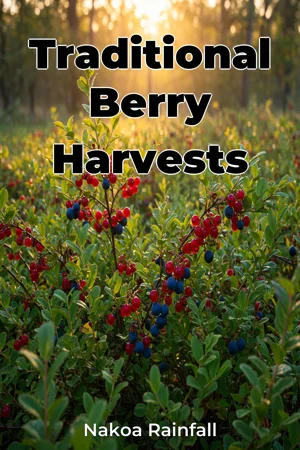
Have you ever wondered how indigenous communities thrived for centuries, utilizing the natural world around them in sustainable and ingenious ways? "Traditional Berry Harvests" unveils the profound knowledge and sophisticated practices of indigenous groups in cultivating, harvesting, and preserving berries – not merely as a food source, but as integral components of their medicine, dyes, and cultural identity. This book explores the historical depth and ecological significance of these traditions. This book focuses on three key topics: the horticultural techniques employed by indigenous peoples, the diverse applications of berries beyond sustenance, and the cultural and spiritual significance interwoven with berry harvests. These topics are vital because they offer insights into sustainable living, highlight the interconnectedness between humans and the environment, and preserve the legacy of indigenous wisdom, which is increasingly relevant in our modern world. Understanding the context behind these practices requires delving into the historical relationship between indigenous communities and their environments. For millennia, these groups observed, experimented, and refined their methods for managing berry populations, often employing techniques like controlled burns, selective pruning, and companion planting. This accumulated knowledge was passed down through generations, forming a complex system of resource management. The central argument of "Traditional Berry Harvests" is that indigenous berry harvesting traditions represent a holistic system of knowledge encompassing ecological stewardship, practical skills, and cultural values. This argument is crucial because recognizing the depth and sophistication of these traditions challenges conventional narratives of indigenous peoples and offers valuable lessons for contemporary sustainability efforts. The book is structured to guide the reader through a comprehensive exploration of traditional berry harvests. First, it introduces the various berry species and regions covered, highlighting the unique ecological contexts. It then develops the core ideas through three major sections. The first section examines the cultivation and harvesting techniques, detailing the specific methods used to enhance berry yields while maintaining ecological balance. The second section explores the diverse applications of berries - their use as medicines to treat illnesses, as dyes to create vibrant textiles and artwork, and as essential food staples. The third section investigates the cultural and spiritual dimensions of berry harvests, exploring the ceremonies, stories, and social structures associated with these practices. Finally, the book culminates by discussing the contemporary relevance of indigenous berry harvesting traditions, exploring their potential applications in sustainable agriculture, conservation efforts, and cultural preservation. "Traditional Berry Harvests" draws upon a range of evidence, including ethnobotanical studies, archaeological records, oral histories, and contemporary community-based research. Unique data sources include detailed documentation of traditional harvesting practices, analyses of berry composition and medicinal properties, and firsthand accounts from indigenous elders and knowledge keepers. This book connects to a broad range of disciplines, including botany, anthropology, and environmental studies. The botanical perspective provides insights into the plant biology and ecological interactions of berry species. The anthropological lens illuminates the cultural and social contexts of berry harvesting practices. The connection to environmental studies highlights the sustainability aspects of indigenous traditions and their relevance to contemporary conservation efforts. What distinguishes this book is its emphasis on the holistic nature of indigenous berry harvesting traditions, recognizing them as interconnected systems of knowledge, practice, and belief. The tone is respectful, informative, and engaging, aiming to present complex information in an accessible and compelling manner. The target audience includes ethnobotanists, environmental scientists, historians, indigenous community members, and anyone interested in sustainable living and cultural preservation. As a non-fiction history and nature book, "Traditional Berry Harvests" adheres to principles of accuracy, objectivity, and evidence-based analysis. The scope of this book encompasses a variety of indigenous groups across North America, focusing on specific case studies that illustrate the diversity and ingenuity of their berry harvesting traditions. The book does not aim to provide an exhaustive account of every indigenous group's practices but rather to offer a representative overview of key themes and concepts. The information presented can be applied practically by readers interested in learning about sustainable food systems, supporting indigenous communities, and incorporating traditional ecological knowledge into their own lives. While the book celebrates the ingenuity and sustainability of indigenous berry harvesting traditions, it also acknowledges the historical injustices and contemporary challenges faced by indigenous communities, including land dispossession, cultural appropriation, and climate change. It addresses these issues with sensitivity and respect, advocating for collaborative solutions that prioritize indigenous self-determination and environmental justice.
Have you ever wondered how indigenous communities thrived for centuries, utilizing the natural world around them in sustainable and ingenious ways? "Traditional Berry Harvests" unveils the profound knowledge and sophisticated practices of indigenous groups in cultivating, harvesting, and preserving berries – not merely as a food source, but as integral components of their medicine, dyes, and cultural identity. This book explores the historical depth and ecological significance of these traditions. This book focuses on three key topics: the horticultural techniques employed by indigenous peoples, the diverse applications of berries beyond sustenance, and the cultural and spiritual significance interwoven with berry harvests. These topics are vital because they offer insights into sustainable living, highlight the interconnectedness between humans and the environment, and preserve the legacy of indigenous wisdom, which is increasingly relevant in our modern world. Understanding the context behind these practices requires delving into the historical relationship between indigenous communities and their environments. For millennia, these groups observed, experimented, and refined their methods for managing berry populations, often employing techniques like controlled burns, selective pruning, and companion planting. This accumulated knowledge was passed down through generations, forming a complex system of resource management. The central argument of "Traditional Berry Harvests" is that indigenous berry harvesting traditions represent a holistic system of knowledge encompassing ecological stewardship, practical skills, and cultural values. This argument is crucial because recognizing the depth and sophistication of these traditions challenges conventional narratives of indigenous peoples and offers valuable lessons for contemporary sustainability efforts. The book is structured to guide the reader through a comprehensive exploration of traditional berry harvests. First, it introduces the various berry species and regions covered, highlighting the unique ecological contexts. It then develops the core ideas through three major sections. The first section examines the cultivation and harvesting techniques, detailing the specific methods used to enhance berry yields while maintaining ecological balance. The second section explores the diverse applications of berries - their use as medicines to treat illnesses, as dyes to create vibrant textiles and artwork, and as essential food staples. The third section investigates the cultural and spiritual dimensions of berry harvests, exploring the ceremonies, stories, and social structures associated with these practices. Finally, the book culminates by discussing the contemporary relevance of indigenous berry harvesting traditions, exploring their potential applications in sustainable agriculture, conservation efforts, and cultural preservation. "Traditional Berry Harvests" draws upon a range of evidence, including ethnobotanical studies, archaeological records, oral histories, and contemporary community-based research. Unique data sources include detailed documentation of traditional harvesting practices, analyses of berry composition and medicinal properties, and firsthand accounts from indigenous elders and knowledge keepers. This book connects to a broad range of disciplines, including botany, anthropology, and environmental studies. The botanical perspective provides insights into the plant biology and ecological interactions of berry species. The anthropological lens illuminates the cultural and social contexts of berry harvesting practices. The connection to environmental studies highlights the sustainability aspects of indigenous traditions and their relevance to contemporary conservation efforts. What distinguishes this book is its emphasis on the holistic nature of indigenous berry harvesting traditions, recognizing them as interconnected systems of knowledge, practice, and belief. The tone is respectful, informative, and engaging, aiming to present complex information in an accessible and compelling manner. The target audience includes ethnobotanists, environmental scientists, historians, indigenous community members, and anyone interested in sustainable living and cultural preservation. As a non-fiction history and nature book, "Traditional Berry Harvests" adheres to principles of accuracy, objectivity, and evidence-based analysis. The scope of this book encompasses a variety of indigenous groups across North America, focusing on specific case studies that illustrate the diversity and ingenuity of their berry harvesting traditions. The book does not aim to provide an exhaustive account of every indigenous group's practices but rather to offer a representative overview of key themes and concepts. The information presented can be applied practically by readers interested in learning about sustainable food systems, supporting indigenous communities, and incorporating traditional ecological knowledge into their own lives. While the book celebrates the ingenuity and sustainability of indigenous berry harvesting traditions, it also acknowledges the historical injustices and contemporary challenges faced by indigenous communities, including land dispossession, cultural appropriation, and climate change. It addresses these issues with sensitivity and respect, advocating for collaborative solutions that prioritize indigenous self-determination and environmental justice.
"Traditional Berry Harvests" explores the sophisticated and sustainable practices of indigenous communities in North America regarding berry cultivation, harvesting, and preservation. More than just a food source, berries were integral to medicine, dyes, and cultural identity. The book emphasizes the historical depth and ecological significance of these traditions, revealing how indigenous groups managed berry populations through techniques like controlled burns and selective pruning, demonstrating a deep understanding of ecological stewardship. The book uniquely emphasizes the holistic nature of indigenous berry harvesting, viewing it as an interconnected system of knowledge, practice, and belief. It progresses through an introduction of berry species and regions, followed by sections on cultivation techniques, diverse applications of berries (medicinal, dyes, food), and the cultural/spiritual dimensions of harvests. Ultimately, the book connects these traditions to contemporary relevance in sustainable agriculture and cultural preservation, highlighting the potential for applying indigenous knowledge in our modern world.
Book Details
ISBN
9788235269331
Publisher
Publifye AS
Your Licenses
You don't own any licenses for this book
Purchase a license below to unlock this book and download the EPUB.
Purchase License
Select a tier to unlock this book
Need bulk licensing?
Contact us for enterprise agreements.