
About This Book
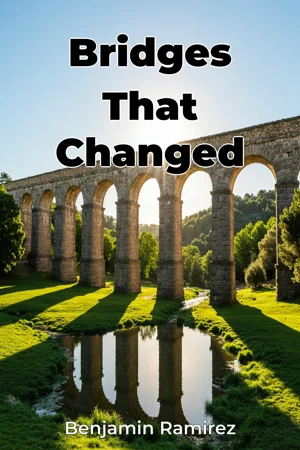
What if the structures we often take for granted have fundamentally reshaped the course of history? "Bridges That Changed" investigates how select bridges represent pivotal achievements in engineering and catalysts for societal transformation, fundamentally altering transportation networks and regional connectivity. This book explores the intersection of architecture, history, and engineering, examining how specific bridges have not only conquered physical obstacles but also spurred economic growth, facilitated cultural exchange, and redefined human interaction with the environment. The book focuses on three central themes. First, it addresses significant milestones in bridge engineering, exploring the evolution of design and construction techniques from ancient Roman aqueducts to modern suspension spans. It delves into the innovations of materials science, structural mechanics, and construction methodologies that have enabled increasingly ambitious bridge projects. Second, the book examines the role of bridges in shaping transportation networks and regional development. It assesses how bridges have opened up new trade routes, connected previously isolated communities, and spurred urbanization. Third, it analyzes the social and cultural impact of bridges, considering how they’ve become symbols of progress, unity, and human ingenuity. A foundation in history, architecture, and basic engineering principles will enhance the reader's comprehension, although technical jargon is minimized to engage a broad audience. The central argument of "Bridges That Changed" posits that bridges are not merely functional structures but powerful agents of change that have profoundly influenced patterns of human settlement, economic activity, and cultural exchange. This perspective challenges traditional views that often overlook the broader societal implications of infrastructure projects. It argues that understanding the history and impact of bridges is crucial for informed decision-making in contemporary infrastructure planning and development. The book is structured in three key parts. Part 1 introduces the evolution of bridge design and construction, tracing the development of different bridge types and technologies from ancient times to the present day. Part 2 examines case studies of influential bridges from across the globe, analyzing their engineering feats, their impact on transportation networks, and their social and cultural significance. Part 3 considers the future of bridge design and construction, discussing emerging technologies, sustainable practices, and the challenges of building bridges in the 21st century. The book culminates by considering the role of bridges in shaping the future of urban development and regional integration. Supporting this analysis is evidence gleaned from historical archives, engineering reports, architectural drawings, and case studies. The research integrates data from diverse sources to present a comprehensive and nuanced picture. "Bridges That Changed" connects to disciplines, such as urban planning, economics, and sociology. For example, the book explores how bridge construction has influenced urban sprawl and regional economic growth. It also considers the social impact of bridges on communities, examining issues of accessibility, displacement, and cultural identity. This interdisciplinary approach enriches the analysis and provides a more holistic understanding of the role of bridges in society. The book's distinctive approach lies in its blend of technical analysis, historical context, and social commentary. It moves beyond a purely engineering-focused perspective to consider the broader implications of bridge construction for society and the environment. The tone and the writing style of the book are factual and accessible, balancing technical information with engaging storytelling to appeal to a broad readership. The intended audience includes students and professionals in architecture, engineering, urban planning, and history, as well as general readers interested in the built environment and its impact on society. The book is a valuable resource for anyone seeking to understand the history, technology, and social significance of bridges. As a work of nonfiction, "Bridges That Changed" relies on verifiable facts, documented historical accounts, and rigorous analysis. It adheres to the conventions of academic writing, including proper citation and source documentation. The book's scope focuses primarily on bridges that have had a demonstrable and significant impact on transportation, regional development, or society as a whole. This focus allows for in-depth analysis of selected case studies while acknowledging the limitations of covering every bridge in history. The information presented in “Bridges That Changed” can be applied by urban planners, civil engineers, and policymakers to inform infrastructure development decisions. The book provides insights into the long-term impacts of bridge construction, helping to ensure that future projects are sustainable, equitable, and responsive to the needs of communities.
What if the structures we often take for granted have fundamentally reshaped the course of history? "Bridges That Changed" investigates how select bridges represent pivotal achievements in engineering and catalysts for societal transformation, fundamentally altering transportation networks and regional connectivity. This book explores the intersection of architecture, history, and engineering, examining how specific bridges have not only conquered physical obstacles but also spurred economic growth, facilitated cultural exchange, and redefined human interaction with the environment. The book focuses on three central themes. First, it addresses significant milestones in bridge engineering, exploring the evolution of design and construction techniques from ancient Roman aqueducts to modern suspension spans. It delves into the innovations of materials science, structural mechanics, and construction methodologies that have enabled increasingly ambitious bridge projects. Second, the book examines the role of bridges in shaping transportation networks and regional development. It assesses how bridges have opened up new trade routes, connected previously isolated communities, and spurred urbanization. Third, it analyzes the social and cultural impact of bridges, considering how they’ve become symbols of progress, unity, and human ingenuity. A foundation in history, architecture, and basic engineering principles will enhance the reader's comprehension, although technical jargon is minimized to engage a broad audience. The central argument of "Bridges That Changed" posits that bridges are not merely functional structures but powerful agents of change that have profoundly influenced patterns of human settlement, economic activity, and cultural exchange. This perspective challenges traditional views that often overlook the broader societal implications of infrastructure projects. It argues that understanding the history and impact of bridges is crucial for informed decision-making in contemporary infrastructure planning and development. The book is structured in three key parts. Part 1 introduces the evolution of bridge design and construction, tracing the development of different bridge types and technologies from ancient times to the present day. Part 2 examines case studies of influential bridges from across the globe, analyzing their engineering feats, their impact on transportation networks, and their social and cultural significance. Part 3 considers the future of bridge design and construction, discussing emerging technologies, sustainable practices, and the challenges of building bridges in the 21st century. The book culminates by considering the role of bridges in shaping the future of urban development and regional integration. Supporting this analysis is evidence gleaned from historical archives, engineering reports, architectural drawings, and case studies. The research integrates data from diverse sources to present a comprehensive and nuanced picture. "Bridges That Changed" connects to disciplines, such as urban planning, economics, and sociology. For example, the book explores how bridge construction has influenced urban sprawl and regional economic growth. It also considers the social impact of bridges on communities, examining issues of accessibility, displacement, and cultural identity. This interdisciplinary approach enriches the analysis and provides a more holistic understanding of the role of bridges in society. The book's distinctive approach lies in its blend of technical analysis, historical context, and social commentary. It moves beyond a purely engineering-focused perspective to consider the broader implications of bridge construction for society and the environment. The tone and the writing style of the book are factual and accessible, balancing technical information with engaging storytelling to appeal to a broad readership. The intended audience includes students and professionals in architecture, engineering, urban planning, and history, as well as general readers interested in the built environment and its impact on society. The book is a valuable resource for anyone seeking to understand the history, technology, and social significance of bridges. As a work of nonfiction, "Bridges That Changed" relies on verifiable facts, documented historical accounts, and rigorous analysis. It adheres to the conventions of academic writing, including proper citation and source documentation. The book's scope focuses primarily on bridges that have had a demonstrable and significant impact on transportation, regional development, or society as a whole. This focus allows for in-depth analysis of selected case studies while acknowledging the limitations of covering every bridge in history. The information presented in “Bridges That Changed” can be applied by urban planners, civil engineers, and policymakers to inform infrastructure development decisions. The book provides insights into the long-term impacts of bridge construction, helping to ensure that future projects are sustainable, equitable, and responsive to the needs of communities.
"Bridges That Changed" explores the profound impact of bridges on society, arguing they are not just functional structures but agents of change. It examines how these marvels of engineering have shaped transportation, regional development, and cultural exchange throughout history. The book highlights how bridge construction has opened trade routes, connected isolated communities, and spurred urbanization. The book delves into the evolution of bridge design, from ancient Roman aqueducts to modern suspension spans, showcasing innovations in materials science and construction. Case studies from around the world illustrate how bridges have become symbols of progress and human ingenuity. For example, certain bridges have influenced urban sprawl and regional economic growth, while others have impacted communities through accessibility and cultural shifts. Organized into three parts, the book first traces bridge design's evolution, then examines influential case studies, and finally considers the future of bridge construction. By blending technical analysis with historical context and social commentary, "Bridges That Changed" offers a holistic understanding of bridges' role in shaping society and the built environment.
Book Details
ISBN
9788235269102
Publisher
Publifye AS
Your Licenses
You don't own any licenses for this book
Purchase a license below to unlock this book and download the EPUB.
Purchase License
Select a tier to unlock this book
Need bulk licensing?
Contact us for enterprise agreements.