
About This Book
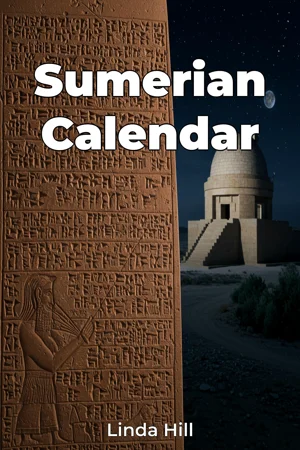
Have you ever wondered how ancient civilizations organized their lives around the passage of time? "Sumerian Calendar" delves into the fascinating story of the first recorded calendar system, developed by the Sumerians, and explores its lasting impact on subsequent Mesopotamian cultures and beyond. This book will examine the intricate details of the Sumerian calendar, its influence on agriculture, religion, and administration, and ultimately demonstrate how this early system laid the foundation for many calendars used today. This book explores three crucial aspects of the Sumerian calendar: its structure and function, its integration into Sumerian society, and its legacy in later civilizations. Understanding these topics is essential for comprehending the development of timekeeping and its role in shaping human societies. The calendar was not just a tool for measuring time, but also a reflection of Sumerian cosmology and social organization. To fully appreciate the Sumerian calendar, we must first understand the historical and social context of Sumerian civilization itself. Emerging in Mesopotamia around the 4th millennium BCE, the Sumerians developed a complex society characterized by agriculture, urbanization, and sophisticated systems of writing and mathematics. This intellectual environment fostered the creation of the calendar as a practical and symbolic instrument. The central argument of "Sumerian Calendar" is that the Sumerian calendar was not merely a primitive attempt at timekeeping, but a highly functional and culturally significant system that profoundly influenced the development of subsequent Mesopotamian and Western calendars. Its structure, based on lunar cycles and adjusted to the solar year, reveals a deep understanding of astronomical phenomena and a sophisticated approach to managing time. The book is structured to guide readers through a comprehensive exploration of the subject. First, it introduces the basic concepts of the Sumerian calendar, including its lunar basis, the roles of intercalation to reconcile it with the solar year, and the names and significance of the months. Next, it examines how the calendar was used in various aspects of Sumerian life, such as agricultural planning, religious festivals, and administrative record-keeping. Finally, it traces the calendar's influence on later Mesopotamian civilizations, including the Babylonians and Assyrians, and explores its connections to the development of the Hebrew and Greek calendars. The book relies on a range of evidence, including cuneiform texts, archaeological findings, and scholarly interpretations. The analysis of original Sumerian texts, such as agricultural almanacs and administrative records, provides direct insights into how the calendar was used in practice. Furthermore, comparisons with later calendars and astronomical observations support the argument for the Sumerian calendar's lasting influence. "Sumerian Calendar" also connects to broader academic fields such as archaeology, anthropology, and the history of science. By examining the calendar within its archaeological context, we gain a better understanding of Sumerian society and its material culture. By considering its anthropological implications, we can explore how the calendar influenced social organization and cultural practices. And by analyzing its scientific underpinnings, we appreciate the Sumerians' early contributions to astronomy and mathematics. This book takes a unique approach by combining a detailed analysis of the calendar's structure with an exploration of its social and cultural significance. Rather than simply presenting a technical description of the calendar, it seeks to understand its role within the broader context of Sumerian civilization and its lasting impact on timekeeping practices. Written in an accessible and engaging style, "Sumerian Calendar" aims to appeal to a broad audience, including students, history enthusiasts, and anyone interested in the origins of timekeeping. It provides a comprehensive and insightful account of the Sumerian calendar, shedding light on a crucial aspect of ancient Mesopotamian civilization. As a work of world history, "Sumerian Calendar" adheres to the conventions of scholarly rigor, relying on primary sources and expert analysis to support its arguments. It offers a balanced and objective account of the Sumerian calendar, avoiding speculative claims and presenting the evidence in a clear and unbiased manner. The scope of the book is limited to the Sumerian calendar and its direct influence on subsequent Mesopotamian civilizations. While it acknowledges the existence of other ancient calendars, it does not attempt to provide a comprehensive overview of all early timekeeping systems. This focus allows for a more in-depth analysis of the Sumerian calendar and its unique characteristics. Understanding the Sumerian calendar can provide valuable insights into the challenges of coordinating social activities and managing resources. It also highlights the importance of cultural transmission and the lasting legacy of ancient civilizations. While the specifics of the Sumerian calendar are not directly applicable to modern life, its underlying principles of lunar cycles and seasonal adjustments continue to inform many contemporary calendars. By studying the Sumerian calendar, we can gain a deeper appreciation for the history of timekeeping and its ongoing relevance to human societies.
Have you ever wondered how ancient civilizations organized their lives around the passage of time? "Sumerian Calendar" delves into the fascinating story of the first recorded calendar system, developed by the Sumerians, and explores its lasting impact on subsequent Mesopotamian cultures and beyond. This book will examine the intricate details of the Sumerian calendar, its influence on agriculture, religion, and administration, and ultimately demonstrate how this early system laid the foundation for many calendars used today. This book explores three crucial aspects of the Sumerian calendar: its structure and function, its integration into Sumerian society, and its legacy in later civilizations. Understanding these topics is essential for comprehending the development of timekeeping and its role in shaping human societies. The calendar was not just a tool for measuring time, but also a reflection of Sumerian cosmology and social organization. To fully appreciate the Sumerian calendar, we must first understand the historical and social context of Sumerian civilization itself. Emerging in Mesopotamia around the 4th millennium BCE, the Sumerians developed a complex society characterized by agriculture, urbanization, and sophisticated systems of writing and mathematics. This intellectual environment fostered the creation of the calendar as a practical and symbolic instrument. The central argument of "Sumerian Calendar" is that the Sumerian calendar was not merely a primitive attempt at timekeeping, but a highly functional and culturally significant system that profoundly influenced the development of subsequent Mesopotamian and Western calendars. Its structure, based on lunar cycles and adjusted to the solar year, reveals a deep understanding of astronomical phenomena and a sophisticated approach to managing time. The book is structured to guide readers through a comprehensive exploration of the subject. First, it introduces the basic concepts of the Sumerian calendar, including its lunar basis, the roles of intercalation to reconcile it with the solar year, and the names and significance of the months. Next, it examines how the calendar was used in various aspects of Sumerian life, such as agricultural planning, religious festivals, and administrative record-keeping. Finally, it traces the calendar's influence on later Mesopotamian civilizations, including the Babylonians and Assyrians, and explores its connections to the development of the Hebrew and Greek calendars. The book relies on a range of evidence, including cuneiform texts, archaeological findings, and scholarly interpretations. The analysis of original Sumerian texts, such as agricultural almanacs and administrative records, provides direct insights into how the calendar was used in practice. Furthermore, comparisons with later calendars and astronomical observations support the argument for the Sumerian calendar's lasting influence. "Sumerian Calendar" also connects to broader academic fields such as archaeology, anthropology, and the history of science. By examining the calendar within its archaeological context, we gain a better understanding of Sumerian society and its material culture. By considering its anthropological implications, we can explore how the calendar influenced social organization and cultural practices. And by analyzing its scientific underpinnings, we appreciate the Sumerians' early contributions to astronomy and mathematics. This book takes a unique approach by combining a detailed analysis of the calendar's structure with an exploration of its social and cultural significance. Rather than simply presenting a technical description of the calendar, it seeks to understand its role within the broader context of Sumerian civilization and its lasting impact on timekeeping practices. Written in an accessible and engaging style, "Sumerian Calendar" aims to appeal to a broad audience, including students, history enthusiasts, and anyone interested in the origins of timekeeping. It provides a comprehensive and insightful account of the Sumerian calendar, shedding light on a crucial aspect of ancient Mesopotamian civilization. As a work of world history, "Sumerian Calendar" adheres to the conventions of scholarly rigor, relying on primary sources and expert analysis to support its arguments. It offers a balanced and objective account of the Sumerian calendar, avoiding speculative claims and presenting the evidence in a clear and unbiased manner. The scope of the book is limited to the Sumerian calendar and its direct influence on subsequent Mesopotamian civilizations. While it acknowledges the existence of other ancient calendars, it does not attempt to provide a comprehensive overview of all early timekeeping systems. This focus allows for a more in-depth analysis of the Sumerian calendar and its unique characteristics. Understanding the Sumerian calendar can provide valuable insights into the challenges of coordinating social activities and managing resources. It also highlights the importance of cultural transmission and the lasting legacy of ancient civilizations. While the specifics of the Sumerian calendar are not directly applicable to modern life, its underlying principles of lunar cycles and seasonal adjustments continue to inform many contemporary calendars. By studying the Sumerian calendar, we can gain a deeper appreciation for the history of timekeeping and its ongoing relevance to human societies.
"Sumerian Calendar" explores the origins of timekeeping with the first recorded calendar system developed in Mesopotamia. This world history book reveals how profoundly the Sumerian calendar, with its lunar cycles and adjustments for the solar year, influenced agriculture, religious festivals, and administration within Sumerian society. Intriguingly, this early system laid the groundwork for calendars still in use today, highlighting the Sumerians' deep understanding of astronomy. The book examines the calendar's structure, its societal integration, and its lasting legacy, drawing on cuneiform texts and archaeological findings. Furthermore, it traces the calendar's influence on later civilizations like the Babylonians and Assyrians, and its connections to Hebrew and Greek calendars. This approach combines detailed calendar analysis with its social and cultural significance. Organized to guide readers, the book first introduces the basics, then explores its use in Sumerian life, and finally, traces its influence on subsequent cultures.
Book Details
ISBN
9788235268983
Publisher
Publifye AS
Your Licenses
You don't own any licenses for this book
Purchase a license below to unlock this book and download the EPUB.
Purchase License
Select a tier to unlock this book
Need bulk licensing?
Contact us for enterprise agreements.