
About This Book
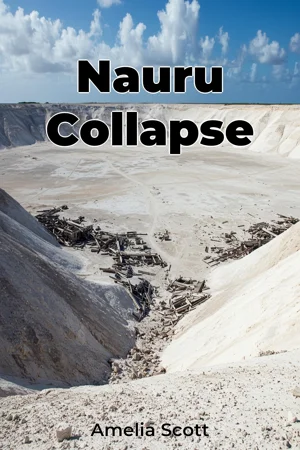
Can a nation built on bird droppings truly collapse? This book, *Nauru Collapse*, investigates the dramatic economic trajectory of the island nation of Nauru, tracing its rise from obscurity to unparalleled wealth derived from phosphate mining, and its subsequent descent into financial ruin. More than just an economic history, this is a study of societal transformation, environmental devastation, and the challenges of sustainable development in a resource-dependent microstate. This book is important because Nauru's story serves as a cautionary tale, highlighting the pitfalls of short-sighted resource management and the vulnerability of small island nations to global economic forces. *Nauru Collapse* provides a comprehensive examination of Nauru's history, beginning with its pre-colonial existence and the eventual discovery of its vast phosphate deposits. It contextualizes Nauru's experience within the broader history of resource extraction in the Pacific and the legacy of colonialism. Readers will gain an understanding of the geopolitical forces that shaped Nauru's development and the environmental consequences of phosphate mining. The central argument of this book is that Nauru's economic collapse was not simply the result of mismanagement, but the inevitable outcome of a system that prioritized short-term profit over long-term sustainability and societal well-being. This argument is crucial, as it challenges conventional narratives of economic failure and offers insights into the systemic issues that can lead to the downfall of resource-rich nations. The book unfolds in three main sections. First, it details the discovery and exploitation of Nauru's phosphate resources, examining the economic boom that transformed the island into one of the wealthiest nations per capita. The second section analyzes the factors that contributed to Nauru's decline, including poor investment decisions, corruption, environmental degradation, and the exhaustion of phosphate reserves. The final part of the book explores the social and political consequences of the collapse, including the impact on Nauru's population, its struggle to find new sources of income, and its attempts to address the environmental damage caused by mining. *Nauru Collapse* draws upon a variety of sources, including archival documents, government reports, economic data, and interviews with Nauruan citizens and policymakers. It also incorporates environmental studies and scientific research to assess the ecological impact of phosphate mining. The book considers the interdisciplinary effects of political science by viewing the country's governmental structure and legal framework, and the impact of environmental science by analyzing the long-term ecological damage caused by phosphate extraction. These connections enhance the book's argument by demonstrating the complex interplay of economic, social, and environmental factors that contributed to Nauru's collapse. This book offers a unique perspective by focusing on the lived experiences of Nauruan people and exploring the social and cultural dimensions of economic change. It avoids simplistic explanations and provides a nuanced analysis of the complex forces that shaped Nauru's destiny. Written in a clear and accessible style, *Nauru Collapse* is aimed at a broad audience, including students, researchers, policymakers, and anyone interested in history, economics, environmental studies, and international development. It will be valuable to those seeking to understand the challenges facing small island nations and the importance of sustainable resource management. As a work of History World, Economics, and World History, the book adheres to standards of rigorous research and objective analysis. While the book focuses primarily on the economic and social history of Nauru, within the limitations of its scope, it does attempt to address the recent controversies surrounding Nauru's role in offshore detention and asylum processing, acknowledging the complex interplay of economic desperation and international politics. Ultimately, *Nauru Collapse* offers valuable insights into the challenges of economic development and the importance of sustainable practices. It serves as a warning about the potential consequences of short-sighted policies and a call for more responsible resource management in the face of global economic pressures.
Can a nation built on bird droppings truly collapse? This book, *Nauru Collapse*, investigates the dramatic economic trajectory of the island nation of Nauru, tracing its rise from obscurity to unparalleled wealth derived from phosphate mining, and its subsequent descent into financial ruin. More than just an economic history, this is a study of societal transformation, environmental devastation, and the challenges of sustainable development in a resource-dependent microstate. This book is important because Nauru's story serves as a cautionary tale, highlighting the pitfalls of short-sighted resource management and the vulnerability of small island nations to global economic forces. *Nauru Collapse* provides a comprehensive examination of Nauru's history, beginning with its pre-colonial existence and the eventual discovery of its vast phosphate deposits. It contextualizes Nauru's experience within the broader history of resource extraction in the Pacific and the legacy of colonialism. Readers will gain an understanding of the geopolitical forces that shaped Nauru's development and the environmental consequences of phosphate mining. The central argument of this book is that Nauru's economic collapse was not simply the result of mismanagement, but the inevitable outcome of a system that prioritized short-term profit over long-term sustainability and societal well-being. This argument is crucial, as it challenges conventional narratives of economic failure and offers insights into the systemic issues that can lead to the downfall of resource-rich nations. The book unfolds in three main sections. First, it details the discovery and exploitation of Nauru's phosphate resources, examining the economic boom that transformed the island into one of the wealthiest nations per capita. The second section analyzes the factors that contributed to Nauru's decline, including poor investment decisions, corruption, environmental degradation, and the exhaustion of phosphate reserves. The final part of the book explores the social and political consequences of the collapse, including the impact on Nauru's population, its struggle to find new sources of income, and its attempts to address the environmental damage caused by mining. *Nauru Collapse* draws upon a variety of sources, including archival documents, government reports, economic data, and interviews with Nauruan citizens and policymakers. It also incorporates environmental studies and scientific research to assess the ecological impact of phosphate mining. The book considers the interdisciplinary effects of political science by viewing the country's governmental structure and legal framework, and the impact of environmental science by analyzing the long-term ecological damage caused by phosphate extraction. These connections enhance the book's argument by demonstrating the complex interplay of economic, social, and environmental factors that contributed to Nauru's collapse. This book offers a unique perspective by focusing on the lived experiences of Nauruan people and exploring the social and cultural dimensions of economic change. It avoids simplistic explanations and provides a nuanced analysis of the complex forces that shaped Nauru's destiny. Written in a clear and accessible style, *Nauru Collapse* is aimed at a broad audience, including students, researchers, policymakers, and anyone interested in history, economics, environmental studies, and international development. It will be valuable to those seeking to understand the challenges facing small island nations and the importance of sustainable resource management. As a work of History World, Economics, and World History, the book adheres to standards of rigorous research and objective analysis. While the book focuses primarily on the economic and social history of Nauru, within the limitations of its scope, it does attempt to address the recent controversies surrounding Nauru's role in offshore detention and asylum processing, acknowledging the complex interplay of economic desperation and international politics. Ultimately, *Nauru Collapse* offers valuable insights into the challenges of economic development and the importance of sustainable practices. It serves as a warning about the potential consequences of short-sighted policies and a call for more responsible resource management in the face of global economic pressures.
*Nauru Collapse* tells the cautionary tale of the Pacific island nation of Nauru, charting its extraordinary rise and devastating fall. Fueled by vast phosphate deposits from bird droppings, Nauru experienced a meteoric economic boom, becoming one of the wealthiest nations per capita. However, this prosperity was short-lived. The book examines how short-sighted resource management, environmental degradation, and poor investment decisions led to an economic collapse, leaving the island and its people struggling with the consequences of resource extraction. The book progresses by detailing the initial exploitation of phosphate, analyzing the factors leading to Nauru's decline, and exploring the social and political ramifications of the collapse. It highlights that Nauru's plight isn't just mismanagement; it's a systemic issue where short-term profits trumped sustainability. For example, while Nauru once boasted a high GDP, the environmental costs of mining, such as the destruction of arable land, were largely ignored. This comprehensive study uses archival documents, economic data, and interviews to offer a nuanced understanding of Nauru's societal transformation and serves as a valuable lesson for other small island nations facing similar challenges in a globalized world.
Book Details
ISBN
9788235268952
Publisher
Publifye AS
Your Licenses
You don't own any licenses for this book
Purchase a license below to unlock this book and download the EPUB.
Purchase License
Select a tier to unlock this book
Need bulk licensing?
Contact us for enterprise agreements.