
About This Book
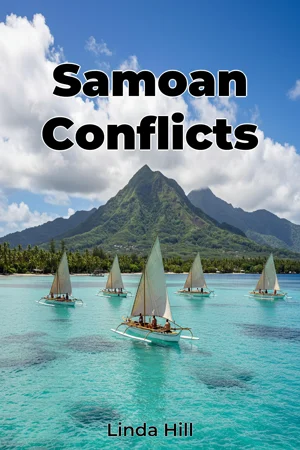
How did a small island nation in the vast Pacific become the focal point of a geopolitical struggle between global powers? "Samoan Conflicts" delves into the complex history of Samoa, examining the tumultuous period of colonial competition between Germany, Britain, and the United States for control of the islands, and its eventual journey to independence. This book is paramount for understanding not only Samoan history but also the broader dynamics of late 19th and early 20th-century imperialism and its lasting consequences. This book argues that the Samoan experience exemplifies the devastating impact of colonial rivalries on indigenous populations, highlighting how external forces manipulated internal political structures for their economic and strategic gain. Understanding this historical dynamic is crucial for interpreting contemporary geopolitical issues, particularly concerning small island states and their vulnerability to external pressures. "Samoan Conflicts" unfolds in three major sections. The book first introduces the pre-colonial Samoan society, its unique socio-political structure, and the initial interactions with European traders and missionaries. This section establishes the foundation upon which colonial intervention would later be built. The second part details the escalating rivalry between Germany, Britain, and the United States. It examines the political maneuvering, economic exploitation, and military confrontations, including the Samoan civil wars fueled by these external powers. This section will analyze treaty agreements, such as the Berlin Act of 1889 and the Tripartite Convention of 1899, and their effects on the Samoan people. The third section traces Samoa's path towards independence, including the periods under New Zealand's administration, the rise of Samoan nationalism, and the eventual achievement of self-governance. It demonstrates how Samoan resilience and resistance shaped their destiny despite decades of foreign control. The analysis presented is underpinned by a wide range of primary sources, including diplomatic correspondence, missionary accounts, and indigenous oral histories. Secondary sources from historical journals, academic publications, and relevant books are also used. The book draws connections to international relations, political science, and post-colonial studies, offering a multidisciplinary perspective on Samoan history. A unique aspect of this book lies in its balanced approach, recognizing both the destructive force of colonialism and the agency of the Samoan people in resisting and shaping their future. The book aims to use an academic yet accessible writing style, suited to readers with a general interest in history, as well as students and scholars in related fields. It targets anyone interested in the history of Samoa, the Pacific region, colonialism, imperialism, or international relations. This book's scope is limited to the political and diplomatic history of Samoa during the colonial era, with a specific focus on the interplay between Samoan society and the external powers. While broader social and cultural aspects are considered, the primary emphasis remains on the power dynamics and political events that defined this period. The information contained within helps the reader understand the political, economic, and social challenges faced by many post-colonial nations today, highlighting the importance of self-determination and cultural preservation. The book acknowledges ongoing debates on the legacies of colonialism and the interpretation of historical events in Samoa. It addresses these debates by presenting a balanced and nuanced account, drawing upon diverse sources and perspectives.
How did a small island nation in the vast Pacific become the focal point of a geopolitical struggle between global powers? "Samoan Conflicts" delves into the complex history of Samoa, examining the tumultuous period of colonial competition between Germany, Britain, and the United States for control of the islands, and its eventual journey to independence. This book is paramount for understanding not only Samoan history but also the broader dynamics of late 19th and early 20th-century imperialism and its lasting consequences. This book argues that the Samoan experience exemplifies the devastating impact of colonial rivalries on indigenous populations, highlighting how external forces manipulated internal political structures for their economic and strategic gain. Understanding this historical dynamic is crucial for interpreting contemporary geopolitical issues, particularly concerning small island states and their vulnerability to external pressures. "Samoan Conflicts" unfolds in three major sections. The book first introduces the pre-colonial Samoan society, its unique socio-political structure, and the initial interactions with European traders and missionaries. This section establishes the foundation upon which colonial intervention would later be built. The second part details the escalating rivalry between Germany, Britain, and the United States. It examines the political maneuvering, economic exploitation, and military confrontations, including the Samoan civil wars fueled by these external powers. This section will analyze treaty agreements, such as the Berlin Act of 1889 and the Tripartite Convention of 1899, and their effects on the Samoan people. The third section traces Samoa's path towards independence, including the periods under New Zealand's administration, the rise of Samoan nationalism, and the eventual achievement of self-governance. It demonstrates how Samoan resilience and resistance shaped their destiny despite decades of foreign control. The analysis presented is underpinned by a wide range of primary sources, including diplomatic correspondence, missionary accounts, and indigenous oral histories. Secondary sources from historical journals, academic publications, and relevant books are also used. The book draws connections to international relations, political science, and post-colonial studies, offering a multidisciplinary perspective on Samoan history. A unique aspect of this book lies in its balanced approach, recognizing both the destructive force of colonialism and the agency of the Samoan people in resisting and shaping their future. The book aims to use an academic yet accessible writing style, suited to readers with a general interest in history, as well as students and scholars in related fields. It targets anyone interested in the history of Samoa, the Pacific region, colonialism, imperialism, or international relations. This book's scope is limited to the political and diplomatic history of Samoa during the colonial era, with a specific focus on the interplay between Samoan society and the external powers. While broader social and cultural aspects are considered, the primary emphasis remains on the power dynamics and political events that defined this period. The information contained within helps the reader understand the political, economic, and social challenges faced by many post-colonial nations today, highlighting the importance of self-determination and cultural preservation. The book acknowledges ongoing debates on the legacies of colonialism and the interpretation of historical events in Samoa. It addresses these debates by presenting a balanced and nuanced account, drawing upon diverse sources and perspectives.
"Samoan Conflicts" explores how Samoa became a focal point in the geopolitical struggles between Germany, Britain, and the United States during the age of imperialism. This book examines the impact of colonial rivalries on the Samoan people, demonstrating how external powers manipulated internal political structures for their strategic and economic gain. One intriguing fact is that the Berlin Act of 1889, intended to stabilize the region, instead intensified the competition among these powers and fueled Samoan civil wars. The book highlights the resilience of Samoan nationalism in the face of foreign intervention. The book progresses chronologically, from pre-colonial Samoan society and initial interactions with Europeans, to the escalating rivalry between the colonial powers. It then traces Samoa's path towards independence, emphasizing the rise of Samoan nationalism and the eventual achievement of self-governance. By analyzing diplomatic correspondence, missionary accounts, and indigenous oral histories, "Samoan Conflicts" offers a multidisciplinary perspective on Samoan history, drawing connections to international relations, political science, and post-colonial studies. This balanced approach acknowledges both the destructive forces of colonialism and the agency of the Samoan people in shaping their future.
Book Details
ISBN
9788235268914
Publisher
Publifye AS
Your Licenses
You don't own any licenses for this book
Purchase a license below to unlock this book and download the EPUB.
Purchase License
Select a tier to unlock this book
Need bulk licensing?
Contact us for enterprise agreements.