
About This Book
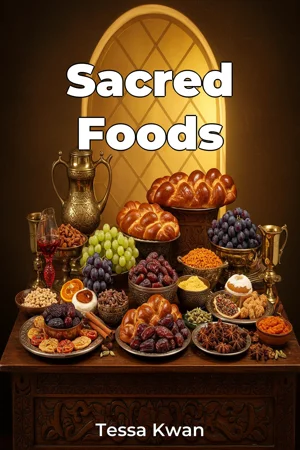
How has faith shaped what, when, and how we eat? "Sacred Foods" delves into the intricate relationship between religious traditions and culinary practices, exploring how diverse faiths across the globe influence food preparation, fasting rituals, and celebratory feasts. This book examines how seemingly simple acts like sharing a meal can be deeply entwined with spiritual meaning, historical context, and cultural identity. We will explore three key areas: the symbolic significance of specific foods within different religions, the role of dietary laws and restrictions in shaping religious identity, and the communal aspects of food in religious celebrations. These themes are vital because they reveal how food transcends mere sustenance, becoming a powerful medium for expressing faith, reinforcing social bonds, and preserving cultural heritage. Understanding the connection between food and religion requires considering a broad historical and cultural backdrop. "Sacred Foods" provides historical context, tracing the origins and evolution of various food-related religious practices and beliefs. We will examine how these practices have adapted over time due to social, economic, and environmental changes, demonstrating the enduring yet flexible nature of food's spiritual significance. The central argument of "Sacred Foods" is that culinary practices are not merely peripheral aspects of religious life but are, in fact, integral to understanding the core tenets, values, and lived experiences of diverse faith communities. By analyzing the symbolic meanings, rituals, and communal aspects of food, we gain deeper insight into the multifaceted relationship between religion and culture. The book begins by introducing the fundamental concepts of food symbolism, dietary laws, and communal feasting. It then develops these ideas through in-depth explorations of several major religious traditions, including Judaism, Christianity, Islam, Hinduism, and Buddhism. Each chapter will examine the specific foods, rituals, and beliefs associated with each faith, highlighting both commonalities and unique characteristics. The book culminates in a discussion of the contemporary challenges and opportunities facing religious food traditions in a globalized world, considering issues such as ethical sourcing, environmental sustainability, and interfaith dialogue. The final section looks at practical implications, offering insights into how understanding sacred foods can foster greater cultural sensitivity and promote more inclusive and meaningful food experiences. "Sacred Foods" draws upon a wide range of evidence and research, including religious texts, anthropological studies, historical accounts, and culinary analyses. It incorporates data from ethnographic fieldwork, examining how food traditions are practiced and interpreted in diverse communities around the world. This book connects to various fields of study, including anthropology, sociology, history, and nutrition. By integrating insights from these disciplines, "Sacred Foods" offers a comprehensive and nuanced understanding of the complex interplay between religion, culture, and food. "Sacred Foods" offers a unique perspective by examining the intersection of food and religion through a comparative and interdisciplinary lens. It provides a valuable resource for understanding the cultural and spiritual significance of food in a diverse world. The tone is informative and accessible, making it suitable for both academic and general audiences. The target audience includes students of religion, anthropology, and culinary studies, as well as anyone interested in exploring the cultural and spiritual dimensions of food. This book provides a wealth of information, fostering a deeper appreciation for the diverse ways in which food shapes our identities and communities. As a non-fiction book, "Sacred Foods" adheres to standards of accuracy, objectivity, and scholarly rigor. It presents evidence-based arguments, acknowledges diverse perspectives, and provides clear citations to support its claims. The scope of "Sacred Foods" is broad, encompassing a wide range of religious traditions and culinary practices across the globe. However, it is intentionally limited to focusing on the cultural and spiritual significance of food, rather than providing detailed recipes or culinary instructions. The information presented in "Sacred Foods" can be applied in various real-world contexts, such as culinary tourism, interfaith dialogue, and food-related social enterprises. By understanding the cultural and religious significance of food, readers can promote greater respect, inclusivity, and sustainability in their own communities. While "Sacred Foods" strives to present a balanced and nuanced perspective, it acknowledges that debates exist within and between religious traditions regarding food-related practices and beliefs. The book addresses these controversies in a fair and respectful manner, encouraging readers to engage critically with different viewpoints.
How has faith shaped what, when, and how we eat? "Sacred Foods" delves into the intricate relationship between religious traditions and culinary practices, exploring how diverse faiths across the globe influence food preparation, fasting rituals, and celebratory feasts. This book examines how seemingly simple acts like sharing a meal can be deeply entwined with spiritual meaning, historical context, and cultural identity. We will explore three key areas: the symbolic significance of specific foods within different religions, the role of dietary laws and restrictions in shaping religious identity, and the communal aspects of food in religious celebrations. These themes are vital because they reveal how food transcends mere sustenance, becoming a powerful medium for expressing faith, reinforcing social bonds, and preserving cultural heritage. Understanding the connection between food and religion requires considering a broad historical and cultural backdrop. "Sacred Foods" provides historical context, tracing the origins and evolution of various food-related religious practices and beliefs. We will examine how these practices have adapted over time due to social, economic, and environmental changes, demonstrating the enduring yet flexible nature of food's spiritual significance. The central argument of "Sacred Foods" is that culinary practices are not merely peripheral aspects of religious life but are, in fact, integral to understanding the core tenets, values, and lived experiences of diverse faith communities. By analyzing the symbolic meanings, rituals, and communal aspects of food, we gain deeper insight into the multifaceted relationship between religion and culture. The book begins by introducing the fundamental concepts of food symbolism, dietary laws, and communal feasting. It then develops these ideas through in-depth explorations of several major religious traditions, including Judaism, Christianity, Islam, Hinduism, and Buddhism. Each chapter will examine the specific foods, rituals, and beliefs associated with each faith, highlighting both commonalities and unique characteristics. The book culminates in a discussion of the contemporary challenges and opportunities facing religious food traditions in a globalized world, considering issues such as ethical sourcing, environmental sustainability, and interfaith dialogue. The final section looks at practical implications, offering insights into how understanding sacred foods can foster greater cultural sensitivity and promote more inclusive and meaningful food experiences. "Sacred Foods" draws upon a wide range of evidence and research, including religious texts, anthropological studies, historical accounts, and culinary analyses. It incorporates data from ethnographic fieldwork, examining how food traditions are practiced and interpreted in diverse communities around the world. This book connects to various fields of study, including anthropology, sociology, history, and nutrition. By integrating insights from these disciplines, "Sacred Foods" offers a comprehensive and nuanced understanding of the complex interplay between religion, culture, and food. "Sacred Foods" offers a unique perspective by examining the intersection of food and religion through a comparative and interdisciplinary lens. It provides a valuable resource for understanding the cultural and spiritual significance of food in a diverse world. The tone is informative and accessible, making it suitable for both academic and general audiences. The target audience includes students of religion, anthropology, and culinary studies, as well as anyone interested in exploring the cultural and spiritual dimensions of food. This book provides a wealth of information, fostering a deeper appreciation for the diverse ways in which food shapes our identities and communities. As a non-fiction book, "Sacred Foods" adheres to standards of accuracy, objectivity, and scholarly rigor. It presents evidence-based arguments, acknowledges diverse perspectives, and provides clear citations to support its claims. The scope of "Sacred Foods" is broad, encompassing a wide range of religious traditions and culinary practices across the globe. However, it is intentionally limited to focusing on the cultural and spiritual significance of food, rather than providing detailed recipes or culinary instructions. The information presented in "Sacred Foods" can be applied in various real-world contexts, such as culinary tourism, interfaith dialogue, and food-related social enterprises. By understanding the cultural and religious significance of food, readers can promote greater respect, inclusivity, and sustainability in their own communities. While "Sacred Foods" strives to present a balanced and nuanced perspective, it acknowledges that debates exist within and between religious traditions regarding food-related practices and beliefs. The book addresses these controversies in a fair and respectful manner, encouraging readers to engage critically with different viewpoints.
"Sacred Foods" explores the profound connection between religious traditions and culinary practices worldwide. It reveals how faith shapes what, when, and how we eat, transforming simple meals into expressions of spiritual meaning. For example, dietary laws not only define religious identity but also influence culinary practices. Furthermore, communal feasting in different religions reinforces social bonds and preserves cultural heritage, demonstrating food's power beyond mere sustenance. The book progresses systematically, beginning with core concepts such as food symbolism and dietary laws. It then delves into major religious traditions—Judaism, Christianity, Islam, Hinduism, and Buddhism—examining their unique food rituals and beliefs. By integrating historical context and diverse research, "Sacred Foods" offers a comprehensive understanding of this relationship. The book concludes by addressing contemporary challenges like ethical sourcing and interfaith dialogue, highlighting food's crucial role in fostering cultural sensitivity and inclusivity.
Book Details
ISBN
9788235268877
Publisher
Publifye AS
Your Licenses
You don't own any licenses for this book
Purchase a license below to unlock this book and download the EPUB.
Purchase License
Select a tier to unlock this book
Need bulk licensing?
Contact us for enterprise agreements.