
About This Book
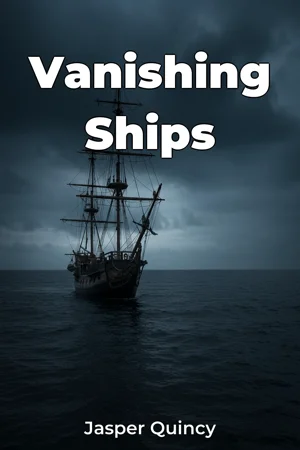
What fate awaits a vessel swallowed whole by the sea, its crew vanished without so much as a distress call? *Vanishing Ships* delves into the unsettling world of maritime mysteries, exploring documented cases of ships that have disappeared, sometimes leaving behind wreckage but more often vanishing entirely, along with their sailors. This book examines not just the events themselves, but also the historical context, potential explanations, and enduring impact of these nautical enigmas. The study of vanishing ships is significant for several reasons. First, it serves as a poignant reminder of the inherent dangers of seafaring and the unpredictable power of nature. Second, these incidents often reveal gaps in our understanding of ocean phenomena, navigational practices, and even human behavior under extreme stress. Finally, unsolved disappearances fuel speculation, giving rise to a range of theories – from rational explanations to more outlandish possibilities – that capture the imagination and challenge our perception of reality. *Vanishing Ships* will investigate these mysteries through a framework combining historical accounts, oceanographic principles, and forensic analysis. The book will argue that while many disappearances can be attributed to known causes such as severe weather, navigational errors, or mechanical failures, a significant number remain unexplained, demanding a more nuanced and interdisciplinary approach. The book is structured in three primary sections. The first section will introduce the core concepts of maritime disappearance, providing a historical overview of notable cases from the 18th century to the present day. This section will also detail the known hazards of seafaring, including rogue waves, sudden storms, and the perils of human error, setting a baseline for understanding common causes. The second section will examine specific cases of unsolved disappearances, presenting detailed narratives reconstructed from available records, survivor testimony (where applicable), and expert analysis. Cases like the *Mary Celeste*, the *USS Cyclops*, and the *MV Joyita* will be examined, focusing on the factual evidence and eliminating sensationalism. The third section will explore various theories attempting to explain these events, ranging from plausible scenarios like hull failure or piracy to more speculative ideas involving paranormal activity or extraterrestrial intervention. The book will critically analyze the evidence supporting each theory, emphasizing the importance of scientific rigor and skepticism. The evidence presented will draw from diverse sources including historical ship logs, maritime insurance records, naval reports, oceanographic data, and meteorological archives. Furthermore, the book incorporates insights from experts in naval architecture, marine meteorology, and maritime history to provide a well-rounded and informed perspective. *Vanishing Ships* bridges the gap between historical research, marine science, and forensic investigation. It also touches on elements of psychology, exploring the human capacity for error, panic, and resilience in the face of maritime disaster. Connecting with folklore studies, discussing the persistent legends and myths surrounding the seas. The book takes a fact-based approach, prioritizing evidence and logical reasoning over speculation. While acknowledging the allure of the unknown, it emphasizes the importance of critical thinking and scientific inquiry in unraveling these mysteries. This book is intended for readers interested in maritime history, true crime, and the intersection of science and mystery. It will appeal to amateur historians, armchair detectives, and anyone fascinated by the stories of the sea. The genre expectations of adventure and history are met through detailed accounts of voyages, historical context of naval actions, and the exploration of the unknown. The book’s scope is intentionally limited to cases where a vessel and/or its crew have vanished without a conclusively determined cause. It does not delve into shipwrecks where the cause of the sinking is well-established, but instead focuses on the truly enigmatic disappearances. The information in *Vanishing Ships* can be applied to modern maritime safety practices. By understanding the potential causes of past disappearances, we can learn from past mistakes and develop strategies to prevent future tragedies. The book also highlights the importance of rigorous investigation and data collection in the event of a maritime incident. One ongoing debate in this field concerns the role of so-called “rogue waves” in ship disappearances. While the existence of these massive waves is now scientifically proven, their frequency and impact on maritime traffic remain a subject of vigorous debate. *Vanishing Ships* addresses this controversy, presenting the latest scientific evidence and considering its implications for our understanding of ship disappearances.
What fate awaits a vessel swallowed whole by the sea, its crew vanished without so much as a distress call? *Vanishing Ships* delves into the unsettling world of maritime mysteries, exploring documented cases of ships that have disappeared, sometimes leaving behind wreckage but more often vanishing entirely, along with their sailors. This book examines not just the events themselves, but also the historical context, potential explanations, and enduring impact of these nautical enigmas. The study of vanishing ships is significant for several reasons. First, it serves as a poignant reminder of the inherent dangers of seafaring and the unpredictable power of nature. Second, these incidents often reveal gaps in our understanding of ocean phenomena, navigational practices, and even human behavior under extreme stress. Finally, unsolved disappearances fuel speculation, giving rise to a range of theories – from rational explanations to more outlandish possibilities – that capture the imagination and challenge our perception of reality. *Vanishing Ships* will investigate these mysteries through a framework combining historical accounts, oceanographic principles, and forensic analysis. The book will argue that while many disappearances can be attributed to known causes such as severe weather, navigational errors, or mechanical failures, a significant number remain unexplained, demanding a more nuanced and interdisciplinary approach. The book is structured in three primary sections. The first section will introduce the core concepts of maritime disappearance, providing a historical overview of notable cases from the 18th century to the present day. This section will also detail the known hazards of seafaring, including rogue waves, sudden storms, and the perils of human error, setting a baseline for understanding common causes. The second section will examine specific cases of unsolved disappearances, presenting detailed narratives reconstructed from available records, survivor testimony (where applicable), and expert analysis. Cases like the *Mary Celeste*, the *USS Cyclops*, and the *MV Joyita* will be examined, focusing on the factual evidence and eliminating sensationalism. The third section will explore various theories attempting to explain these events, ranging from plausible scenarios like hull failure or piracy to more speculative ideas involving paranormal activity or extraterrestrial intervention. The book will critically analyze the evidence supporting each theory, emphasizing the importance of scientific rigor and skepticism. The evidence presented will draw from diverse sources including historical ship logs, maritime insurance records, naval reports, oceanographic data, and meteorological archives. Furthermore, the book incorporates insights from experts in naval architecture, marine meteorology, and maritime history to provide a well-rounded and informed perspective. *Vanishing Ships* bridges the gap between historical research, marine science, and forensic investigation. It also touches on elements of psychology, exploring the human capacity for error, panic, and resilience in the face of maritime disaster. Connecting with folklore studies, discussing the persistent legends and myths surrounding the seas. The book takes a fact-based approach, prioritizing evidence and logical reasoning over speculation. While acknowledging the allure of the unknown, it emphasizes the importance of critical thinking and scientific inquiry in unraveling these mysteries. This book is intended for readers interested in maritime history, true crime, and the intersection of science and mystery. It will appeal to amateur historians, armchair detectives, and anyone fascinated by the stories of the sea. The genre expectations of adventure and history are met through detailed accounts of voyages, historical context of naval actions, and the exploration of the unknown. The book’s scope is intentionally limited to cases where a vessel and/or its crew have vanished without a conclusively determined cause. It does not delve into shipwrecks where the cause of the sinking is well-established, but instead focuses on the truly enigmatic disappearances. The information in *Vanishing Ships* can be applied to modern maritime safety practices. By understanding the potential causes of past disappearances, we can learn from past mistakes and develop strategies to prevent future tragedies. The book also highlights the importance of rigorous investigation and data collection in the event of a maritime incident. One ongoing debate in this field concerns the role of so-called “rogue waves” in ship disappearances. While the existence of these massive waves is now scientifically proven, their frequency and impact on maritime traffic remain a subject of vigorous debate. *Vanishing Ships* addresses this controversy, presenting the latest scientific evidence and considering its implications for our understanding of ship disappearances.
"Vanishing Ships" explores the compelling topic of maritime mysteries, specifically focusing on vessels that have disappeared without a trace. These unsettling events serve as stark reminders of the unpredictable nature of the sea and the inherent dangers faced by sailors. The book delves into historical accounts of ship disappearances, examining potential explanations ranging from severe weather to navigational errors, while also acknowledging the enduring allure of the unknown. The book presents a framework combining historical accounts, oceanographic principles, and forensic analysis to investigate these nautical enigmas. For instance, cases like the *Mary Celeste* and the *USS Cyclops* are examined with a focus on factual evidence to avoid sensationalism. It progresses by first introducing the core concepts of maritime disappearance, then examining specific unsolved cases, and finally exploring various theories, including plausible and speculative ideas, always emphasizing scientific rigor. This book offers a unique perspective by bridging the gap between historical research, marine science, and forensic investigation, appealing to those interested in maritime history, true crime, and the intersection of science and mystery. By understanding the potential causes of past disappearances, the book implicitly suggests lessons that can be applied to modern maritime safety practices.
Book Details
ISBN
9788235268792
Publisher
Publifye AS
Your Licenses
You don't own any licenses for this book
Purchase a license below to unlock this book and download the EPUB.
Purchase License
Select a tier to unlock this book
Need bulk licensing?
Contact us for enterprise agreements.