
About This Book
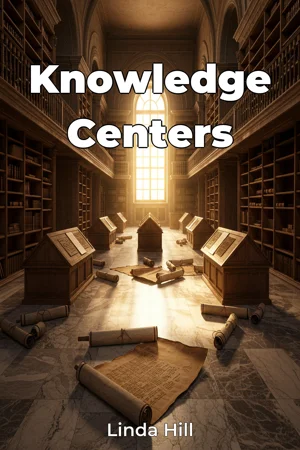
How did the knowledge of antiquity survive and evolve through the ages, shaping not only intellectual pursuits but also the social and political landscapes of civilizations? "Knowledge Centers" explores the roles of pivotal institutions in preserving, expanding, and transmitting knowledge across generations and diverse cultures, primarily focusing on the ancient and medieval periods. This book delves into the historical, social, and intellectual contexts that allowed these centers to flourish, shaping our understanding of the world. The central argument posits that specific centers of learning were not merely repositories of information but actively shaped the course of intellectual history. They served as dynamic hubs where existing knowledge was critiqued, expanded upon, and disseminated, influencing everything from scientific advancements and philosophical thought to religious doctrines and legal systems. This book is structured to provide a comprehensive overview of these knowledge centers. It begins by defining what constitutes a "knowledge center" and outlining the key characteristics that allowed them to thrive, such as patronage, intellectual freedom (to varying degrees), access to resources, and effective systems for knowledge management. The book then examines several prominent examples in detail. The Library of Alexandria, for instance, will be explored as an early model for collecting and organizing vast amounts of information. Major points will cover its founding, its collection practices, and the intellectual contributions of scholars associated with it. Islamic centers of learning, such as the House of Wisdom in Baghdad, will be analyzed focusing on their role in translating and preserving Greek texts, as well as fostering advancements in mathematics, astronomy, and medicine. Medieval European universities, such as the University of Paris and Oxford, will be examined concerning their contribution to the development of scholasticism, law, and theology, tracing their evolution from cathedral schools to independent institutions. The culmination of the book focuses on how these historical centers have influenced modern systems of education and research. We will examine how the practices and principles developed in these ancient and medieval institutions continue to resonate in contemporary universities, libraries, and research centers. The evidence presented is drawn from a wide range of primary sources, including surviving manuscripts, architectural remains, and contemporary accounts. Secondary sources include scholarly articles, monographs, and archaeological reports, providing a multidisciplinary approach. "Knowledge Centers" connects to other fields such as sociology, political science, and religious studies. The book operates with a worldview that acknowledges that centers of learning also operated with sociopolitical objectives, and were products of their context. A unique aspect of this book lies in its comparative approach, contrasting different types of knowledge centers across cultures and time periods to identify common themes and unique features. It also avoids Eurocentric perspectives by giving equal attention to non-European centers of learning. Written in an accessible yet scholarly tone, "Knowledge Centers" targets students, academics, and general readers interested in the history of education, science, and ideas. This book offers value to anyone seeking a deeper understanding of how knowledge has been created, preserved, and transmitted throughout history. The book will focus on a selection of prominent centers due to constraints of space. The scope is limited to institutions that made significant contributions to intellectual and cultural development. The information presented in "Knowledge Centers" can be applied to understanding contemporary challenges in education, research, and information management. The principles and practices developed in these historical institutions continue to be relevant in today's interconnected world.
How did the knowledge of antiquity survive and evolve through the ages, shaping not only intellectual pursuits but also the social and political landscapes of civilizations? "Knowledge Centers" explores the roles of pivotal institutions in preserving, expanding, and transmitting knowledge across generations and diverse cultures, primarily focusing on the ancient and medieval periods. This book delves into the historical, social, and intellectual contexts that allowed these centers to flourish, shaping our understanding of the world. The central argument posits that specific centers of learning were not merely repositories of information but actively shaped the course of intellectual history. They served as dynamic hubs where existing knowledge was critiqued, expanded upon, and disseminated, influencing everything from scientific advancements and philosophical thought to religious doctrines and legal systems. This book is structured to provide a comprehensive overview of these knowledge centers. It begins by defining what constitutes a "knowledge center" and outlining the key characteristics that allowed them to thrive, such as patronage, intellectual freedom (to varying degrees), access to resources, and effective systems for knowledge management. The book then examines several prominent examples in detail. The Library of Alexandria, for instance, will be explored as an early model for collecting and organizing vast amounts of information. Major points will cover its founding, its collection practices, and the intellectual contributions of scholars associated with it. Islamic centers of learning, such as the House of Wisdom in Baghdad, will be analyzed focusing on their role in translating and preserving Greek texts, as well as fostering advancements in mathematics, astronomy, and medicine. Medieval European universities, such as the University of Paris and Oxford, will be examined concerning their contribution to the development of scholasticism, law, and theology, tracing their evolution from cathedral schools to independent institutions. The culmination of the book focuses on how these historical centers have influenced modern systems of education and research. We will examine how the practices and principles developed in these ancient and medieval institutions continue to resonate in contemporary universities, libraries, and research centers. The evidence presented is drawn from a wide range of primary sources, including surviving manuscripts, architectural remains, and contemporary accounts. Secondary sources include scholarly articles, monographs, and archaeological reports, providing a multidisciplinary approach. "Knowledge Centers" connects to other fields such as sociology, political science, and religious studies. The book operates with a worldview that acknowledges that centers of learning also operated with sociopolitical objectives, and were products of their context. A unique aspect of this book lies in its comparative approach, contrasting different types of knowledge centers across cultures and time periods to identify common themes and unique features. It also avoids Eurocentric perspectives by giving equal attention to non-European centers of learning. Written in an accessible yet scholarly tone, "Knowledge Centers" targets students, academics, and general readers interested in the history of education, science, and ideas. This book offers value to anyone seeking a deeper understanding of how knowledge has been created, preserved, and transmitted throughout history. The book will focus on a selection of prominent centers due to constraints of space. The scope is limited to institutions that made significant contributions to intellectual and cultural development. The information presented in "Knowledge Centers" can be applied to understanding contemporary challenges in education, research, and information management. The principles and practices developed in these historical institutions continue to be relevant in today's interconnected world.
"Knowledge Centers" explores the vital role of historical institutions in preserving, expanding, and transmitting knowledge across cultures and generations, focusing primarily on the ancient and medieval periods. It examines how these centers actively shaped intellectual history, influencing advancements from scientific discoveries to philosophical thought. The book argues these centers were not merely repositories of information, but dynamic hubs where existing knowledge was critiqued, expanded upon, and disseminated. The book delves into prominent examples, such as the Library of Alexandria, an early model for organizing vast amounts of information, and the House of Wisdom in Baghdad, which preserved Greek texts and fostered advancements in mathematics and astronomy. Medieval European universities also feature prominently, highlighting their contribution to scholasticism and law. The book uniquely adopts a comparative approach, contrasting different types of knowledge centers across cultures and time periods to identify common themes and unique features, avoiding Eurocentric perspectives. Concluding with an analysis of how these historical centers continue to influence modern systems of education and research, the book demonstrates the enduring relevance of ancient practices in today's interconnected world. By drawing from primary sources like surviving manuscripts and contemporary accounts, "Knowledge Centers" offers a multidisciplinary perspective on intellectual history and cultural development.
Book Details
ISBN
9788235268754
Publisher
Publifye AS
Your Licenses
You don't own any licenses for this book
Purchase a license below to unlock this book and download the EPUB.
Purchase License
Select a tier to unlock this book
Need bulk licensing?
Contact us for enterprise agreements.