
About This Book
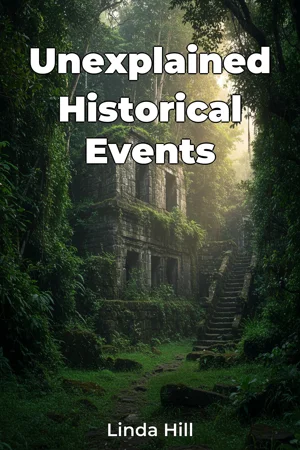
What if history, as we know it, is incomplete? "Unexplained Historical Events" delves into some of history's most enduring enigmas, probing the shadowy corners of the past where documented fact meets persistent mystery. We examine pivotal occurrences and vanished societies that continue to challenge conventional historical narratives, inviting readers to consider alternative perspectives and question established truths. This book focuses on three primary areas of historical ambiguity: the disappearances of civilizations, perplexing artifacts and constructions, and anomalies within established timelines. These topics are significant because they force us to confront the limits of our understanding and the biases inherent in historical interpretation. By examining these mysteries, we not only expand our awareness of the past but also hone our critical thinking skills, enabling us to approach historical narratives with a more discerning eye. To fully appreciate these historical puzzles, a background understanding of standard historical methodology, archaeological principles, and basic cultural anthropology is beneficial. However, we present all evidence and arguments in a clear, accessible manner, ensuring that readers from various backgrounds can engage with the material. The central argument of "Unexplained Historical Events" is that unresolved historical events serve not as mere footnotes to history, but as valuable catalysts for re-evaluating our understanding of the past. By acknowledging the gaps in our knowledge and exploring alternative explanations, we can move toward a more nuanced and comprehensive view of human history. The book begins by establishing the fundamental principles of historical investigation and the inherent limitations of historical records. It moves into compelling case studies. The first major section explores the reasons behind the collapse and disappearance of several civilizations, from the abrupt vanishing of the Indus Valley Civilization to the enigmatic decline of the Maya, analyzing potential contributing factors such as environmental change, internal conflict, and external pressures. The second section examines perplexing artifacts and constructions found throughout the world, such as the Antikythera mechanism, the Nazca Lines, and Göbekli Tepe, questioning their purposes, origins, and implications for our understanding of ancient technology and societal structures. The third major point explores anomalies within established timelines, questioning conventional wisdom. Each chapter presents evidence from archaeological findings, primary source documents, and scholarly research, drawing on diverse fields such as archaeology, anthropology, geology, and climatology. We critically assess both mainstream interpretations and alternative hypotheses, encouraging readers to form their own informed opinions. This book bridges multiple disciplines, connecting historical analysis with scientific investigation and anthropological insights. This interdisciplinary approach provides a more holistic understanding of these complex historical events, enhancing the depth and credibility of our arguments. "Unexplained Historical Events" offers a balanced, objective assessment of each historical problem, presenting evidence from various sources without promoting unfounded speculation or sensationalism. The writing style is engaging and accessible, designed to appeal to a broad audience interested in history, archaeology, and unsolved mysteries. Our target audience includes history enthusiasts, students, armchair archaeologists, and anyone intrigued by the unexplained aspects of the past. The book offers value by providing a rigorous and thought-provoking exploration of historical enigmas, fostering critical thinking, and encouraging a deeper appreciation for the complexities of human history. As a work of non-fiction, this book adheres to the principles of verifiable evidence, accurate reporting, and responsible scholarship. While we explore alternative theories, we clearly distinguish between established facts and speculative interpretations. The scope of this book covers a wide range of geographical locations and historical periods, but we focus on events and phenomena for which credible historical evidence exists, even if the explanations remain elusive. We do not delve into purely mythological or legendary accounts. The information presented in "Unexplained Historical Events" can be applied practically by readers to enhance their critical thinking skills, improve their understanding of historical methodology, and broaden their perspectives on human history. By questioning assumptions and exploring alternative explanations, readers can develop a more nuanced and informed worldview. Many of the events discussed in this book are subjects of ongoing debate and controversy within the historical and scientific communities. We acknowledge these debates and present various perspectives, encouraging readers to engage with the material critically and form their own informed opinions.
What if history, as we know it, is incomplete? "Unexplained Historical Events" delves into some of history's most enduring enigmas, probing the shadowy corners of the past where documented fact meets persistent mystery. We examine pivotal occurrences and vanished societies that continue to challenge conventional historical narratives, inviting readers to consider alternative perspectives and question established truths. This book focuses on three primary areas of historical ambiguity: the disappearances of civilizations, perplexing artifacts and constructions, and anomalies within established timelines. These topics are significant because they force us to confront the limits of our understanding and the biases inherent in historical interpretation. By examining these mysteries, we not only expand our awareness of the past but also hone our critical thinking skills, enabling us to approach historical narratives with a more discerning eye. To fully appreciate these historical puzzles, a background understanding of standard historical methodology, archaeological principles, and basic cultural anthropology is beneficial. However, we present all evidence and arguments in a clear, accessible manner, ensuring that readers from various backgrounds can engage with the material. The central argument of "Unexplained Historical Events" is that unresolved historical events serve not as mere footnotes to history, but as valuable catalysts for re-evaluating our understanding of the past. By acknowledging the gaps in our knowledge and exploring alternative explanations, we can move toward a more nuanced and comprehensive view of human history. The book begins by establishing the fundamental principles of historical investigation and the inherent limitations of historical records. It moves into compelling case studies. The first major section explores the reasons behind the collapse and disappearance of several civilizations, from the abrupt vanishing of the Indus Valley Civilization to the enigmatic decline of the Maya, analyzing potential contributing factors such as environmental change, internal conflict, and external pressures. The second section examines perplexing artifacts and constructions found throughout the world, such as the Antikythera mechanism, the Nazca Lines, and Göbekli Tepe, questioning their purposes, origins, and implications for our understanding of ancient technology and societal structures. The third major point explores anomalies within established timelines, questioning conventional wisdom. Each chapter presents evidence from archaeological findings, primary source documents, and scholarly research, drawing on diverse fields such as archaeology, anthropology, geology, and climatology. We critically assess both mainstream interpretations and alternative hypotheses, encouraging readers to form their own informed opinions. This book bridges multiple disciplines, connecting historical analysis with scientific investigation and anthropological insights. This interdisciplinary approach provides a more holistic understanding of these complex historical events, enhancing the depth and credibility of our arguments. "Unexplained Historical Events" offers a balanced, objective assessment of each historical problem, presenting evidence from various sources without promoting unfounded speculation or sensationalism. The writing style is engaging and accessible, designed to appeal to a broad audience interested in history, archaeology, and unsolved mysteries. Our target audience includes history enthusiasts, students, armchair archaeologists, and anyone intrigued by the unexplained aspects of the past. The book offers value by providing a rigorous and thought-provoking exploration of historical enigmas, fostering critical thinking, and encouraging a deeper appreciation for the complexities of human history. As a work of non-fiction, this book adheres to the principles of verifiable evidence, accurate reporting, and responsible scholarship. While we explore alternative theories, we clearly distinguish between established facts and speculative interpretations. The scope of this book covers a wide range of geographical locations and historical periods, but we focus on events and phenomena for which credible historical evidence exists, even if the explanations remain elusive. We do not delve into purely mythological or legendary accounts. The information presented in "Unexplained Historical Events" can be applied practically by readers to enhance their critical thinking skills, improve their understanding of historical methodology, and broaden their perspectives on human history. By questioning assumptions and exploring alternative explanations, readers can develop a more nuanced and informed worldview. Many of the events discussed in this book are subjects of ongoing debate and controversy within the historical and scientific communities. We acknowledge these debates and present various perspectives, encouraging readers to engage with the material critically and form their own informed opinions.
"Unexplained Historical Events" explores some of history's most puzzling enigmas, inviting readers to question established narratives. The book delves into historical mysteries such as the collapse of lost civilizations like the Indus Valley Civilization and the decline of the Maya, exploring potential factors like environmental shifts and internal conflicts. Furthermore, it examines perplexing ancient artifacts and constructions, including the Antikythera mechanism and Göbekli Tepe, challenging our understanding of ancient technology and societal structures. The book presents evidence from diverse fields, including archaeology and anthropology, providing a balanced assessment of each historical problem. It emphasizes critical thinking by presenting mainstream interpretations alongside alternative hypotheses, encouraging readers to form their own conclusions. The approach begins by establishing historical investigation principles, then proceeds through case studies, ultimately exploring anomalies within established timelines. This book uniquely bridges historical analysis with scientific investigation, offering a holistic perspective on complex historical events. "Unexplained Historical Events" serves as a valuable resource for history enthusiasts, students, and anyone intrigued by the unexplained aspects of our past, fostering a deeper appreciation for the complexities of world history and historical research.
Book Details
ISBN
9788235268549
Publisher
Publifye AS
Your Licenses
You don't own any licenses for this book
Purchase a license below to unlock this book and download the EPUB.
Purchase License
Select a tier to unlock this book
Need bulk licensing?
Contact us for enterprise agreements.