
About This Book
How will cities feed themselves in an era of climate change, population growth, and increasing resource scarcity? "Urban Food Systems" explores the multifaceted challenges and innovative solutions surrounding food production, distribution, and access within urban environments. This book delves into the critical role of cities in shaping sustainable food futures, examining the complex interplay of geography, environmental science, and social equity. At the heart of this exploration lie three key topics: the management of urban food supply chains, the prevalence and impact of food deserts, and the potential of urban farming as a sustainable solution. Understanding these areas is crucial for policymakers, urban planners, community organizers, and engaged citizens seeking to create more resilient and equitable food systems. The book provides a deep dive into the historical context of urban food systems, tracing their evolution alongside urban development and societal changes. It also addresses the scientific underpinnings of food production, including soil science, water management, and ecological principles. Our central argument posits that a holistic, integrated approach is essential for building truly sustainable urban food systems. This requires not only technological innovation but also fundamental shifts in policy, infrastructure, and consumer behavior. We will demonstrate the importance of connecting food production with environmental sustainability, social justice, and economic viability, challenging conventional perspectives that treat these elements as separate entities. The book is structured to first introduce the core concepts of urban food systems, defining key terms and outlining the major challenges and opportunities. We then proceed to examine the complexities of food supply chains, analyzing the flow of food from producers to consumers and identifying critical points of vulnerability and inefficiency. A dedicated section focuses on food deserts, exploring their geographic distribution, socioeconomic causes, and health consequences. This section presents empirical data and case studies to illustrate the lived experiences of individuals and communities affected by food insecurity. Next, we investigate urban farming initiatives, ranging from community gardens and rooftop farms to vertical agriculture and aquaponics. We analyze the environmental benefits, economic viability, and social impacts of these initiatives, providing a balanced assessment of their potential and limitations. Finally, the book culminates in a discussion of policy recommendations and practical strategies for building more sustainable and equitable urban food systems. The analysis presented in "Urban Food Systems" relies on a diverse range of evidence, including statistical data on food production, consumption, and waste; geographic information system (GIS) mapping of food deserts and urban farms; case studies of successful and unsuccessful initiatives; and interviews with farmers, policymakers, and community members. We integrate interdisciplinary perspectives from fields such as urban planning, public health, economics, and sociology to provide a comprehensive understanding of the challenges and opportunities. This book offers a unique perspective by emphasizing the interconnectedness of environmental, social, and economic dimensions of urban food systems. It moves beyond simplistic solutions and promotes a nuanced understanding of the complexities involved. The writing style is academic yet accessible, aiming to engage both scholars and practitioners. The target audience includes undergraduate and graduate students in urban studies, environmental science, geography, and public policy, as well as professionals working in urban planning, food policy, and community development. This book will be valuable to anyone seeking a deeper understanding of the challenges and opportunities surrounding food in cities. "Urban Food Systems" focuses on the North American context, with additional case studies highlighting international perspectives. While the book provides a broad overview of the key issues, it does not delve into the specific details of agricultural practices or food processing technologies. This allows us to maintain a focus on the systemic challenges and policy implications. The information presented in this book can be applied practically by urban planners, policymakers, and community organizations seeking to design and implement effective food system interventions. The book navigates the ongoing debates surrounding the role of technology in urban agriculture, the balance between local and global food systems, and the ethical considerations of food production and consumption. By exploring these controversies, we aim to foster critical thinking and informed decision-making.
How will cities feed themselves in an era of climate change, population growth, and increasing resource scarcity? "Urban Food Systems" explores the multifaceted challenges and innovative solutions surrounding food production, distribution, and access within urban environments. This book delves into the critical role of cities in shaping sustainable food futures, examining the complex interplay of geography, environmental science, and social equity. At the heart of this exploration lie three key topics: the management of urban food supply chains, the prevalence and impact of food deserts, and the potential of urban farming as a sustainable solution. Understanding these areas is crucial for policymakers, urban planners, community organizers, and engaged citizens seeking to create more resilient and equitable food systems. The book provides a deep dive into the historical context of urban food systems, tracing their evolution alongside urban development and societal changes. It also addresses the scientific underpinnings of food production, including soil science, water management, and ecological principles. Our central argument posits that a holistic, integrated approach is essential for building truly sustainable urban food systems. This requires not only technological innovation but also fundamental shifts in policy, infrastructure, and consumer behavior. We will demonstrate the importance of connecting food production with environmental sustainability, social justice, and economic viability, challenging conventional perspectives that treat these elements as separate entities. The book is structured to first introduce the core concepts of urban food systems, defining key terms and outlining the major challenges and opportunities. We then proceed to examine the complexities of food supply chains, analyzing the flow of food from producers to consumers and identifying critical points of vulnerability and inefficiency. A dedicated section focuses on food deserts, exploring their geographic distribution, socioeconomic causes, and health consequences. This section presents empirical data and case studies to illustrate the lived experiences of individuals and communities affected by food insecurity. Next, we investigate urban farming initiatives, ranging from community gardens and rooftop farms to vertical agriculture and aquaponics. We analyze the environmental benefits, economic viability, and social impacts of these initiatives, providing a balanced assessment of their potential and limitations. Finally, the book culminates in a discussion of policy recommendations and practical strategies for building more sustainable and equitable urban food systems. The analysis presented in "Urban Food Systems" relies on a diverse range of evidence, including statistical data on food production, consumption, and waste; geographic information system (GIS) mapping of food deserts and urban farms; case studies of successful and unsuccessful initiatives; and interviews with farmers, policymakers, and community members. We integrate interdisciplinary perspectives from fields such as urban planning, public health, economics, and sociology to provide a comprehensive understanding of the challenges and opportunities. This book offers a unique perspective by emphasizing the interconnectedness of environmental, social, and economic dimensions of urban food systems. It moves beyond simplistic solutions and promotes a nuanced understanding of the complexities involved. The writing style is academic yet accessible, aiming to engage both scholars and practitioners. The target audience includes undergraduate and graduate students in urban studies, environmental science, geography, and public policy, as well as professionals working in urban planning, food policy, and community development. This book will be valuable to anyone seeking a deeper understanding of the challenges and opportunities surrounding food in cities. "Urban Food Systems" focuses on the North American context, with additional case studies highlighting international perspectives. While the book provides a broad overview of the key issues, it does not delve into the specific details of agricultural practices or food processing technologies. This allows us to maintain a focus on the systemic challenges and policy implications. The information presented in this book can be applied practically by urban planners, policymakers, and community organizations seeking to design and implement effective food system interventions. The book navigates the ongoing debates surrounding the role of technology in urban agriculture, the balance between local and global food systems, and the ethical considerations of food production and consumption. By exploring these controversies, we aim to foster critical thinking and informed decision-making.
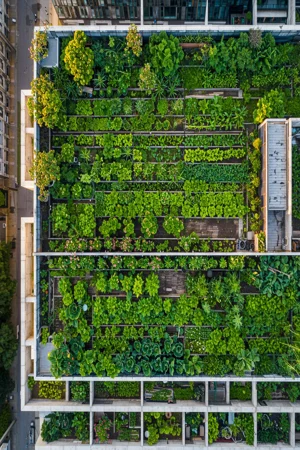
"Urban Food Systems" examines the critical challenges and innovative solutions for feeding growing urban populations sustainably. With climate change and resource scarcity looming, the book explores how cities can reshape their food systems to ensure food security and environmental sustainability. It highlights the importance of managing urban food supply chains efficiently, addressing the pervasive issue of food deserts, and leveraging the potential of urban farming and urban agriculture. Did you know that GIS mapping helps visualize and understand the geographic distribution of food deserts? Furthermore, urban farming initiatives, such as rooftop farms, offer environmental benefits and can enhance social equity. The book champions a holistic approach, integrating technological innovation with policy changes and shifts in consumer behavior. It emphasizes connecting food production with environmental sustainability, social justice, and economic viability. For instance, just as a balanced ecosystem requires diverse species, a sustainable urban food system requires diverse strategies and collaborations. Progressing through its chapters, the book introduces core concepts, analyzes food supply chains, explores food deserts, investigates urban farming, and concludes with policy recommendations. This comprehensive approach makes the book a valuable resource for policymakers, urban planners, and anyone interested in creating more resilient and equitable food systems.
Book Details
ISBN
9788235268532
Publisher
Publifye AS
Your Licenses
You don't own any licenses for this book
Purchase a license below to unlock this book and download the EPUB.
Purchase License
Select a tier to unlock this book
Need bulk licensing?
Contact us for enterprise agreements.