
About This Book
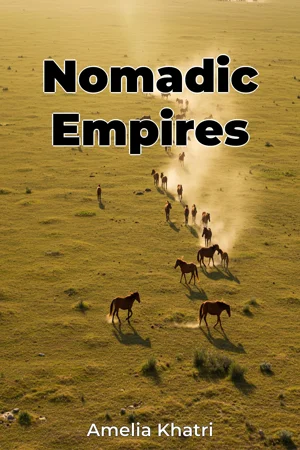
How did horseback-riding societies, often perceived as barbaric raiders, shape the course of civilizations and empires across continents? This book, "Nomadic Empires," delves into the complex history of nomadic groups like the Mongols, Huns, and Scythians, examining their ascent to power, their sophisticated social and military structures, and the lasting impact they had on the sedentary societies they interacted with and, at times, conquered. We will explore not only their military prowess but also their contributions to trade, cultural exchange, and political innovation. The book is structured around three primary thematic areas. First, it examines the ecological and technological factors that gave rise to nomadic societies, particularly the domestication of the horse and the development of mobile pastoralism. Second, it analyzes the ways in which these societies organized themselves politically and militarily, focusing on their ability to mobilize large armies and create sophisticated administrative systems. Finally, the book investigates the long-term consequences of nomadic expansion, including the spread of new technologies, the reshaping of political boundaries, and the fusion of nomadic and sedentary cultures. The central argument of "Nomadic Empires" is that nomadic groups were not simply destructive forces but also agents of significant historical change. Their mobility, adaptability, and military skill enabled them to challenge established empires, facilitate trade, and transmit ideas across vast distances. Understanding their role requires moving beyond simplistic narratives of barbarism versus civilization and appreciating the complex interactions between nomadic and sedentary societies. The book presents a comprehensive overview of nomadic empires, beginning with an introduction to the core concepts of nomadism, pastoralism, and steppe ecology. It then proceeds chronologically, examining the rise and fall of several key nomadic groups, including the Scythians, known for their horsemanship and distinctive art; the Huns, whose westward migration destabilized the Roman Empire; and, most notably, the Mongols, who forged the largest contiguous land empire in history. Each case study explores the group's origins, social structure, military tactics, and relationship with neighboring sedentary societies. The book culminates with an analysis of the legacy of nomadic empires, considering their impact on political institutions, trade networks, and cultural exchange. To support its arguments, "Nomadic Empires" draws on a wide range of primary and secondary sources, including archaeological evidence, historical chronicles, diplomatic correspondence, and ethnographic studies. It also incorporates recent scholarship on steppe societies and the dynamics of nomadic-sedentary interactions. The book utilizes comparative analysis, considering similarities and differences between various nomadic groups and examining the factors that contributed to their success or failure. "Nomadic Empires" intersects with several other fields of study, including archaeology, anthropology, and political science. Archaeological evidence provides insights into the material culture of nomadic societies, while anthropology sheds light on their social organization and belief systems. Political science offers frameworks for understanding the dynamics of empire-building and the interaction between states. It connects with environmental history, considering the impact of climate change and resource availability on nomadic societies. This book offers a fresh perspective by treating nomadic empires not as peripheral actors but as central players in world history. It challenges conventional narratives that focus primarily on sedentary civilizations and highlights the crucial role of nomadic groups in shaping the political, economic, and cultural landscape of Eurasia. The tone of the book is academic yet accessible, aiming to present complex historical information in a clear and engaging manner. "Nomadic Empires" is intended for a broad audience, including students, scholars, and general readers interested in world history, military history, and the history of Eurasia. It will be of particular value to those seeking a more nuanced understanding of nomadic societies and their impact on the world. This book adheres to the conventions of non-fiction history by providing accurate, well-documented information and presenting arguments in a clear and logical manner. While the book aims to provide a comprehensive overview of nomadic empires, it necessarily focuses on the most influential groups and regions. It does not delve into the details of every nomadic society that has existed throughout history. The lessons learned from studying nomadic empires can be applied to contemporary issues, such as understanding the dynamics of globalization, the challenges of managing cultural diversity, and the importance of adapting to changing environmental conditions. The book could also be useful for policymakers seeking to understand the historical roots of conflict and cooperation in Eurasia. It addresses ongoing debates concerning the nature of nomadic power and the legacy of nomadic empires.
How did horseback-riding societies, often perceived as barbaric raiders, shape the course of civilizations and empires across continents? This book, "Nomadic Empires," delves into the complex history of nomadic groups like the Mongols, Huns, and Scythians, examining their ascent to power, their sophisticated social and military structures, and the lasting impact they had on the sedentary societies they interacted with and, at times, conquered. We will explore not only their military prowess but also their contributions to trade, cultural exchange, and political innovation. The book is structured around three primary thematic areas. First, it examines the ecological and technological factors that gave rise to nomadic societies, particularly the domestication of the horse and the development of mobile pastoralism. Second, it analyzes the ways in which these societies organized themselves politically and militarily, focusing on their ability to mobilize large armies and create sophisticated administrative systems. Finally, the book investigates the long-term consequences of nomadic expansion, including the spread of new technologies, the reshaping of political boundaries, and the fusion of nomadic and sedentary cultures. The central argument of "Nomadic Empires" is that nomadic groups were not simply destructive forces but also agents of significant historical change. Their mobility, adaptability, and military skill enabled them to challenge established empires, facilitate trade, and transmit ideas across vast distances. Understanding their role requires moving beyond simplistic narratives of barbarism versus civilization and appreciating the complex interactions between nomadic and sedentary societies. The book presents a comprehensive overview of nomadic empires, beginning with an introduction to the core concepts of nomadism, pastoralism, and steppe ecology. It then proceeds chronologically, examining the rise and fall of several key nomadic groups, including the Scythians, known for their horsemanship and distinctive art; the Huns, whose westward migration destabilized the Roman Empire; and, most notably, the Mongols, who forged the largest contiguous land empire in history. Each case study explores the group's origins, social structure, military tactics, and relationship with neighboring sedentary societies. The book culminates with an analysis of the legacy of nomadic empires, considering their impact on political institutions, trade networks, and cultural exchange. To support its arguments, "Nomadic Empires" draws on a wide range of primary and secondary sources, including archaeological evidence, historical chronicles, diplomatic correspondence, and ethnographic studies. It also incorporates recent scholarship on steppe societies and the dynamics of nomadic-sedentary interactions. The book utilizes comparative analysis, considering similarities and differences between various nomadic groups and examining the factors that contributed to their success or failure. "Nomadic Empires" intersects with several other fields of study, including archaeology, anthropology, and political science. Archaeological evidence provides insights into the material culture of nomadic societies, while anthropology sheds light on their social organization and belief systems. Political science offers frameworks for understanding the dynamics of empire-building and the interaction between states. It connects with environmental history, considering the impact of climate change and resource availability on nomadic societies. This book offers a fresh perspective by treating nomadic empires not as peripheral actors but as central players in world history. It challenges conventional narratives that focus primarily on sedentary civilizations and highlights the crucial role of nomadic groups in shaping the political, economic, and cultural landscape of Eurasia. The tone of the book is academic yet accessible, aiming to present complex historical information in a clear and engaging manner. "Nomadic Empires" is intended for a broad audience, including students, scholars, and general readers interested in world history, military history, and the history of Eurasia. It will be of particular value to those seeking a more nuanced understanding of nomadic societies and their impact on the world. This book adheres to the conventions of non-fiction history by providing accurate, well-documented information and presenting arguments in a clear and logical manner. While the book aims to provide a comprehensive overview of nomadic empires, it necessarily focuses on the most influential groups and regions. It does not delve into the details of every nomadic society that has existed throughout history. The lessons learned from studying nomadic empires can be applied to contemporary issues, such as understanding the dynamics of globalization, the challenges of managing cultural diversity, and the importance of adapting to changing environmental conditions. The book could also be useful for policymakers seeking to understand the historical roots of conflict and cooperation in Eurasia. It addresses ongoing debates concerning the nature of nomadic power and the legacy of nomadic empires.
"Nomadic Empires" explores the significant role of nomadic societies, such as the Mongols, Huns, and Scythians, in shaping world history. Often viewed as mere raiders, these horseback-riding cultures profoundly influenced civilizations across Eurasia. The book examines their sophisticated military and social structures, highlighting that their impact extended beyond conquest to include trade, cultural exchange, and political innovation. For instance, the Mongols created the largest contiguous land empire, demonstrating remarkable organizational skills and military prowess. The book's approach examines the ecological and technological advantages of nomadic life, like the domestication of the horse, and how these societies were organized politically and militarily. It then investigates the long-term consequences of nomadic expansion, including technological diffusion and cultural blending. By analyzing diverse nomadic groups, "Nomadic Empires" argues that these societies were not just destructive forces but key agents of historical change. Beginning with an introduction to nomadism and steppe ecology, the book progresses chronologically through case studies of key nomadic groups. From the Scythians, admired for their horsemanship, to the Huns, whose migrations impacted the Roman Empire, each chapter delves into the group's origins, social structure, and interactions with sedentary societies. Ultimately, the book provides a fresh perspective on world history by highlighting the central role of nomadic empires in shaping the Eurasian landscape.
Book Details
ISBN
9788235268525
Publisher
Publifye AS
Your Licenses
You don't own any licenses for this book
Purchase a license below to unlock this book and download the EPUB.
Purchase License
Select a tier to unlock this book
Need bulk licensing?
Contact us for enterprise agreements.