
About This Book
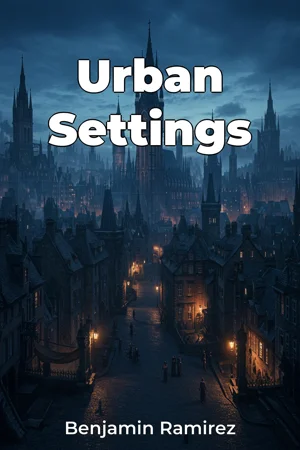
How do the cities we inhabit not only provide shelter but also fundamentally shape the stories we tell? This book, *Urban Settings*, examines the crucial relationship between urban environments and the construction of tone and conflict in genre fiction. It explores how the architectural and social elements of cities serve as active agents in shaping narratives, influencing character development, plot trajectory, and thematic resonance. It is relevant to readers interested in social sciences, particularly those related to our understanding of architecture and urbanism. The book focuses on three primary areas: first, the use of architectural design and urban planning to establish specific moods or atmospheres within fictional worlds. Second, it analyzes how urban spaces can generate and exacerbate conflict, both internal and external, for characters. Third, it investigates how social dynamics within cities, stemming from diverse populations and power structures, contribute to the overarching themes of genre fiction. Understanding the urban environment's impact on narrative requires a basic familiarity with architectural styles, urban planning principles, and sociological concepts related to urban life. Historical shifts in urban design, from the gridded layouts of ancient Roman cities to the modernist visions of the 20th century, have profoundly altered the social and psychological experiences of city dwellers, and consequently, the stories that emerge from these settings. The central argument of *Urban Settings* is that the city is not merely a backdrop but an active participant in shaping the narratives within genre fiction. By dissecting the interplay between urban spaces and storytelling, the book highlights the profound influence of the built environment on our collective imagination and understanding of the human condition. This understanding holds significance for those interested in how our environment shapes our stories. This book unfolds in a structured manner. It begins by introducing core concepts of architectural semiotics—how buildings and urban layouts communicate meaning—and their relevance to setting tone. It then progresses to explore how specific urban features, such as public squares, alleyways, and iconic buildings, function as stages for conflict, influencing character choices and driving plot developments. The book’s middle section examines the role of social stratification within cities, analyzing how segregation, gentrification, and access to resources impact narrative themes of power, justice, and social mobility. The culmination of the argument consolidates these findings, showcasing how urban environments serve as potent symbols that reflect and reinforce underlying social, political, and cultural anxieties. It then applies the framework to various case studies. The evidence presented is drawn from literary analysis of genre fiction, architectural theory, urban studies research, and sociological studies of city life. Specific examples from diverse genres, including science fiction, fantasy, crime fiction, and horror, illustrate the theoretical concepts. Unique data sources include architectural renderings, city maps, and demographic data, providing a multifaceted understanding of the urban settings examined. *Urban Settings* connects to several interdisciplinary fields, including sociology, history, and psychology. Sociological perspectives on urban inequality and social interaction inform the analysis of conflict within fictional cities. Historical contexts of urban development provide a backdrop for understanding the evolution of urban settings in literature. Psychological studies of environmental perception shed light on how characters respond to their surroundings. This book offers a unique perspective by providing a rigorous framework for analyzing the narrative functions of urban environments in genre fiction. It encourages readers to think critically about how cities are represented and how these representations shape our perceptions of urban life. The tone of the book is academic, grounded in research, yet accessible to a broad audience interested in urban studies and literary analysis. The writing style balances theoretical discussions with concrete examples, ensuring the arguments are both intellectually stimulating and easily understandable. The target audience includes students and scholars of architecture, urban studies, literature, and cultural studies, as well as writers and readers of genre fiction. This book is valuable to this audience because it offers a new lens through which to interpret and appreciate the complexities of urban environments in storytelling. As a work of non-fiction within the specified genres, *Urban Settings* aims to provide a systematic and evidence-based analysis of its subject matter. It adheres to scholarly conventions of citation, documentation, and argumentation, while also striving to engage readers with clear and compelling prose. The scope of the book is intentionally broad, encompassing a wide range of urban environments and genre fiction. However, it is limited by its focus on Western urban traditions and narratives, acknowledging the need for further research into non-Western contexts. The information presented in *Urban Settings* can be applied practically by urban planners, architects, and writers. Planners and architects can use the book's insights to design spaces that promote positive social interactions and address potential sources of conflict. Writers can leverage the book's framework to create more realistic and compelling urban settings in their fiction. While the book steers clear of overt controversies, it touches upon debates surrounding urban development, social inequality, and the representation of marginalized communities in fiction. By engaging with these issues, the book contributes to ongoing dialogues about the role of cities in shaping our lives and imaginations. This book is useful to academics, writers and city planners.
How do the cities we inhabit not only provide shelter but also fundamentally shape the stories we tell? This book, *Urban Settings*, examines the crucial relationship between urban environments and the construction of tone and conflict in genre fiction. It explores how the architectural and social elements of cities serve as active agents in shaping narratives, influencing character development, plot trajectory, and thematic resonance. It is relevant to readers interested in social sciences, particularly those related to our understanding of architecture and urbanism. The book focuses on three primary areas: first, the use of architectural design and urban planning to establish specific moods or atmospheres within fictional worlds. Second, it analyzes how urban spaces can generate and exacerbate conflict, both internal and external, for characters. Third, it investigates how social dynamics within cities, stemming from diverse populations and power structures, contribute to the overarching themes of genre fiction. Understanding the urban environment's impact on narrative requires a basic familiarity with architectural styles, urban planning principles, and sociological concepts related to urban life. Historical shifts in urban design, from the gridded layouts of ancient Roman cities to the modernist visions of the 20th century, have profoundly altered the social and psychological experiences of city dwellers, and consequently, the stories that emerge from these settings. The central argument of *Urban Settings* is that the city is not merely a backdrop but an active participant in shaping the narratives within genre fiction. By dissecting the interplay between urban spaces and storytelling, the book highlights the profound influence of the built environment on our collective imagination and understanding of the human condition. This understanding holds significance for those interested in how our environment shapes our stories. This book unfolds in a structured manner. It begins by introducing core concepts of architectural semiotics—how buildings and urban layouts communicate meaning—and their relevance to setting tone. It then progresses to explore how specific urban features, such as public squares, alleyways, and iconic buildings, function as stages for conflict, influencing character choices and driving plot developments. The book’s middle section examines the role of social stratification within cities, analyzing how segregation, gentrification, and access to resources impact narrative themes of power, justice, and social mobility. The culmination of the argument consolidates these findings, showcasing how urban environments serve as potent symbols that reflect and reinforce underlying social, political, and cultural anxieties. It then applies the framework to various case studies. The evidence presented is drawn from literary analysis of genre fiction, architectural theory, urban studies research, and sociological studies of city life. Specific examples from diverse genres, including science fiction, fantasy, crime fiction, and horror, illustrate the theoretical concepts. Unique data sources include architectural renderings, city maps, and demographic data, providing a multifaceted understanding of the urban settings examined. *Urban Settings* connects to several interdisciplinary fields, including sociology, history, and psychology. Sociological perspectives on urban inequality and social interaction inform the analysis of conflict within fictional cities. Historical contexts of urban development provide a backdrop for understanding the evolution of urban settings in literature. Psychological studies of environmental perception shed light on how characters respond to their surroundings. This book offers a unique perspective by providing a rigorous framework for analyzing the narrative functions of urban environments in genre fiction. It encourages readers to think critically about how cities are represented and how these representations shape our perceptions of urban life. The tone of the book is academic, grounded in research, yet accessible to a broad audience interested in urban studies and literary analysis. The writing style balances theoretical discussions with concrete examples, ensuring the arguments are both intellectually stimulating and easily understandable. The target audience includes students and scholars of architecture, urban studies, literature, and cultural studies, as well as writers and readers of genre fiction. This book is valuable to this audience because it offers a new lens through which to interpret and appreciate the complexities of urban environments in storytelling. As a work of non-fiction within the specified genres, *Urban Settings* aims to provide a systematic and evidence-based analysis of its subject matter. It adheres to scholarly conventions of citation, documentation, and argumentation, while also striving to engage readers with clear and compelling prose. The scope of the book is intentionally broad, encompassing a wide range of urban environments and genre fiction. However, it is limited by its focus on Western urban traditions and narratives, acknowledging the need for further research into non-Western contexts. The information presented in *Urban Settings* can be applied practically by urban planners, architects, and writers. Planners and architects can use the book's insights to design spaces that promote positive social interactions and address potential sources of conflict. Writers can leverage the book's framework to create more realistic and compelling urban settings in their fiction. While the book steers clear of overt controversies, it touches upon debates surrounding urban development, social inequality, and the representation of marginalized communities in fiction. By engaging with these issues, the book contributes to ongoing dialogues about the role of cities in shaping our lives and imaginations. This book is useful to academics, writers and city planners.
*Urban Settings* explores the dynamic relationship between urban environments and storytelling in genre fiction. It argues that cities aren't just backdrops but active participants shaping narratives, influencing everything from character development to thematic resonance. For instance, architectural design choices can establish specific moods, while urban planning can exacerbate conflict. This is particularly relevant for those in social sciences, architecture, and urban studies. The book uniquely dissects how elements like public squares and iconic buildings function as stages for conflict, driving plot developments. It also examines how social stratification in cities impacts themes of power and justice. Understanding this interplay requires familiarity with architectural styles, urban planning, and sociological concepts, offering a new lens to interpret urban complexities in storytelling. Beginning with architectural semiotics and its role in setting tone, the book progresses to explore specific urban features as catalysts for conflict. It culminates by consolidating these findings, showcasing how urban environments symbolize and reinforce social, political, and cultural anxieties, using case studies from diverse genres. This approach makes it valuable for academics, writers, and city planners alike.
Book Details
ISBN
9788235268495
Publisher
Publifye AS
Your Licenses
You don't own any licenses for this book
Purchase a license below to unlock this book and download the EPUB.
Purchase License
Select a tier to unlock this book
Need bulk licensing?
Contact us for enterprise agreements.