
About This Book
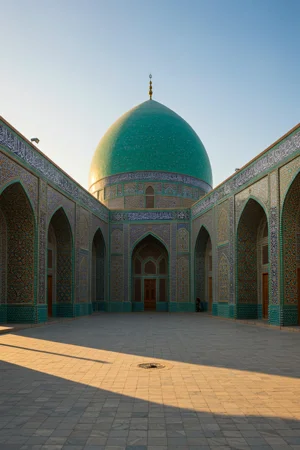
How did the artistic vision of Persia shape a cultural landscape that continues to resonate across the Middle East and beyond? "Persian Arts" delves into the significant achievements of Persian civilization in literature, calligraphy, and architecture, examining their profound and lasting influence on Middle Eastern culture. This book stresses the pivotal role that Persian artistic expression played in fostering a shared cultural identity and facilitating intellectual exchange throughout the region. At its core, this book focuses on three key areas: the evolution of Persian literature and its impact on regional storytelling traditions, the development of Persian calligraphy as a revered art form and its use in disseminating knowledge and culture, and the architectural innovations of Persia and their influence on the design of mosques, palaces, and public spaces throughout the Middle East. Understanding these topics is essential for appreciating the intricate tapestry of Middle Eastern cultural heritage and recognizing the often-understated contributions of Persian artisans and thinkers. "Persian Arts" contextualizes these artistic achievements within the broader sweep of Iranian history, from the Achaemenid Empire to the modern era, detailing the social, political, and religious factors that shaped artistic production. It assumes the reader has a general familiarity with Middle Eastern history but provides specific details regarding Persian dynasties and their patronage of the arts. The central argument of "Persian Arts" is that Persian artistic endeavors were not merely aesthetic creations; they were powerful tools that fostered cultural cohesion and intellectual exchange throughout the Middle East. This book explores how Persian literature provided a common language of shared values and narratives, how calligraphy served as a bridge for transmitting knowledge and religious beliefs, and how architectural designs influenced civic and religious spaces. The book unfolds in several stages. It begins by introducing the core concepts of Persian artistic expression and their historical roots. Subsequent chapters then explore the development of Persian literature, tracing its evolution from epic poetry to mystical verse and examining its influence on Arabic and Turkish literary traditions. Another section concentrates on Persian calligraphy, analyzing its various styles, techniques, and applications in manuscript illumination, architectural decoration, and other art forms. The book then turns to Persian architecture, highlighting its innovative features, such as the use of arches, domes, and intricate tilework, and demonstrating their impact on building design across the Middle East. The culmination of the book analyzes how these artistic achievements collaboratively shaped Middle Eastern culture. It also examines the modern-day relevance of these historical achievements. The arguments presented in "Persian Arts" are supported by a wealth of evidence, including analyses of Persian literary texts, studies of calligraphic masterpieces, and architectural surveys of historical sites. The book also draws upon primary sources such as historical chronicles, travelogues, and artistic treatises. "Persian Arts" also connects to other fields such as religious studies by considering the links between Sufism and Persian poetry, and political science by examining the role of royal patronage in promoting artistic development. Additionally, it demonstrates impacts on the field of comparative literature through analysis of literary exchanges between Persian, Arabic, and Turkish writers. This book provides a fresh perspective by highlighting Persia's role in shaping a common Middle Eastern identity. It uses meticulous analysis of primary sources and art objects to illustrate a compelling narrative. Written in an accessible yet scholarly style, "Persian Arts" aims to engage both academic experts and general readers interested in Middle Eastern art and culture. It provides a comprehensive yet readable account of Persian artistic achievements. Targeted at students, researchers, and anyone with an interest in art history, Middle Eastern studies, and cultural exchange, this book offers valuable insights into the artistic heritage of Persia. This book focuses predominantly on the classical period of Persian artistic development, with less emphasis on contemporary art forms. Furthermore, while it acknowledges the influence of other cultures on Persian art, its primary focus remains on the outward influence of Persian artistic forms. Readers will gain a deeper understanding of Middle Eastern cultural heritage by studying Persian artistic traditions. This knowledge can be applied to architectural preservation, understanding literature, and informing contemporary design. While there is general consensus regarding the importance of Persian art, debates continue regarding the extent of its influence relative to other cultures. This book engages with these debates by providing a nuanced account of Persian artistic achievements and their impact.
How did the artistic vision of Persia shape a cultural landscape that continues to resonate across the Middle East and beyond? "Persian Arts" delves into the significant achievements of Persian civilization in literature, calligraphy, and architecture, examining their profound and lasting influence on Middle Eastern culture. This book stresses the pivotal role that Persian artistic expression played in fostering a shared cultural identity and facilitating intellectual exchange throughout the region. At its core, this book focuses on three key areas: the evolution of Persian literature and its impact on regional storytelling traditions, the development of Persian calligraphy as a revered art form and its use in disseminating knowledge and culture, and the architectural innovations of Persia and their influence on the design of mosques, palaces, and public spaces throughout the Middle East. Understanding these topics is essential for appreciating the intricate tapestry of Middle Eastern cultural heritage and recognizing the often-understated contributions of Persian artisans and thinkers. "Persian Arts" contextualizes these artistic achievements within the broader sweep of Iranian history, from the Achaemenid Empire to the modern era, detailing the social, political, and religious factors that shaped artistic production. It assumes the reader has a general familiarity with Middle Eastern history but provides specific details regarding Persian dynasties and their patronage of the arts. The central argument of "Persian Arts" is that Persian artistic endeavors were not merely aesthetic creations; they were powerful tools that fostered cultural cohesion and intellectual exchange throughout the Middle East. This book explores how Persian literature provided a common language of shared values and narratives, how calligraphy served as a bridge for transmitting knowledge and religious beliefs, and how architectural designs influenced civic and religious spaces. The book unfolds in several stages. It begins by introducing the core concepts of Persian artistic expression and their historical roots. Subsequent chapters then explore the development of Persian literature, tracing its evolution from epic poetry to mystical verse and examining its influence on Arabic and Turkish literary traditions. Another section concentrates on Persian calligraphy, analyzing its various styles, techniques, and applications in manuscript illumination, architectural decoration, and other art forms. The book then turns to Persian architecture, highlighting its innovative features, such as the use of arches, domes, and intricate tilework, and demonstrating their impact on building design across the Middle East. The culmination of the book analyzes how these artistic achievements collaboratively shaped Middle Eastern culture. It also examines the modern-day relevance of these historical achievements. The arguments presented in "Persian Arts" are supported by a wealth of evidence, including analyses of Persian literary texts, studies of calligraphic masterpieces, and architectural surveys of historical sites. The book also draws upon primary sources such as historical chronicles, travelogues, and artistic treatises. "Persian Arts" also connects to other fields such as religious studies by considering the links between Sufism and Persian poetry, and political science by examining the role of royal patronage in promoting artistic development. Additionally, it demonstrates impacts on the field of comparative literature through analysis of literary exchanges between Persian, Arabic, and Turkish writers. This book provides a fresh perspective by highlighting Persia's role in shaping a common Middle Eastern identity. It uses meticulous analysis of primary sources and art objects to illustrate a compelling narrative. Written in an accessible yet scholarly style, "Persian Arts" aims to engage both academic experts and general readers interested in Middle Eastern art and culture. It provides a comprehensive yet readable account of Persian artistic achievements. Targeted at students, researchers, and anyone with an interest in art history, Middle Eastern studies, and cultural exchange, this book offers valuable insights into the artistic heritage of Persia. This book focuses predominantly on the classical period of Persian artistic development, with less emphasis on contemporary art forms. Furthermore, while it acknowledges the influence of other cultures on Persian art, its primary focus remains on the outward influence of Persian artistic forms. Readers will gain a deeper understanding of Middle Eastern cultural heritage by studying Persian artistic traditions. This knowledge can be applied to architectural preservation, understanding literature, and informing contemporary design. While there is general consensus regarding the importance of Persian art, debates continue regarding the extent of its influence relative to other cultures. This book engages with these debates by providing a nuanced account of Persian artistic achievements and their impact.
"Persian Arts" explores the significant artistic contributions of Persia and their lasting influence on Middle Eastern culture. The book focuses on Persian literature, calligraphy, and architecture, revealing how these art forms fostered a shared cultural identity and facilitated intellectual exchange. For instance, Persian literature, with its epic poetry and mystical verse, shaped regional storytelling traditions. Similarly, Persian calligraphy became a revered art form, disseminating knowledge and culture through manuscript illumination and architectural decoration. The book contextualizes these artistic achievements within Iranian history, from the Achaemenid Empire onward, detailing the social, political, and religious factors that shaped artistic production. "Persian Arts" argues that Persian artistic endeavors were powerful tools for cultural cohesion. Persian architecture, known for its arches, domes, and intricate tilework, significantly impacted mosque design and public spaces across the Middle East. The book progresses by first introducing core concepts, then exploring literature, calligraphy, and architecture in separate sections, culminating in an analysis of how these elements shaped Middle Eastern culture.
Book Details
ISBN
9788235268464
Publisher
Publifye AS
Your Licenses
You don't own any licenses for this book
Purchase a license below to unlock this book and download the EPUB.
Purchase License
Select a tier to unlock this book
Need bulk licensing?
Contact us for enterprise agreements.