
About This Book
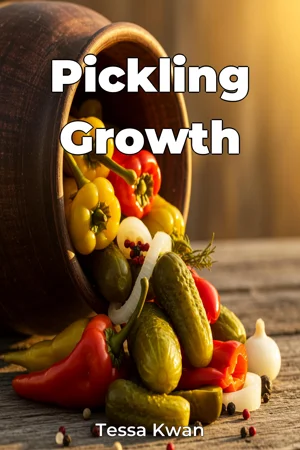
Have you ever considered how a simple jar of pickles embodies centuries of human ingenuity and cultural exchange? "Pickling Growth" explores the transformative history of pickling, revealing how this ancient food preservation technique not only sustained populations but also shaped global cuisines and trade routes. This book delves into three key areas. First, it examines the historical evolution of pickling, tracing its origins from ancient Mesopotamia and Egypt to its widespread adoption across diverse cultures. Second, it analyzes the scientific principles underlying pickling, explaining how fermentation and acidity inhibit spoilage. Finally, it explores the diverse culinary applications of pickling, showcasing its influence on regional cuisines worldwide. These topics are crucial because they reveal the profound impact of a seemingly simple process on human history, food science, and culinary traditions. Understanding "Pickling Growth" requires no specialized scientific background, though a basic awareness of food preservation techniques will be helpful. The book provides a historical context, outlining early methods of food storage and preservation, such as drying and salting, before focusing on the unique advantages of pickling. It also offers a basic scientific overview of microbial activity and the role of acids and salts in inhibiting bacterial growth. The central argument of this book is that pickling is not merely a method of food preservation but also a catalyst for cultural exchange and culinary innovation. It contends that the availability of pickled foods enabled long-distance trade, facilitated exploration, and contributed to the development of unique regional foodways. This argument is significant because it challenges the conventional view of pickling as a simple kitchen technique and instead positions it as a key driver of historical and cultural change. The book begins by introducing the fundamental concepts of pickling, including the different methods used (fermentation, vinegar-based pickling, etc.) and the various ingredients involved (salt, acids, spices). It then develops its central argument through three major sections. The first section explores the historical development of pickling across different cultures, examining its role in ancient civilizations, medieval societies, and the age of exploration. The second section delves into the scientific principles of pickling, explaining the mechanisms of food preservation and the impact of pickling on nutritional content. The third section showcases the diverse culinary applications of pickling, examining its role in various regional cuisines and its contribution to contemporary culinary trends. The book culminates by discussing the practical applications of pickling in modern food production and its potential for addressing food security challenges. The evidence presented in "Pickling Growth" draws upon a variety of sources, including archaeological findings, historical texts, scientific research papers, and culinary records. It incorporates data from food science studies, historical accounts of trade and exploration, and ethnographic studies of food cultures. The book also utilizes recipes and culinary traditions as primary sources, analyzing how pickling techniques have been adapted and modified across different cultures. "Pickling Growth" connects to several other fields of study. It intersects with history by examining the role of pickling in trade, exploration, and cultural exchange. It connects to food science by exploring the chemical and biological processes involved in pickling. It also relates to anthropology and sociology by examining the cultural significance of pickled foods and their role in shaping social identities. These interdisciplinary connections enrich the book's argument by providing a holistic perspective on the impact of pickling. This book takes a unique approach by combining historical analysis with scientific explanations and culinary explorations. It not only traces the historical development of pickling but also explains the underlying scientific principles and showcases its diverse culinary applications. This comprehensive approach provides a deeper understanding of the transformative power of pickling. The tone of "Pickling Growth" is informative and engaging. While grounded in factual accuracy and rigorous research, the book is written in a clear and accessible style that is suitable for a general audience. The writing style aims to convey complex ideas in an understandable and engaging manner. The target audience for "Pickling Growth" includes food enthusiasts, history buffs, culinary professionals, and anyone interested in the intersection of food, culture, and science. This book would be valuable to readers seeking to understand the profound impact of pickling on human history and culinary traditions. As a non-fiction work of history and cooking, "Pickling Growth" adheres to the genre conventions of providing accurate information, supporting claims with evidence, and presenting a clear and logical argument. In line with expectations for this type of book, careful citations and source notes are included. The scope of "Pickling Growth" covers the historical development, scientific principles, and culinary applications of pickling across various cultures and time periods. While it strives to be comprehensive, the book acknowledges limitations in covering every single culture or specific pickling technique. For example, while many examples are included, the book focuses on major traditions and innovations. The information in "Pickling Growth" can be applied practically by readers interested in learning about traditional food preservation techniques, experimenting with different pickling recipes, or understanding the science behind fermented foods. It can also be used by culinary professionals seeking to incorporate pickling techniques into their menus. While pickling is generally accepted as a safe and effective method of food preservation, there are ongoing debates in the field of food science regarding the optimal methods of pickling and the potential health benefits and risks associated with consuming pickled foods. "Pickling Growth" addresses these debates by presenting a balanced perspective based on current scientific research.
Have you ever considered how a simple jar of pickles embodies centuries of human ingenuity and cultural exchange? "Pickling Growth" explores the transformative history of pickling, revealing how this ancient food preservation technique not only sustained populations but also shaped global cuisines and trade routes. This book delves into three key areas. First, it examines the historical evolution of pickling, tracing its origins from ancient Mesopotamia and Egypt to its widespread adoption across diverse cultures. Second, it analyzes the scientific principles underlying pickling, explaining how fermentation and acidity inhibit spoilage. Finally, it explores the diverse culinary applications of pickling, showcasing its influence on regional cuisines worldwide. These topics are crucial because they reveal the profound impact of a seemingly simple process on human history, food science, and culinary traditions. Understanding "Pickling Growth" requires no specialized scientific background, though a basic awareness of food preservation techniques will be helpful. The book provides a historical context, outlining early methods of food storage and preservation, such as drying and salting, before focusing on the unique advantages of pickling. It also offers a basic scientific overview of microbial activity and the role of acids and salts in inhibiting bacterial growth. The central argument of this book is that pickling is not merely a method of food preservation but also a catalyst for cultural exchange and culinary innovation. It contends that the availability of pickled foods enabled long-distance trade, facilitated exploration, and contributed to the development of unique regional foodways. This argument is significant because it challenges the conventional view of pickling as a simple kitchen technique and instead positions it as a key driver of historical and cultural change. The book begins by introducing the fundamental concepts of pickling, including the different methods used (fermentation, vinegar-based pickling, etc.) and the various ingredients involved (salt, acids, spices). It then develops its central argument through three major sections. The first section explores the historical development of pickling across different cultures, examining its role in ancient civilizations, medieval societies, and the age of exploration. The second section delves into the scientific principles of pickling, explaining the mechanisms of food preservation and the impact of pickling on nutritional content. The third section showcases the diverse culinary applications of pickling, examining its role in various regional cuisines and its contribution to contemporary culinary trends. The book culminates by discussing the practical applications of pickling in modern food production and its potential for addressing food security challenges. The evidence presented in "Pickling Growth" draws upon a variety of sources, including archaeological findings, historical texts, scientific research papers, and culinary records. It incorporates data from food science studies, historical accounts of trade and exploration, and ethnographic studies of food cultures. The book also utilizes recipes and culinary traditions as primary sources, analyzing how pickling techniques have been adapted and modified across different cultures. "Pickling Growth" connects to several other fields of study. It intersects with history by examining the role of pickling in trade, exploration, and cultural exchange. It connects to food science by exploring the chemical and biological processes involved in pickling. It also relates to anthropology and sociology by examining the cultural significance of pickled foods and their role in shaping social identities. These interdisciplinary connections enrich the book's argument by providing a holistic perspective on the impact of pickling. This book takes a unique approach by combining historical analysis with scientific explanations and culinary explorations. It not only traces the historical development of pickling but also explains the underlying scientific principles and showcases its diverse culinary applications. This comprehensive approach provides a deeper understanding of the transformative power of pickling. The tone of "Pickling Growth" is informative and engaging. While grounded in factual accuracy and rigorous research, the book is written in a clear and accessible style that is suitable for a general audience. The writing style aims to convey complex ideas in an understandable and engaging manner. The target audience for "Pickling Growth" includes food enthusiasts, history buffs, culinary professionals, and anyone interested in the intersection of food, culture, and science. This book would be valuable to readers seeking to understand the profound impact of pickling on human history and culinary traditions. As a non-fiction work of history and cooking, "Pickling Growth" adheres to the genre conventions of providing accurate information, supporting claims with evidence, and presenting a clear and logical argument. In line with expectations for this type of book, careful citations and source notes are included. The scope of "Pickling Growth" covers the historical development, scientific principles, and culinary applications of pickling across various cultures and time periods. While it strives to be comprehensive, the book acknowledges limitations in covering every single culture or specific pickling technique. For example, while many examples are included, the book focuses on major traditions and innovations. The information in "Pickling Growth" can be applied practically by readers interested in learning about traditional food preservation techniques, experimenting with different pickling recipes, or understanding the science behind fermented foods. It can also be used by culinary professionals seeking to incorporate pickling techniques into their menus. While pickling is generally accepted as a safe and effective method of food preservation, there are ongoing debates in the field of food science regarding the optimal methods of pickling and the potential health benefits and risks associated with consuming pickled foods. "Pickling Growth" addresses these debates by presenting a balanced perspective based on current scientific research.
"Pickling Growth" unveils the captivating story of pickling, an ancient food preservation method that has profoundly impacted global cuisines and trade. More than just a technique, pickling has acted as a catalyst for cultural exchange. Imagine how the simple act of preserving cucumbers, cabbage, or even eggs could facilitate exploration and shape regional foodways. From ancient Mesopotamia to modern kitchens, pickling’s journey is one of innovation and adaptation. The book explores pickling's historical development across cultures, delving into the scientific principles that make it work, such as fermentation and acidity. It also showcases how pickling techniques have been used in diverse culinary applications, from Asian kimchi to European sauerkraut. By combining historical analysis, scientific explanations, and culinary explorations, "Pickling Growth" offers a unique perspective on this transformative practice. Beginning with fundamental pickling concepts, the book progresses through historical development, scientific principles, and culinary applications, providing a comprehensive understanding of its impact.
Book Details
ISBN
9788235268402
Publisher
Publifye AS
Your Licenses
You don't own any licenses for this book
Purchase a license below to unlock this book and download the EPUB.
Purchase License
Select a tier to unlock this book
Need bulk licensing?
Contact us for enterprise agreements.