
About This Book
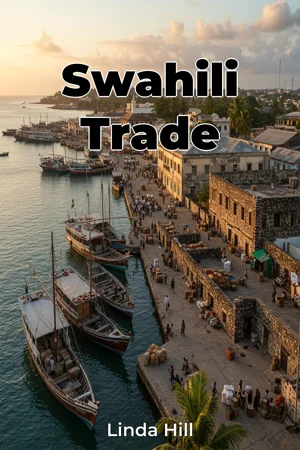
How did a string of coastal settlements along East Africa become vibrant centers of culture and commerce, connecting distant lands and fostering a unique identity? "Swahili Trade" explores the fascinating history of the Swahili coast, revealing how extensive trade networks with Arabia, India, and China shaped its economic, social, and cultural landscape. This book delves into the heart of Swahili civilization, examining the key role of maritime trade in its development. We will explore the rise of city-states like Kilwa, Mombasa, and Zanzibar, tracing their evolution from small fishing villages to bustling ports that attracted merchants and settlers from across the Indian Ocean. Understanding the dynamics of Swahili trade is crucial for comprehending the interconnectedness of the medieval world and the formation of hybrid cultural identities. It also provides insight into the long history of globalization and its impact on local societies. "Swahili Trade" provides the geographical and historical context necessary to understand the complexities of the Swahili coast. Prior knowledge of basic world history, particularly the Indian Ocean trade routes and the rise of Islam, will be beneficial, but not essential. The book offers a clear overview of these elements. The central argument of this book is that the Swahili coast was not merely a passive recipient of external influences, but an active participant in shaping its own destiny. Through strategic engagement in trade, Swahili merchants and rulers forged a distinct cultural identity, blending African, Arab, and Asian elements into a unique synthesis. This argument challenges traditional narratives that often portray Africa as peripheral to global historical processes. The book is structured in three major sections. The first introduces the geography of the Swahili coast, the origins of the Swahili people, and the early development of trade networks. The second section examines the peak of Swahili civilization, focusing on the major trade commodities such as gold, ivory, slaves, and textiles, along with the social and political organization of the city-states. Finally, the book analyzes the decline of Swahili power, including the arrival of the Portuguese and the subsequent impact of European colonialism. It culminates by exploring the lasting legacy of Swahili trade on the region's culture, language, and identity. The arguments presented are supported by a range of historical sources, including archaeological evidence from Swahili settlements, accounts from Arab and European travelers, and Swahili oral traditions. The book also draws upon recent scholarship in archaeology, linguistics, and anthropology to provide a comprehensive and nuanced understanding of Swahili history. "Swahili Trade" is deeply intertwined with other fields of study, including anthropology, archaeology, and linguistics. Anthropological perspectives shed light on the social structures and cultural practices of the Swahili people, while archaeological excavations provide tangible evidence of their material wealth and technological advancements. Linguistic analysis reveals the complex origins of the Swahili language, a Bantu language with significant Arabic and Persian influences. These interdisciplinary connections enrich the overall understanding of Swahili civilization. This book offers a unique perspective by emphasizing the agency of the Swahili people in shaping their own history. It moves away from Eurocentric narratives and highlights the dynamism and creativity of African societies in the pre-colonial era. The tone is academic yet accessible, aiming to engage both scholars and general readers interested in world history and African studies. The writing style is clear and concise, avoiding jargon and technical terms whenever possible. The target audience includes students of history, particularly those interested in African history, world history, and the history of trade. It will also appeal to general readers who are curious about the cultures and civilizations of the Indian Ocean world. This book offers valuable insights into the complex interactions between Africa, Asia, and the Middle East. As a work of history, "Swahili Trade" prioritizes factual accuracy, rigorous analysis, and a balanced presentation of different perspectives. It acknowledges the limitations of historical sources and the challenges of reconstructing the past. While the book covers a broad sweep of Swahili history, from its origins to the colonial period, it focuses primarily on the period between the 10th and 16th centuries, when Swahili trade reached its zenith. The book does not delve into the post-colonial history of the Swahili coast in detail. The lessons from "Swahili Trade" are relevant to contemporary issues of globalization, cultural exchange, and identity formation. Understanding how the Swahili people navigated the complexities of trade and cultural interaction can provide valuable insights for building more inclusive and sustainable societies in the 21st century.
How did a string of coastal settlements along East Africa become vibrant centers of culture and commerce, connecting distant lands and fostering a unique identity? "Swahili Trade" explores the fascinating history of the Swahili coast, revealing how extensive trade networks with Arabia, India, and China shaped its economic, social, and cultural landscape. This book delves into the heart of Swahili civilization, examining the key role of maritime trade in its development. We will explore the rise of city-states like Kilwa, Mombasa, and Zanzibar, tracing their evolution from small fishing villages to bustling ports that attracted merchants and settlers from across the Indian Ocean. Understanding the dynamics of Swahili trade is crucial for comprehending the interconnectedness of the medieval world and the formation of hybrid cultural identities. It also provides insight into the long history of globalization and its impact on local societies. "Swahili Trade" provides the geographical and historical context necessary to understand the complexities of the Swahili coast. Prior knowledge of basic world history, particularly the Indian Ocean trade routes and the rise of Islam, will be beneficial, but not essential. The book offers a clear overview of these elements. The central argument of this book is that the Swahili coast was not merely a passive recipient of external influences, but an active participant in shaping its own destiny. Through strategic engagement in trade, Swahili merchants and rulers forged a distinct cultural identity, blending African, Arab, and Asian elements into a unique synthesis. This argument challenges traditional narratives that often portray Africa as peripheral to global historical processes. The book is structured in three major sections. The first introduces the geography of the Swahili coast, the origins of the Swahili people, and the early development of trade networks. The second section examines the peak of Swahili civilization, focusing on the major trade commodities such as gold, ivory, slaves, and textiles, along with the social and political organization of the city-states. Finally, the book analyzes the decline of Swahili power, including the arrival of the Portuguese and the subsequent impact of European colonialism. It culminates by exploring the lasting legacy of Swahili trade on the region's culture, language, and identity. The arguments presented are supported by a range of historical sources, including archaeological evidence from Swahili settlements, accounts from Arab and European travelers, and Swahili oral traditions. The book also draws upon recent scholarship in archaeology, linguistics, and anthropology to provide a comprehensive and nuanced understanding of Swahili history. "Swahili Trade" is deeply intertwined with other fields of study, including anthropology, archaeology, and linguistics. Anthropological perspectives shed light on the social structures and cultural practices of the Swahili people, while archaeological excavations provide tangible evidence of their material wealth and technological advancements. Linguistic analysis reveals the complex origins of the Swahili language, a Bantu language with significant Arabic and Persian influences. These interdisciplinary connections enrich the overall understanding of Swahili civilization. This book offers a unique perspective by emphasizing the agency of the Swahili people in shaping their own history. It moves away from Eurocentric narratives and highlights the dynamism and creativity of African societies in the pre-colonial era. The tone is academic yet accessible, aiming to engage both scholars and general readers interested in world history and African studies. The writing style is clear and concise, avoiding jargon and technical terms whenever possible. The target audience includes students of history, particularly those interested in African history, world history, and the history of trade. It will also appeal to general readers who are curious about the cultures and civilizations of the Indian Ocean world. This book offers valuable insights into the complex interactions between Africa, Asia, and the Middle East. As a work of history, "Swahili Trade" prioritizes factual accuracy, rigorous analysis, and a balanced presentation of different perspectives. It acknowledges the limitations of historical sources and the challenges of reconstructing the past. While the book covers a broad sweep of Swahili history, from its origins to the colonial period, it focuses primarily on the period between the 10th and 16th centuries, when Swahili trade reached its zenith. The book does not delve into the post-colonial history of the Swahili coast in detail. The lessons from "Swahili Trade" are relevant to contemporary issues of globalization, cultural exchange, and identity formation. Understanding how the Swahili people navigated the complexities of trade and cultural interaction can provide valuable insights for building more inclusive and sustainable societies in the 21st century.
"Swahili Trade" explores the fascinating rise of the Swahili Coast in East Africa, a region that transformed from a collection of small settlements into a vibrant hub of culture and commerce. By examining the extensive trade networks connecting the coast to Arabia, India, and China, the book reveals how maritime trade shaped the economic, social, and cultural landscape of the Swahili civilization. The book highlights the agency of Swahili merchants and rulers in forging a distinct cultural identity. The book argues that the Swahili coast was not merely a passive recipient of outside influences, but actively shaped its own destiny by strategically engaging in trade. It examines the rise of key city-states like Kilwa, Mombasa, and Zanzibar, illustrating their evolution into bustling ports. For example, archaeological finds reveal the material wealth resulting from these trade ventures. "Swahili Trade" is structured in three sections, first introducing the geography and early trade networks, then examining the peak of Swahili civilization, and finally analyzing the decline of Swahili power and its lasting legacy. This book offers a unique perspective by emphasizing the agency of the Swahili people in shaping their own history. It moves away from Eurocentric narratives and highlights the dynamism and creativity of African societies in the pre-colonial era.
Book Details
ISBN
9788235268358
Publisher
Publifye AS
Your Licenses
You don't own any licenses for this book
Purchase a license below to unlock this book and download the EPUB.
Purchase License
Select a tier to unlock this book
Need bulk licensing?
Contact us for enterprise agreements.