
About This Book
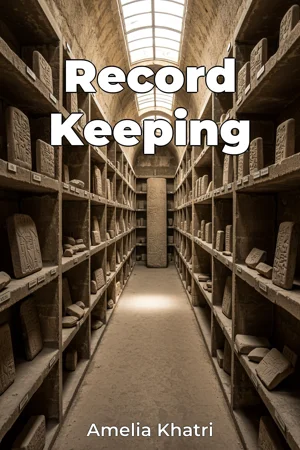
How have we come to know what we know? The answer lies, in large part, in the meticulously kept records of our past. "Record Keeping" explores the fascinating evolution of how societies have documented and preserved information, from the earliest markings on stone to the complex digital databases that underpin modern life. This book delves into the pivotal role record-keeping has played in shaping civilizations, preserving knowledge, and informing the present. The book examines three key areas: the technologies of record-keeping, the impact of record-keeping on societal structures, and the ethical considerations surrounding information management. Without reliable records, our understanding of history would be fragmented and incomplete, legal systems would be arbitrary, and scientific progress would be severely hampered. "Record Keeping" begins by laying the historical groundwork, tracing the development of writing systems and early forms of record-keeping. From cuneiform tablets in Mesopotamia to the elaborate hieroglyphic records of ancient Egypt, the book illustrates how different cultures developed unique methods for preserving their histories, laws, and knowledge. It details the transition from physical records to digital formats, analyzing the impact of technologies like the printing press, the typewriter, and, most significantly, the computer on the speed, accessibility, and scale of information management. The central argument of this book is that the evolution of record-keeping is intrinsically linked to the development of human civilization. Advances in record-keeping technologies have facilitated greater societal complexity, allowing for more sophisticated forms of governance, commerce, and intellectual exchange. The book also addresses the inherent biases and limitations of historical records, acknowledging that what is preserved often reflects the priorities and perspectives of those in power. Moving beyond a chronological overview, "Record Keeping" examines the societal impact of record-keeping practices. It explores how accurate and accessible records are essential for establishing legal frameworks, protecting property rights, and ensuring accountability in government. The book investigates case studies of societies that have excelled in record-keeping, as well as those that have suffered from its absence, highlighting the profound consequences of effective or ineffective information management. The book also delves into the ethical dimensions of record-keeping in the digital age, addressing concerns about data privacy, security, and access. It considers the implications of mass surveillance, data breaches, and algorithmic bias on individual liberties and social justice. This section draws on research from archival science, information ethics, and legal studies to provide a nuanced perspective on the challenges of managing information in an increasingly interconnected world. The evidence presented in "Record Keeping" draws upon a wide range of sources, including archaeological findings, historical documents, archival records, and contemporary research in information science. The book analyzes primary source materials, such as ancient legal codes, administrative documents, and personal correspondence, to provide firsthand insights into the practices and perspectives of past societies. "Record Keeping" connects to several other fields of study, including archaeology, history, law, computer science, and sociology. By integrating insights from these disciplines, the book offers a more holistic understanding of the multifaceted role of record-keeping in human affairs. The book adopts a balanced and objective tone, presenting information in a clear and accessible manner. It avoids technical jargon and strives to make complex concepts understandable to a broad audience. "Record Keeping" is intended for students, researchers, historians, and anyone interested in the history of information management and its impact on society. The book offers valuable insights into the challenges and opportunities of preserving knowledge in an increasingly digital world. While the book aims to provide a comprehensive overview of record-keeping practices throughout history, it acknowledges that its scope is necessarily limited. It does not delve into every culture or time period in exhaustive detail, but rather focuses on key developments and trends that have shaped the evolution of information management. Ultimately, "Record Keeping" demonstrates that understanding the history of record-keeping is essential for navigating the challenges and opportunities of the information age. By learning from the successes and failures of the past, we can develop more effective and ethical approaches to managing information in the present and future.
How have we come to know what we know? The answer lies, in large part, in the meticulously kept records of our past. "Record Keeping" explores the fascinating evolution of how societies have documented and preserved information, from the earliest markings on stone to the complex digital databases that underpin modern life. This book delves into the pivotal role record-keeping has played in shaping civilizations, preserving knowledge, and informing the present. The book examines three key areas: the technologies of record-keeping, the impact of record-keeping on societal structures, and the ethical considerations surrounding information management. Without reliable records, our understanding of history would be fragmented and incomplete, legal systems would be arbitrary, and scientific progress would be severely hampered. "Record Keeping" begins by laying the historical groundwork, tracing the development of writing systems and early forms of record-keeping. From cuneiform tablets in Mesopotamia to the elaborate hieroglyphic records of ancient Egypt, the book illustrates how different cultures developed unique methods for preserving their histories, laws, and knowledge. It details the transition from physical records to digital formats, analyzing the impact of technologies like the printing press, the typewriter, and, most significantly, the computer on the speed, accessibility, and scale of information management. The central argument of this book is that the evolution of record-keeping is intrinsically linked to the development of human civilization. Advances in record-keeping technologies have facilitated greater societal complexity, allowing for more sophisticated forms of governance, commerce, and intellectual exchange. The book also addresses the inherent biases and limitations of historical records, acknowledging that what is preserved often reflects the priorities and perspectives of those in power. Moving beyond a chronological overview, "Record Keeping" examines the societal impact of record-keeping practices. It explores how accurate and accessible records are essential for establishing legal frameworks, protecting property rights, and ensuring accountability in government. The book investigates case studies of societies that have excelled in record-keeping, as well as those that have suffered from its absence, highlighting the profound consequences of effective or ineffective information management. The book also delves into the ethical dimensions of record-keeping in the digital age, addressing concerns about data privacy, security, and access. It considers the implications of mass surveillance, data breaches, and algorithmic bias on individual liberties and social justice. This section draws on research from archival science, information ethics, and legal studies to provide a nuanced perspective on the challenges of managing information in an increasingly interconnected world. The evidence presented in "Record Keeping" draws upon a wide range of sources, including archaeological findings, historical documents, archival records, and contemporary research in information science. The book analyzes primary source materials, such as ancient legal codes, administrative documents, and personal correspondence, to provide firsthand insights into the practices and perspectives of past societies. "Record Keeping" connects to several other fields of study, including archaeology, history, law, computer science, and sociology. By integrating insights from these disciplines, the book offers a more holistic understanding of the multifaceted role of record-keeping in human affairs. The book adopts a balanced and objective tone, presenting information in a clear and accessible manner. It avoids technical jargon and strives to make complex concepts understandable to a broad audience. "Record Keeping" is intended for students, researchers, historians, and anyone interested in the history of information management and its impact on society. The book offers valuable insights into the challenges and opportunities of preserving knowledge in an increasingly digital world. While the book aims to provide a comprehensive overview of record-keeping practices throughout history, it acknowledges that its scope is necessarily limited. It does not delve into every culture or time period in exhaustive detail, but rather focuses on key developments and trends that have shaped the evolution of information management. Ultimately, "Record Keeping" demonstrates that understanding the history of record-keeping is essential for navigating the challenges and opportunities of the information age. By learning from the successes and failures of the past, we can develop more effective and ethical approaches to managing information in the present and future.
"Record Keeping" explores the captivating history of how societies have documented and preserved information, highlighting the crucial role of historical records in shaping civilizations. From ancient markings on stone to today's digital databases, the book traces the evolution of information management and its profound societal impact. Discover how early cultures, such as those in Mesopotamia and ancient Egypt, developed unique methods for preserving their histories, laws, and knowledge using cuneiform tablets and hieroglyphic records. The book uniquely links advances in record-keeping technologies to the progress of human civilization, demonstrating how these advancements have facilitated more sophisticated governance, commerce, and intellectual exchange. The book progresses by examining the technologies of record-keeping, the impact on societal structures, and the ethical considerations surrounding information management. It delves into the societal impact of record-keeping practices, illustrating how accurate and accessible records are essential for legal frameworks and governmental accountability. The rise of digital records introduces new challenges, particularly in data privacy and security, which the book addresses through insights from archival science and information ethics. Ultimately, "Record Keeping" provides essential insights into the importance of preserving knowledge in our increasingly digital world, drawing on archaeological findings, historical documents, and archival records.
Book Details
ISBN
9788235267962
Publisher
Publifye AS
Your Licenses
You don't own any licenses for this book
Purchase a license below to unlock this book and download the EPUB.
Purchase License
Select a tier to unlock this book
Need bulk licensing?
Contact us for enterprise agreements.