
About This Book
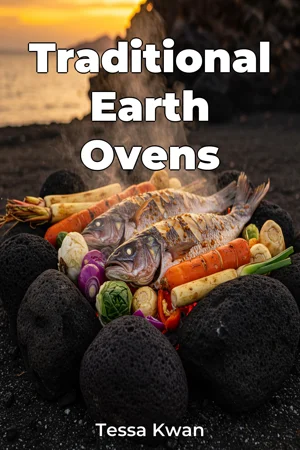
Have you ever wondered how entire communities could be fed efficiently centuries ago, without modern cooking technology? "Traditional Earth Ovens" delves into the ingenious engineering and cultural significance of underground cooking methods employed by indigenous groups worldwide. This book explores the construction, operation, and societal role of earth ovens, highlighting their efficiency and sustainability as food preparation techniques. This book examines three key areas: the physics of heat retention in subterranean structures, the diverse range of earth oven designs across different cultures, and the socio-cultural importance of these ovens within their respective communities. Understanding these aspects offers insights into not only ancient cooking practices but also sustainable living and community building. Historically, earth ovens provided a reliable method for cooking large quantities of food for feasts, ceremonies, and communal gatherings. Socially, the construction and use of these ovens often involved collaborative efforts, reinforcing community bonds and transmitting traditional knowledge. Scientifically, the ovens leverage the earth's natural insulation to maintain consistent temperatures over extended periods. The central argument of "Traditional Earth Ovens" is that these seemingly simple cooking structures represent a sophisticated understanding of thermodynamics, geology, and social organization. Their continued relevance lies in their potential to inform sustainable cooking practices and promote community resilience in the face of contemporary challenges. The book begins with an introduction to the fundamental principles of earth oven technology, outlining the materials used, the construction process, and the physics of heat transfer. It then branches into distinct sections, each dedicated to exploring the earth oven traditions of different geographical regions, such as the Māori Hangi in New Zealand and the Polynesian Umu. These chapters will analyze regional variations in design, materials, and cooking techniques, highlighting the local adaptations that maximized efficiency and reflected cultural practices. The book culminates in a discussion of the earth oven's modern applications, from sustainable cooking projects to archaeological research and experimental cooking. The evidence presented in this book is drawn from a variety of sources, including archaeological findings, ethnographic studies, experimental archaeology, and traditional knowledge passed down through generations. Unique data includes thermal imaging studies of operating earth ovens, comparative analyses of oven designs across different cultures, and interviews with contemporary practitioners. "Traditional Earth Ovens" also draws connections to several other fields, including anthropology (examining the cultural context of food preparation), environmental science (assessing the sustainability of earth oven technology), and engineering (analyzing the structural integrity and thermal efficiency of oven designs). These interdisciplinary connections enrich the book's argument by demonstrating the multifaceted nature of earth oven technology. This book offers a unique perspective by combining scientific analysis with cultural understanding. We examine the physical properties that make earth ovens effective while emphasizing their role in shaping community identity and preserving traditional knowledge. The tone of the book is informative and accessible, aimed at both academic and general audiences. While grounded in thorough research, the writing style remains engaging and avoids overly technical jargon, making the content appealing to a wide range of readers. The primary audience includes archaeologists, anthropologists, culinary historians, sustainable living enthusiasts, and anyone interested in learning about indigenous technologies and cultural practices. The book offers valuable insights into sustainable cooking methods and the cultural significance of food preparation, making it relevant to anyone interested in these topics. As a work of non-fiction in the culinary history and anthropology genres, "Traditional Earth Ovens" upholds the conventions of rigorous research, accurate representation of facts, and clear presentation of evidence. While the book aims to provide a comprehensive overview of earth oven traditions worldwide, it acknowledges the limitations of covering every single variation in detail. The focus is on presenting representative examples and highlighting common principles and themes. The information in this book can be applied practically by readers interested in building their own earth ovens, experimenting with traditional cooking techniques, or promoting sustainable food practices within their communities. While generally respected as ingenious solutions, some debates surround the impact of large-scale earth oven usage on local environments, specifically concerning wood consumption and soil erosion. The book addresses these controversies by presenting a balanced discussion of the benefits and potential drawbacks of earth oven technology.
Have you ever wondered how entire communities could be fed efficiently centuries ago, without modern cooking technology? "Traditional Earth Ovens" delves into the ingenious engineering and cultural significance of underground cooking methods employed by indigenous groups worldwide. This book explores the construction, operation, and societal role of earth ovens, highlighting their efficiency and sustainability as food preparation techniques. This book examines three key areas: the physics of heat retention in subterranean structures, the diverse range of earth oven designs across different cultures, and the socio-cultural importance of these ovens within their respective communities. Understanding these aspects offers insights into not only ancient cooking practices but also sustainable living and community building. Historically, earth ovens provided a reliable method for cooking large quantities of food for feasts, ceremonies, and communal gatherings. Socially, the construction and use of these ovens often involved collaborative efforts, reinforcing community bonds and transmitting traditional knowledge. Scientifically, the ovens leverage the earth's natural insulation to maintain consistent temperatures over extended periods. The central argument of "Traditional Earth Ovens" is that these seemingly simple cooking structures represent a sophisticated understanding of thermodynamics, geology, and social organization. Their continued relevance lies in their potential to inform sustainable cooking practices and promote community resilience in the face of contemporary challenges. The book begins with an introduction to the fundamental principles of earth oven technology, outlining the materials used, the construction process, and the physics of heat transfer. It then branches into distinct sections, each dedicated to exploring the earth oven traditions of different geographical regions, such as the Māori Hangi in New Zealand and the Polynesian Umu. These chapters will analyze regional variations in design, materials, and cooking techniques, highlighting the local adaptations that maximized efficiency and reflected cultural practices. The book culminates in a discussion of the earth oven's modern applications, from sustainable cooking projects to archaeological research and experimental cooking. The evidence presented in this book is drawn from a variety of sources, including archaeological findings, ethnographic studies, experimental archaeology, and traditional knowledge passed down through generations. Unique data includes thermal imaging studies of operating earth ovens, comparative analyses of oven designs across different cultures, and interviews with contemporary practitioners. "Traditional Earth Ovens" also draws connections to several other fields, including anthropology (examining the cultural context of food preparation), environmental science (assessing the sustainability of earth oven technology), and engineering (analyzing the structural integrity and thermal efficiency of oven designs). These interdisciplinary connections enrich the book's argument by demonstrating the multifaceted nature of earth oven technology. This book offers a unique perspective by combining scientific analysis with cultural understanding. We examine the physical properties that make earth ovens effective while emphasizing their role in shaping community identity and preserving traditional knowledge. The tone of the book is informative and accessible, aimed at both academic and general audiences. While grounded in thorough research, the writing style remains engaging and avoids overly technical jargon, making the content appealing to a wide range of readers. The primary audience includes archaeologists, anthropologists, culinary historians, sustainable living enthusiasts, and anyone interested in learning about indigenous technologies and cultural practices. The book offers valuable insights into sustainable cooking methods and the cultural significance of food preparation, making it relevant to anyone interested in these topics. As a work of non-fiction in the culinary history and anthropology genres, "Traditional Earth Ovens" upholds the conventions of rigorous research, accurate representation of facts, and clear presentation of evidence. While the book aims to provide a comprehensive overview of earth oven traditions worldwide, it acknowledges the limitations of covering every single variation in detail. The focus is on presenting representative examples and highlighting common principles and themes. The information in this book can be applied practically by readers interested in building their own earth ovens, experimenting with traditional cooking techniques, or promoting sustainable food practices within their communities. While generally respected as ingenious solutions, some debates surround the impact of large-scale earth oven usage on local environments, specifically concerning wood consumption and soil erosion. The book addresses these controversies by presenting a balanced discussion of the benefits and potential drawbacks of earth oven technology.
"Traditional Earth Ovens" explores the fascinating history and engineering behind underground cooking methods used by indigenous cultures worldwide. It unveils how these earth ovens, like the Māori Hangi and Polynesian Umu, represent sophisticated systems that highlight thermal efficiency and promote sustainable cooking. These ovens aren't just primitive holes in the ground; they're carefully constructed thermal devices leveraging the earth's natural insulation to maintain consistent temperatures, enabling communities to cook large quantities of food for feasts and gatherings. The book examines the physics of heat retention, the variety of designs across different cultures, and the socio-cultural importance of earth ovens. It reveals how the ovens are not only a means of food preparation but also a center of community building, often involving collaborative efforts in their construction and use. From archaeological findings to ethnographic studies, "Traditional Earth Ovens" progresses by exploring the fundamental principles before branching into regional traditions and concluding with modern applications, making it a valuable resource for anyone interested in culinary history, anthropology, or sustainable living.
Book Details
ISBN
9788235267955
Publisher
Publifye AS
Your Licenses
You don't own any licenses for this book
Purchase a license below to unlock this book and download the EPUB.
Purchase License
Select a tier to unlock this book
Need bulk licensing?
Contact us for enterprise agreements.