
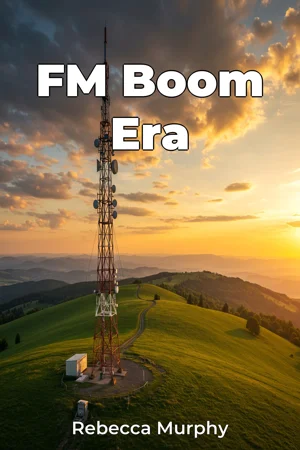
About This Book
Ever wondered why FM radio became the dominant force on the airwaves, relegating AM to a secondary role? This book, "FM Boom Era," delves into the fascinating story of frequency modulation (FM) radio, exploring its technological advancements, its impact on the music industry, and its rise to unparalleled popularity. We examine how FM’s superior sound quality and innovative programming reshaped listener expectations and ultimately revolutionized broadcasting. This book addresses two central questions: First, what specific technological and regulatory factors enabled FM radio to overcome the established AM broadcasting system? Second, how did the improved audio fidelity of FM reshape the landscape of music consumption and radio programming in the mid-20th century? These questions are critical because they illuminate the complex interplay between technological innovation, market forces, and cultural shifts that define the evolution of media. Understanding the FM revolution requires a grasp of early radio technology, the limitations of AM broadcasting, and the regulatory environment that shaped the industry. We begin by outlining the scientific principles behind FM technology and detailing its initial development in the 1930s and 40s. We show how the inherent resistance of FM to static and interference offered a significant advantage over AM, which struggled with these issues. "FM Boom Era" argues that the confluence of technological maturity, strategic regulatory changes, and a growing demand for high-fidelity audio created the ideal conditions for FM’s ascendance. The book demonstrates how FM's enhanced sound quality, particularly its ability to reproduce the full spectrum of musical frequencies, directly catered to an audience increasingly interested in recorded music. The book unfolds in three major sections. First, we introduce FM technology, tracing its early history, key innovations, and the initial challenges it faced. Second, we analyze the regulatory and economic factors that initially restricted FM’s growth, including the influence of established AM broadcasters. This section investigates the pivotal decisions by the FCC that ultimately paved the way for FM's expansion. Third, we explore the cultural impact of FM radio, examining how it fostered the growth of album-oriented rock (AOR) and other new music formats. We show how FM stations created a space for niche genres and artists who were often ignored by mainstream AM radio. Our research draws on a variety of sources, including archival documents from the FCC, technical manuals, industry publications, and oral histories from radio engineers, broadcasters, and musicians who were involved in the FM revolution. We also analyze audience surveys and listener demographics to quantify the shift in popularity from AM to FM. The rise of FM radio has connections to several other fields, including acoustics, electrical engineering, and media studies. The book examines how advancements in audio engineering contributed to the superior sound of FM and how economic theories help to explain the regulatory battles between AM and FM broadcasters. It further considers sociological elements that explain changes in listening habits due to FM's format flexibility. "FM Boom Era" offers a unique perspective by integrating technical analysis with cultural history. It moves beyond a purely technological narrative to examine the social, economic, and artistic consequences of FM’s rise to prominence. The book is geared towards readers interested in the history of technology, media studies, and the music industry. It would be valuable to students, researchers, and anyone curious about the evolution of radio broadcasting. As the book aligns with the conventions of non-fiction works in the genre of technology and music, it aims to provide clear, concise explanations of technical concepts, supported by historical evidence and engaging anecdotes. The book's scope is limited to the period from the 1930s, when FM technology was first developed, through the 1980s, when FM had firmly established itself as the dominant radio format. While it acknowledges the subsequent impact of digital radio and online streaming, its focus remains on the initial FM revolution. The insights in "FM Boom Era" can be applied to understanding other technological transitions in media, such as the shift from analog to digital television and the rise of streaming services. While broadly accepted, some may debate the degree to which regulatory decisions, as opposed to pure market forces, were responsible for FM's ascendance. The book considers these alternative perspectives.
Ever wondered why FM radio became the dominant force on the airwaves, relegating AM to a secondary role? This book, "FM Boom Era," delves into the fascinating story of frequency modulation (FM) radio, exploring its technological advancements, its impact on the music industry, and its rise to unparalleled popularity. We examine how FM’s superior sound quality and innovative programming reshaped listener expectations and ultimately revolutionized broadcasting. This book addresses two central questions: First, what specific technological and regulatory factors enabled FM radio to overcome the established AM broadcasting system? Second, how did the improved audio fidelity of FM reshape the landscape of music consumption and radio programming in the mid-20th century? These questions are critical because they illuminate the complex interplay between technological innovation, market forces, and cultural shifts that define the evolution of media. Understanding the FM revolution requires a grasp of early radio technology, the limitations of AM broadcasting, and the regulatory environment that shaped the industry. We begin by outlining the scientific principles behind FM technology and detailing its initial development in the 1930s and 40s. We show how the inherent resistance of FM to static and interference offered a significant advantage over AM, which struggled with these issues. "FM Boom Era" argues that the confluence of technological maturity, strategic regulatory changes, and a growing demand for high-fidelity audio created the ideal conditions for FM’s ascendance. The book demonstrates how FM's enhanced sound quality, particularly its ability to reproduce the full spectrum of musical frequencies, directly catered to an audience increasingly interested in recorded music. The book unfolds in three major sections. First, we introduce FM technology, tracing its early history, key innovations, and the initial challenges it faced. Second, we analyze the regulatory and economic factors that initially restricted FM’s growth, including the influence of established AM broadcasters. This section investigates the pivotal decisions by the FCC that ultimately paved the way for FM's expansion. Third, we explore the cultural impact of FM radio, examining how it fostered the growth of album-oriented rock (AOR) and other new music formats. We show how FM stations created a space for niche genres and artists who were often ignored by mainstream AM radio. Our research draws on a variety of sources, including archival documents from the FCC, technical manuals, industry publications, and oral histories from radio engineers, broadcasters, and musicians who were involved in the FM revolution. We also analyze audience surveys and listener demographics to quantify the shift in popularity from AM to FM. The rise of FM radio has connections to several other fields, including acoustics, electrical engineering, and media studies. The book examines how advancements in audio engineering contributed to the superior sound of FM and how economic theories help to explain the regulatory battles between AM and FM broadcasters. It further considers sociological elements that explain changes in listening habits due to FM's format flexibility. "FM Boom Era" offers a unique perspective by integrating technical analysis with cultural history. It moves beyond a purely technological narrative to examine the social, economic, and artistic consequences of FM’s rise to prominence. The book is geared towards readers interested in the history of technology, media studies, and the music industry. It would be valuable to students, researchers, and anyone curious about the evolution of radio broadcasting. As the book aligns with the conventions of non-fiction works in the genre of technology and music, it aims to provide clear, concise explanations of technical concepts, supported by historical evidence and engaging anecdotes. The book's scope is limited to the period from the 1930s, when FM technology was first developed, through the 1980s, when FM had firmly established itself as the dominant radio format. While it acknowledges the subsequent impact of digital radio and online streaming, its focus remains on the initial FM revolution. The insights in "FM Boom Era" can be applied to understanding other technological transitions in media, such as the shift from analog to digital television and the rise of streaming services. While broadly accepted, some may debate the degree to which regulatory decisions, as opposed to pure market forces, were responsible for FM's ascendance. The book considers these alternative perspectives.
"FM Boom Era" explores the compelling story of how FM radio rose to prominence, surpassing AM broadcasting to revolutionize the music industry and media landscape. The book investigates the technological advancements that made FM's superior audio fidelity possible, such as its resistance to static, which was a major drawback for AM. It also examines how regulatory decisions by the FCC played a pivotal role in enabling FM's expansion despite initial resistance from established AM broadcasters. This exploration delves into the cultural impact of FM, highlighting how it fostered the growth of album-oriented rock (AOR) and provided a platform for niche genres and artists often ignored by mainstream AM radio. The book approaches this history by first outlining the scientific principles behind FM technology, then analyzing regulatory and economic factors, and finally exploring the cultural impact of FM radio. Through archival documents, industry publications, and oral histories, "FM Boom Era" offers a unique perspective by integrating technical analysis with the social, economic, and artistic consequences of FM’s rise. The book unfolds in three major sections, beginning with the early history of FM technology and its initial challenges. It then analyzes the regulatory and economic factors that initially restricted FM’s growth, before concluding with the cultural impact of FM radio. This approach aims to provide a clear, concise explanation of how advancements in radio technology changed music consumption and radio programming, making it essential reading for anyone interested in the history of technology, media studies, and the music industry.
Book Details
ISBN
9788235267665
Publisher
Publifye AS
Your Licenses
You don't own any licenses for this book
Purchase a license below to unlock this book and download the EPUB.
Purchase License
Select a tier to unlock this book
Need bulk licensing?
Contact us for enterprise agreements.