
About This Book
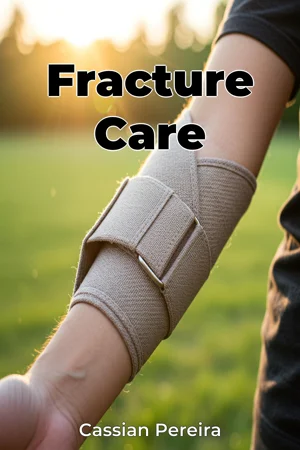
Could you confidently manage a fracture situation before professional medical help arrives? This book, "Fracture Care," provides essential knowledge and practical techniques for identifying, immobilizing, and providing temporary care for fractures, bridging the gap between injury and definitive medical treatment. It falls within the genres of Health Fitness, Medical General, and Health & Fitness, making it a valuable resource for a broad audience. The primary focus revolves around three core concepts: fracture identification, which involves understanding the different types of fractures and their respective symptoms; immobilization techniques, crucial for preventing further injury and promoting healing; and temporary care protocols, designed to manage pain and stabilize the patient until medical professionals take over. These topics are fundamentally important because immediate and appropriate initial care significantly impacts the long-term prognosis of a fracture, potentially minimizing complications and improving recovery outcomes. "Fracture Care" builds upon a foundation of basic anatomy and physiology, assuming the reader possesses a general understanding of the skeletal system and common injury mechanisms. The book begins by outlining the historical context of fracture management, tracing the evolution of treatment methods from ancient practices to modern orthopedic interventions. It then establishes a clear framework for understanding bone structure, fracture classifications (e.g., open vs. closed, displaced vs. non-displaced, specific fracture patterns), and associated complications. The central argument of "Fracture Care" is that possessing fundamental knowledge of fracture management empowers individuals to provide effective initial care, thereby improving patient outcomes and reducing the burden on emergency medical services. This argument is critical because in many situations, particularly in remote or disaster-stricken areas, immediate access to medical professionals is not always possible. Equipping individuals with the skills to stabilize and manage fractures can be life-altering. The book's structure follows a logical progression, beginning with a detailed introduction to fracture mechanics and terminology. Subsequent sections delve into specific fracture types, categorized by anatomical location (e.g., upper extremity, lower extremity, spine). For each fracture type, the book outlines common causes, signs and symptoms, diagnostic methods (emphasizing what can be assessed without imaging), and immediate care protocols. A significant portion is dedicated to immobilization techniques, including the application of splints, slings, and other supportive devices. The book concludes with a discussion of pain management strategies, wound care (if applicable), and instructions on how to prepare the patient for transport to a medical facility. The information presented is supported by established medical guidelines, clinical studies, and expert consensus within the fields of orthopedics and emergency medicine. Visual aids, such as anatomical diagrams and step-by-step illustrations of immobilization techniques, are heavily incorporated. "Fracture Care" also connects to related fields such as sports medicine, rehabilitation, and emergency preparedness. Knowledge of fracture management is essential for athletic trainers and coaches working with athletes at risk of injury. The principles of immobilization and pain management are also relevant to rehabilitation specialists assisting patients in their recovery. Furthermore, the book's emphasis on temporary care protocols aligns with disaster preparedness initiatives, where individuals may need to provide initial treatment in resource-limited settings. A unique aspect of this book is its practical, hands-on approach. It focuses not on advanced medical interventions but on the essential skills that can be employed by anyone with a basic understanding of first aid. The tone is informative and accessible, avoiding overly technical jargon and presenting information in a clear, concise manner. The target audience includes first responders, athletic trainers, coaches, outdoor enthusiasts, parents, and anyone who wants to be prepared to handle fracture situations. The book's value lies in its ability to empower individuals to take informed action and provide effective initial care, potentially minimizing complications and improving patient outcomes. As a non-fiction health and fitness guide, "Fracture Care" emphasizes accuracy, clarity, and practicality. It adheres to established medical guidelines and presents information in a way that is easy to understand and apply. The book's scope is limited to pre-hospital fracture care, focusing on immediate identification, immobilization, and pain management. It does not delve into surgical interventions or long-term rehabilitation, which fall under the purview of medical professionals. The knowledge and skills taught in "Fracture Care" have numerous real-world applications. Whether it's stabilizing a fractured ankle on a hiking trip, immobilizing a broken arm during a sports game, or providing temporary care for a family member who has fallen, the techniques presented can make a significant difference in the patient's comfort, safety, and long-term recovery. While the book aims to provide comprehensive guidance on initial fracture care, it acknowledges the ongoing debate regarding specific immobilization techniques and pain management protocols. It presents different approaches and encourages readers to consult with medical professionals for personalized recommendations.
Could you confidently manage a fracture situation before professional medical help arrives? This book, "Fracture Care," provides essential knowledge and practical techniques for identifying, immobilizing, and providing temporary care for fractures, bridging the gap between injury and definitive medical treatment. It falls within the genres of Health Fitness, Medical General, and Health & Fitness, making it a valuable resource for a broad audience. The primary focus revolves around three core concepts: fracture identification, which involves understanding the different types of fractures and their respective symptoms; immobilization techniques, crucial for preventing further injury and promoting healing; and temporary care protocols, designed to manage pain and stabilize the patient until medical professionals take over. These topics are fundamentally important because immediate and appropriate initial care significantly impacts the long-term prognosis of a fracture, potentially minimizing complications and improving recovery outcomes. "Fracture Care" builds upon a foundation of basic anatomy and physiology, assuming the reader possesses a general understanding of the skeletal system and common injury mechanisms. The book begins by outlining the historical context of fracture management, tracing the evolution of treatment methods from ancient practices to modern orthopedic interventions. It then establishes a clear framework for understanding bone structure, fracture classifications (e.g., open vs. closed, displaced vs. non-displaced, specific fracture patterns), and associated complications. The central argument of "Fracture Care" is that possessing fundamental knowledge of fracture management empowers individuals to provide effective initial care, thereby improving patient outcomes and reducing the burden on emergency medical services. This argument is critical because in many situations, particularly in remote or disaster-stricken areas, immediate access to medical professionals is not always possible. Equipping individuals with the skills to stabilize and manage fractures can be life-altering. The book's structure follows a logical progression, beginning with a detailed introduction to fracture mechanics and terminology. Subsequent sections delve into specific fracture types, categorized by anatomical location (e.g., upper extremity, lower extremity, spine). For each fracture type, the book outlines common causes, signs and symptoms, diagnostic methods (emphasizing what can be assessed without imaging), and immediate care protocols. A significant portion is dedicated to immobilization techniques, including the application of splints, slings, and other supportive devices. The book concludes with a discussion of pain management strategies, wound care (if applicable), and instructions on how to prepare the patient for transport to a medical facility. The information presented is supported by established medical guidelines, clinical studies, and expert consensus within the fields of orthopedics and emergency medicine. Visual aids, such as anatomical diagrams and step-by-step illustrations of immobilization techniques, are heavily incorporated. "Fracture Care" also connects to related fields such as sports medicine, rehabilitation, and emergency preparedness. Knowledge of fracture management is essential for athletic trainers and coaches working with athletes at risk of injury. The principles of immobilization and pain management are also relevant to rehabilitation specialists assisting patients in their recovery. Furthermore, the book's emphasis on temporary care protocols aligns with disaster preparedness initiatives, where individuals may need to provide initial treatment in resource-limited settings. A unique aspect of this book is its practical, hands-on approach. It focuses not on advanced medical interventions but on the essential skills that can be employed by anyone with a basic understanding of first aid. The tone is informative and accessible, avoiding overly technical jargon and presenting information in a clear, concise manner. The target audience includes first responders, athletic trainers, coaches, outdoor enthusiasts, parents, and anyone who wants to be prepared to handle fracture situations. The book's value lies in its ability to empower individuals to take informed action and provide effective initial care, potentially minimizing complications and improving patient outcomes. As a non-fiction health and fitness guide, "Fracture Care" emphasizes accuracy, clarity, and practicality. It adheres to established medical guidelines and presents information in a way that is easy to understand and apply. The book's scope is limited to pre-hospital fracture care, focusing on immediate identification, immobilization, and pain management. It does not delve into surgical interventions or long-term rehabilitation, which fall under the purview of medical professionals. The knowledge and skills taught in "Fracture Care" have numerous real-world applications. Whether it's stabilizing a fractured ankle on a hiking trip, immobilizing a broken arm during a sports game, or providing temporary care for a family member who has fallen, the techniques presented can make a significant difference in the patient's comfort, safety, and long-term recovery. While the book aims to provide comprehensive guidance on initial fracture care, it acknowledges the ongoing debate regarding specific immobilization techniques and pain management protocols. It presents different approaches and encourages readers to consult with medical professionals for personalized recommendations.
"Fracture Care" offers critical insights into managing bone fractures before professional medical help arrives. This essential medical guide focuses on fracture identification, immobilization, and temporary care—three crucial elements that can significantly impact a patient's recovery. Did you know that immediate, appropriate care can minimize complications and improve long-term outcomes? The book uniquely empowers individuals by providing practical techniques, emphasizing skills that can be employed by anyone with basic first aid knowledge, making it invaluable for first responders, athletic trainers, and outdoor enthusiasts. The book progresses logically, starting with fracture mechanics and terminology, then delving into specific fracture types categorized by anatomical location. A significant portion is dedicated to immobilization techniques, like applying splints and slings. Visual aids, such as anatomical diagrams, support the well-established medical guidelines, making complex concepts accessible so you can provide effective initial care.
Book Details
ISBN
9788235267504
Publisher
Publifye AS
Your Licenses
You don't own any licenses for this book
Purchase a license below to unlock this book and download the EPUB.
Purchase License
Select a tier to unlock this book
Need bulk licensing?
Contact us for enterprise agreements.