
About This Book
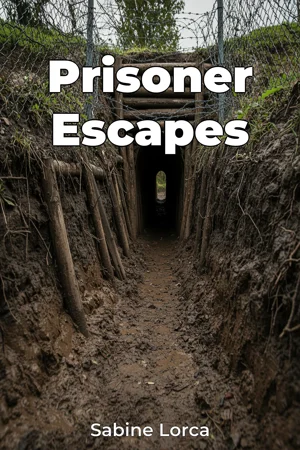
What drove soldiers, captured in the crucible of war, to risk everything for a chance at freedom? "Prisoner Escapes" delves into the gritty reality of military prison escapes, exploring dramatic breakouts from prisoner-of-war camps and the ingenious strategies employed by soldiers determined to evade capture. This book analyzes not just the daring acts of individual escapees, but also the complex planning, resourcefulness, and sheer will required to breach enemy lines. This study examines three primary facets of military escapes. First, it dissects the physical methods employed, from the construction of elaborate tunnels beneath barbed wire to the exploitation of vulnerabilities in camp security. Second, it explores the psychological dimensions of captivity and the indomitable spirit that fueled these perilous endeavors. Third, it investigates the strategic and logistical support networks, both inside and outside the prison walls, that were crucial to the success of many escapes. These topics are important because they offer a unique lens through which to understand the human cost of war and the unwavering desire for liberty, even in the face of overwhelming odds. To fully appreciate the intricacies of these escapes, a foundational understanding of military history, particularly the operational realities of 20th-century warfare and the Geneva Conventions regarding prisoners of war, is beneficial. The book provides context by outlining the common conditions in various POW camps, the prevailing methods of surveillance and control, and the evolving techniques of escape and evasion. At its core, "Prisoner Escapes" argues that the impulse to escape captivity is a fundamental expression of human resilience and resistance. It underscores the strategic importance of escape attempts, not only for the individual seeking freedom but also for the morale of fellow prisoners and the potential disruption they cause to enemy operations. The book unfolds as follows: It begins by establishing the historical context of military imprisonment and the motivations behind escape attempts. It then dedicates chapters to specific escape methods: tunneling, disguise, exploiting weaknesses in security, and utilizing external assistance. These chapters detail notable escape attempts from various wars, carefully analyzing the planning, execution, and outcomes. The central argument culminates in an examination of the broader impact of prisoner escapes on the course of military history and the enduring legacy of those who dared to defy their captors. Finally, the study reflects on the implications of these historical events for contemporary military strategy and the ongoing debate about the treatment of prisoners of war. The evidence presented is drawn from diverse sources, including official military records, firsthand accounts from escapees and their captors, intelligence reports, and architectural analyses of prison camps. "Prisoner Escapes" uniquely synthesizes archival material and personal narratives to provide a comprehensive and nuanced understanding of this compelling aspect of military history. This book connects to other fields such as psychology, exploring the mental fortitude required to endure captivity and plan an escape; engineering, examining the ingenuity behind tunnel construction and other escape devices; and political science, analyzing the legal and ethical dimensions of prisoner treatment and the responsibilities of warring nations. These connections enrich the overall analysis. "Prisoner Escapes" adopts a narrative non-fiction style, blending rigorous historical research with compelling storytelling. The book is aimed at a broad audience, including military history enthusiasts, students of military strategy, and anyone interested in tales of courage, resilience, and the pursuit of freedom. It provides a valuable resource for understanding a less-explored aspect of military history. The scope of "Prisoner Escapes" encompasses major military conflicts from the late 19th century through the late 20th century, with a particular focus on World War I, World War II, and the Korean War. It acknowledges that coverage of all conflicts and all escape attempts is impossible, and focuses on case studies that exemplify key themes and strategies. While the book primarily focuses on historical events, the lessons learned from these escapes – such as the importance of planning, resourcefulness, and perseverance – have practical applications in various fields, including leadership development, crisis management, and strategic planning. The book also acknowledges the ongoing debates surrounding the treatment of prisoners of war and the ethics of escape attempts, adding a layer of contemporary relevance to the historical analysis.
What drove soldiers, captured in the crucible of war, to risk everything for a chance at freedom? "Prisoner Escapes" delves into the gritty reality of military prison escapes, exploring dramatic breakouts from prisoner-of-war camps and the ingenious strategies employed by soldiers determined to evade capture. This book analyzes not just the daring acts of individual escapees, but also the complex planning, resourcefulness, and sheer will required to breach enemy lines. This study examines three primary facets of military escapes. First, it dissects the physical methods employed, from the construction of elaborate tunnels beneath barbed wire to the exploitation of vulnerabilities in camp security. Second, it explores the psychological dimensions of captivity and the indomitable spirit that fueled these perilous endeavors. Third, it investigates the strategic and logistical support networks, both inside and outside the prison walls, that were crucial to the success of many escapes. These topics are important because they offer a unique lens through which to understand the human cost of war and the unwavering desire for liberty, even in the face of overwhelming odds. To fully appreciate the intricacies of these escapes, a foundational understanding of military history, particularly the operational realities of 20th-century warfare and the Geneva Conventions regarding prisoners of war, is beneficial. The book provides context by outlining the common conditions in various POW camps, the prevailing methods of surveillance and control, and the evolving techniques of escape and evasion. At its core, "Prisoner Escapes" argues that the impulse to escape captivity is a fundamental expression of human resilience and resistance. It underscores the strategic importance of escape attempts, not only for the individual seeking freedom but also for the morale of fellow prisoners and the potential disruption they cause to enemy operations. The book unfolds as follows: It begins by establishing the historical context of military imprisonment and the motivations behind escape attempts. It then dedicates chapters to specific escape methods: tunneling, disguise, exploiting weaknesses in security, and utilizing external assistance. These chapters detail notable escape attempts from various wars, carefully analyzing the planning, execution, and outcomes. The central argument culminates in an examination of the broader impact of prisoner escapes on the course of military history and the enduring legacy of those who dared to defy their captors. Finally, the study reflects on the implications of these historical events for contemporary military strategy and the ongoing debate about the treatment of prisoners of war. The evidence presented is drawn from diverse sources, including official military records, firsthand accounts from escapees and their captors, intelligence reports, and architectural analyses of prison camps. "Prisoner Escapes" uniquely synthesizes archival material and personal narratives to provide a comprehensive and nuanced understanding of this compelling aspect of military history. This book connects to other fields such as psychology, exploring the mental fortitude required to endure captivity and plan an escape; engineering, examining the ingenuity behind tunnel construction and other escape devices; and political science, analyzing the legal and ethical dimensions of prisoner treatment and the responsibilities of warring nations. These connections enrich the overall analysis. "Prisoner Escapes" adopts a narrative non-fiction style, blending rigorous historical research with compelling storytelling. The book is aimed at a broad audience, including military history enthusiasts, students of military strategy, and anyone interested in tales of courage, resilience, and the pursuit of freedom. It provides a valuable resource for understanding a less-explored aspect of military history. The scope of "Prisoner Escapes" encompasses major military conflicts from the late 19th century through the late 20th century, with a particular focus on World War I, World War II, and the Korean War. It acknowledges that coverage of all conflicts and all escape attempts is impossible, and focuses on case studies that exemplify key themes and strategies. While the book primarily focuses on historical events, the lessons learned from these escapes – such as the importance of planning, resourcefulness, and perseverance – have practical applications in various fields, including leadership development, crisis management, and strategic planning. The book also acknowledges the ongoing debates surrounding the treatment of prisoners of war and the ethics of escape attempts, adding a layer of contemporary relevance to the historical analysis.
"Prisoner Escapes" explores the compelling history of military prison escapes, diving into the resourcefulness and unwavering determination of soldiers seeking freedom. It examines the physical methods employed, like the construction of elaborate tunnels, alongside the psychological resilience necessary to endure captivity. The book argues that the impulse to escape represents a fundamental expression of human resistance and highlights the strategic impact these attempts had on prisoner morale and enemy operations. The book details the historical context of military imprisonment and the motivations behind escape attempts. Chapters are dedicated to specific escape methods, such as tunneling, disguises, and exploiting security weaknesses, using case studies from World War I, World War II, and the Korean War. It's intriguing to consider how escape strategies were often supported by networks both inside and outside prison walls, which highlights the importance of logistical planning in even the most desperate situations. Through official records and firsthand accounts, "Prisoner Escapes" presents a comprehensive view of this often-overlooked aspect of military history. It progresses from establishing historical context to analyzing specific escape methods and ultimately examines the broader impact of prisoner escapes on military strategy. The book provides valuable insights into wartime resilience and the enduring quest for liberty.
Book Details
ISBN
9788235267405
Publisher
Publifye AS
Your Licenses
You don't own any licenses for this book
Purchase a license below to unlock this book and download the EPUB.
Purchase License
Select a tier to unlock this book
Need bulk licensing?
Contact us for enterprise agreements.