
About This Book
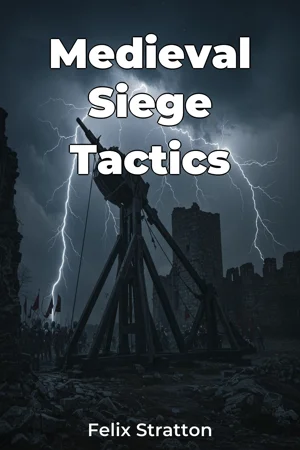
How did medieval armies overcome seemingly impenetrable fortifications? "Medieval Siege Tactics" delves into the multifaceted strategies employed to conquer castles and walled cities, exploring the intricate interplay of mechanical ingenuity, logistical planning, and psychological warfare that defined medieval sieges. This book examines the evolution and application of these tactics, offering a comprehensive understanding of their impact on military history and societal development. This book primarily addresses two critical components of siege warfare: the mechanics of breaching fortifications and the strategies used to force surrender through attrition and psychological pressure. Understanding these aspects is crucial for comprehending the dynamics of medieval conflict, the evolution of military technology, and the social and economic impact of prolonged sieges. The historical backdrop of this study spans from the decline of the Roman Empire to the rise of gunpowder warfare, a period marked by the construction of increasingly sophisticated fortifications and the development of counter-measures to overcome them. No prior military history knowledge is required, although familiarity with basic medieval social structures will be beneficial. The central argument of "Medieval Siege Tactics" is that the success of a siege depended not solely on brute force, but on a carefully orchestrated combination of engineering prowess, logistical support, and psychological manipulation designed to erode the defender's will and capacity to resist. This argument highlights the sophisticated and often overlooked aspects of medieval military thinking. The book unfolds in a structured manner. It begins by introducing the basic principles of siege warfare, defining key terms, and outlining the typical phases of a siege. It then transitions into detailed examinations of specific siege technologies, such as trebuchets, battering rams, siege towers, and mining techniques, exploring their design, construction, and effectiveness. Furthermore, the book dedicates considerable attention to the logistical challenges of sustaining a siege, including the procurement and distribution of food, water, and military supplies. We also analyze the diverse methods of psychological manipulation, from propaganda and intimidation to the use of disease and famine as weapons. The study culminates in an analysis of several key sieges in Medieval Europe, where the interplay of these elements determined the final outcome. The evidence presented is drawn from a variety of primary and secondary sources, including contemporary chronicles, military treatises, archaeological findings, and architectural analyses of fortifications. The book connects to diverse fields such as engineering, sociology, and psychology. Engineering knowledge provides insight into the structural integrity of fortifications and the mechanics of siege engines. Sociological analysis reveals the impact of sieges on civilian populations and social structures. Psychological perspectives shed light on the effectiveness of morale-breaking tactics. Each connection enhances the understanding of the complexity of medieval siege warfare. This book stands out by integrating technological, logistical, and psychological factors into a cohesive analysis of medieval sieges. It avoids reliance on romanticized notions of warfare and focuses on the pragmatic realities of siege operations. The tone is academic but accessible, offering detailed analysis without sacrificing clarity. The writing style aims to engage readers with vivid descriptions and compelling narratives. "Medieval Siege Tactics" is tailored to military history enthusiasts, students of medieval history, and anyone interested in the intersection of technology, strategy, and human behavior in warfare. This book provides readers with a comprehensive and nuanced understanding of medieval sieges, revealing the strategic and tactical intricacies that shaped the course of history. As a work of military history, this book adheres to the genre's conventions of providing detailed accounts of battles, military strategies, and technological advancements. However, it goes beyond conventional battle narratives by incorporating social and psychological analyses. The scope encompasses siege warfare across Europe from the late Roman period to the early Renaissance, with a primary focus on sieges in Western Europe. The book does not delve deeply into siege warfare in other regions, such as the Middle East or Asia, due to limitations of space and the distinct historical contexts. The principles and strategies discussed in "Medieval Siege Tactics" have relevance to modern military and security studies. Understanding the dynamics of siege warfare, including the importance of logistics, psychological operations, and technological innovation, can inform contemporary military thinking. The field of medieval siege warfare is continually debated among historians, particularly regarding the effectiveness of certain siege technologies and the impact of sieges on civilian populations. This book addresses these debates by presenting multiple perspectives and offering balanced assessments of the available evidence.
How did medieval armies overcome seemingly impenetrable fortifications? "Medieval Siege Tactics" delves into the multifaceted strategies employed to conquer castles and walled cities, exploring the intricate interplay of mechanical ingenuity, logistical planning, and psychological warfare that defined medieval sieges. This book examines the evolution and application of these tactics, offering a comprehensive understanding of their impact on military history and societal development. This book primarily addresses two critical components of siege warfare: the mechanics of breaching fortifications and the strategies used to force surrender through attrition and psychological pressure. Understanding these aspects is crucial for comprehending the dynamics of medieval conflict, the evolution of military technology, and the social and economic impact of prolonged sieges. The historical backdrop of this study spans from the decline of the Roman Empire to the rise of gunpowder warfare, a period marked by the construction of increasingly sophisticated fortifications and the development of counter-measures to overcome them. No prior military history knowledge is required, although familiarity with basic medieval social structures will be beneficial. The central argument of "Medieval Siege Tactics" is that the success of a siege depended not solely on brute force, but on a carefully orchestrated combination of engineering prowess, logistical support, and psychological manipulation designed to erode the defender's will and capacity to resist. This argument highlights the sophisticated and often overlooked aspects of medieval military thinking. The book unfolds in a structured manner. It begins by introducing the basic principles of siege warfare, defining key terms, and outlining the typical phases of a siege. It then transitions into detailed examinations of specific siege technologies, such as trebuchets, battering rams, siege towers, and mining techniques, exploring their design, construction, and effectiveness. Furthermore, the book dedicates considerable attention to the logistical challenges of sustaining a siege, including the procurement and distribution of food, water, and military supplies. We also analyze the diverse methods of psychological manipulation, from propaganda and intimidation to the use of disease and famine as weapons. The study culminates in an analysis of several key sieges in Medieval Europe, where the interplay of these elements determined the final outcome. The evidence presented is drawn from a variety of primary and secondary sources, including contemporary chronicles, military treatises, archaeological findings, and architectural analyses of fortifications. The book connects to diverse fields such as engineering, sociology, and psychology. Engineering knowledge provides insight into the structural integrity of fortifications and the mechanics of siege engines. Sociological analysis reveals the impact of sieges on civilian populations and social structures. Psychological perspectives shed light on the effectiveness of morale-breaking tactics. Each connection enhances the understanding of the complexity of medieval siege warfare. This book stands out by integrating technological, logistical, and psychological factors into a cohesive analysis of medieval sieges. It avoids reliance on romanticized notions of warfare and focuses on the pragmatic realities of siege operations. The tone is academic but accessible, offering detailed analysis without sacrificing clarity. The writing style aims to engage readers with vivid descriptions and compelling narratives. "Medieval Siege Tactics" is tailored to military history enthusiasts, students of medieval history, and anyone interested in the intersection of technology, strategy, and human behavior in warfare. This book provides readers with a comprehensive and nuanced understanding of medieval sieges, revealing the strategic and tactical intricacies that shaped the course of history. As a work of military history, this book adheres to the genre's conventions of providing detailed accounts of battles, military strategies, and technological advancements. However, it goes beyond conventional battle narratives by incorporating social and psychological analyses. The scope encompasses siege warfare across Europe from the late Roman period to the early Renaissance, with a primary focus on sieges in Western Europe. The book does not delve deeply into siege warfare in other regions, such as the Middle East or Asia, due to limitations of space and the distinct historical contexts. The principles and strategies discussed in "Medieval Siege Tactics" have relevance to modern military and security studies. Understanding the dynamics of siege warfare, including the importance of logistics, psychological operations, and technological innovation, can inform contemporary military thinking. The field of medieval siege warfare is continually debated among historians, particularly regarding the effectiveness of certain siege technologies and the impact of sieges on civilian populations. This book addresses these debates by presenting multiple perspectives and offering balanced assessments of the available evidence.
"Medieval Siege Tactics" explores the complex world of medieval siege warfare, revealing how armies breached fortifications through a combination of mechanical ingenuity, logistical planning, and psychological tactics. The book highlights that sieges were not merely about brute force; they involved sophisticated engineering to build siege engines like trebuchets and battering rams, alongside calculated efforts to undermine the defender's morale. Readers will understand how essential it was to master both breaching methods and attrition strategies during medieval conflicts. The book progresses from basic siege principles to detailed examinations of siege technologies and logistical challenges. It dives into the psychological manipulations used, such as propaganda and creating famine, to compel surrender. Historical evidence from chronicles, archaeological findings, and architectural analyses supports the narrative, making it a comprehensive study. This unique approach integrates technological, logistical, and psychological factors, offering a nuanced understanding of medieval sieges. By avoiding romanticized notions and focusing on pragmatic realities, the book provides valuable insights for military history enthusiasts and anyone interested in the intersection of strategy, technology, and human behavior in warfare, demonstrating how medieval military tactics shaped history.
Book Details
ISBN
9788235267399
Publisher
Publifye AS
Your Licenses
You don't own any licenses for this book
Purchase a license below to unlock this book and download the EPUB.
Purchase License
Select a tier to unlock this book
Need bulk licensing?
Contact us for enterprise agreements.