
About This Book
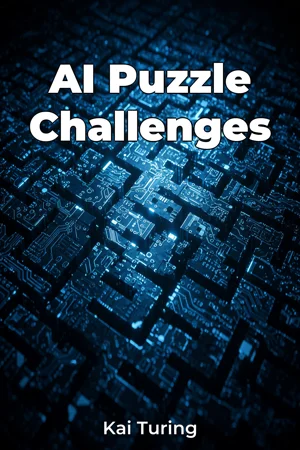
Can artificial intelligence truly master the intricacies of complex problem-solving, or are its capabilities merely imitative? This book, "AI Puzzle Challenges," delves into the fascinating intersection of artificial intelligence and complex puzzles, exploring how machine learning is reshaping our understanding of game strategies and forecasting the profound impact of AI on future challenges. We will navigate the core principles of AI as it applies to puzzle-solving, machine learning’s transformative role in gaming, and the broader implications for the future. These topics are crucial because they reveal the capacity of AI to not just mimic human intelligence but potentially augment and surpass it in specific domains. Given the rapid advancements in AI, understanding its capabilities and limitations is increasingly vital for professionals across numerous fields, as well as for anyone interested in the future of technology. "AI Puzzle Challenges" provides a comprehensive overview of various AI techniques used in problem-solving, starting with basic algorithms like brute force and heuristics, and progressing to more sophisticated methods such as deep learning and reinforcement learning. We explore the historical context of AI research, from early chess-playing programs to modern systems capable of mastering Go and complex video games. While some familiarity with basic programming concepts and mathematical principles is advantageous, concepts are explained clearly to be accessible to a broad audience. The central argument of this book is that AI's success in solving complex puzzles demonstrates its potential for addressing real-world challenges, but also highlights the importance of understanding the limitations and biases inherent in AI systems. This argument is important because it moves beyond the hype surrounding AI to provide a balanced perspective on its capabilities and responsibilities. The book begins by introducing fundamental AI concepts and puzzle types, offering a solid foundation before delving into advanced topics. The first section covers search algorithms, game theory, and machine learning basics. The subsequent sections explore specific applications, such as AI in board games like chess and Go, AI in video games, solving logic puzzles, and its role in optimization problems. Every section builds upon the previous material, culminating in a discussion of the ethical considerations, potential risks, and future directions of AI in problem-solving. These discussions cover the implications for job displacement, algorithmic bias, and the need for responsible AI development. The arguments presented are supported by a combination of theoretical analysis, experimental results, and case studies. We draw on research papers, open-source datasets, and real-world examples to illustrate the strengths and weaknesses of different AI approaches. Specific methodologies such as Monte Carlo Tree Search, Q-learning, and neural networks are examined in detail. "AI Puzzle Challenges" connects to several interdisciplinary fields, including computer science, mathematics, cognitive science, and ethics. Its exploration of AI algorithms and optimization techniques links directly to computer science and mathematics. The analysis of human-AI interaction and cognitive biases connects to cognitive science. The discussions on ethical implications and responsible AI development tie into broader ethical and social considerations. This book distinguishes itself by providing a hands-on approach to understanding AI through puzzle-solving. It offers practical examples, code snippets, and exercises to illustrate key concepts. The tone is informative and engaging, presenting complex information in a clear and accessible manner. The target audience includes students, researchers, and professionals in computer science, AI, and related fields, as well as anyone interested in exploring the capabilities and limitations of artificial intelligence in problem-solving. The book would also appeal to game developers, data scientists, and decision-makers who want to understand how AI can be applied to their respective domains. It is structured as a technology book that provides a solid educational foundation. The scope of "AI Puzzle Challenges" is limited to the application of AI techniques to puzzle-solving and game playing. However, it does not delve into the broader philosophical implications of AI or its potential impact on society. Readers will learn how to apply AI techniques to solve a variety of puzzles, develop a deeper understanding of machine learning algorithms, and gain insights into the ethical considerations surrounding AI development. While the book acknowledges the potential of AI to revolutionize various industries, it also addresses ongoing debates about the risks of AI, such as job displacement, algorithmic bias, and the potential for misuse.
Can artificial intelligence truly master the intricacies of complex problem-solving, or are its capabilities merely imitative? This book, "AI Puzzle Challenges," delves into the fascinating intersection of artificial intelligence and complex puzzles, exploring how machine learning is reshaping our understanding of game strategies and forecasting the profound impact of AI on future challenges. We will navigate the core principles of AI as it applies to puzzle-solving, machine learning’s transformative role in gaming, and the broader implications for the future. These topics are crucial because they reveal the capacity of AI to not just mimic human intelligence but potentially augment and surpass it in specific domains. Given the rapid advancements in AI, understanding its capabilities and limitations is increasingly vital for professionals across numerous fields, as well as for anyone interested in the future of technology. "AI Puzzle Challenges" provides a comprehensive overview of various AI techniques used in problem-solving, starting with basic algorithms like brute force and heuristics, and progressing to more sophisticated methods such as deep learning and reinforcement learning. We explore the historical context of AI research, from early chess-playing programs to modern systems capable of mastering Go and complex video games. While some familiarity with basic programming concepts and mathematical principles is advantageous, concepts are explained clearly to be accessible to a broad audience. The central argument of this book is that AI's success in solving complex puzzles demonstrates its potential for addressing real-world challenges, but also highlights the importance of understanding the limitations and biases inherent in AI systems. This argument is important because it moves beyond the hype surrounding AI to provide a balanced perspective on its capabilities and responsibilities. The book begins by introducing fundamental AI concepts and puzzle types, offering a solid foundation before delving into advanced topics. The first section covers search algorithms, game theory, and machine learning basics. The subsequent sections explore specific applications, such as AI in board games like chess and Go, AI in video games, solving logic puzzles, and its role in optimization problems. Every section builds upon the previous material, culminating in a discussion of the ethical considerations, potential risks, and future directions of AI in problem-solving. These discussions cover the implications for job displacement, algorithmic bias, and the need for responsible AI development. The arguments presented are supported by a combination of theoretical analysis, experimental results, and case studies. We draw on research papers, open-source datasets, and real-world examples to illustrate the strengths and weaknesses of different AI approaches. Specific methodologies such as Monte Carlo Tree Search, Q-learning, and neural networks are examined in detail. "AI Puzzle Challenges" connects to several interdisciplinary fields, including computer science, mathematics, cognitive science, and ethics. Its exploration of AI algorithms and optimization techniques links directly to computer science and mathematics. The analysis of human-AI interaction and cognitive biases connects to cognitive science. The discussions on ethical implications and responsible AI development tie into broader ethical and social considerations. This book distinguishes itself by providing a hands-on approach to understanding AI through puzzle-solving. It offers practical examples, code snippets, and exercises to illustrate key concepts. The tone is informative and engaging, presenting complex information in a clear and accessible manner. The target audience includes students, researchers, and professionals in computer science, AI, and related fields, as well as anyone interested in exploring the capabilities and limitations of artificial intelligence in problem-solving. The book would also appeal to game developers, data scientists, and decision-makers who want to understand how AI can be applied to their respective domains. It is structured as a technology book that provides a solid educational foundation. The scope of "AI Puzzle Challenges" is limited to the application of AI techniques to puzzle-solving and game playing. However, it does not delve into the broader philosophical implications of AI or its potential impact on society. Readers will learn how to apply AI techniques to solve a variety of puzzles, develop a deeper understanding of machine learning algorithms, and gain insights into the ethical considerations surrounding AI development. While the book acknowledges the potential of AI to revolutionize various industries, it also addresses ongoing debates about the risks of AI, such as job displacement, algorithmic bias, and the potential for misuse.
"AI Puzzle Challenges" explores the fascinating realm where artificial intelligence meets complex problem-solving. It examines how machine learning is revolutionizing game strategies and offers insights into AI's broader impact. The book dives into how AI algorithms, such as deep learning and reinforcement learning, are used to tackle puzzles, moving from basic methods like brute force to more sophisticated approaches. Did you know that AI has evolved from early chess programs to systems that master Go? Or that it is now used in complex video games? The book's unique value lies in its practical approach, offering hands-on examples and code snippets to illustrate key concepts in AI and semantics. It begins with foundational AI concepts and puzzle types, progressing to advanced applications like AI in board games and optimization problems. This structure ensures that readers build a solid understanding before tackling more complex topics, such as the ethical dimensions of AI. Each section builds upon the previous one, culminating in a discussion of ethical considerations, potential risks, and future directions of AI in problem-solving. By examining both the capabilities and limitations of AI systems, "AI Puzzle Challenges" provides a balanced perspective on this rapidly advancing field.
Book Details
ISBN
9788235267283
Publisher
Publifye AS
Your Licenses
You don't own any licenses for this book
Purchase a license below to unlock this book and download the EPUB.
Purchase License
Select a tier to unlock this book
Need bulk licensing?
Contact us for enterprise agreements.