
About This Book
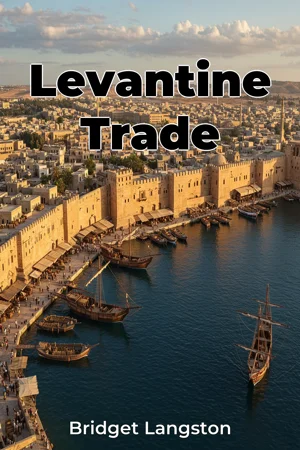
How did a relatively small geographical area become a linchpin in global trade, shaping the course of civilizations across continents? This book, "Levantine Trade," delves into the economic power wielded by the Levant, examining its intricate trade routes and its pivotal role in connecting Asia, Africa, and Europe. This study focuses on three core areas: the evolution of Levantine trade routes, the economic structures that supported this trade, and the socio-political impact of this commercial exchange on the region and the wider world. These topics are essential because understanding the Levant's economic history provides crucial insights into the development of global trade networks, the rise and fall of empires, and the cultural exchanges that shaped our modern world. Historically, the Levant, encompassing modern-day Israel, Palestine, Lebanon, Syria, and parts of Jordan, acted as a bridge between major civilizations. Its strategic location facilitated the movement of goods, ideas, and people, making it a vital crossroads for millennia. Prior knowledge beneficial to the reader includes a basic understanding of ancient and medieval history, geographical awareness of the Middle East, and familiarity with fundamental economic concepts such as supply and demand, trade routes, and mercantilism. The central argument of "Levantine Trade" posits that the Levant's economic influence stemmed not merely from its geographical position, but also from its adaptable economic institutions and the diverse cultural interactions fostered by trade. This argument challenges simplistic views that attribute the Levant's importance solely to its location, emphasizing instead the dynamic interplay of economic, social, and political factors. The book is structured to provide a comprehensive analysis of Levantine trade. It begins by introducing the region's geography and its initial role in early trade networks. It proceeds by developing the following major points: first, an examination of the key commodities that flowed through the Levant, such as spices, textiles, and precious metals, and their impact on regional economies. Second, an analysis of the trading powers that controlled or influenced Levantine trade, including the Phoenicians, Romans, Byzantines, Arabs, Crusaders, and Ottomans. Third, an exploration of the financial systems, trade regulations, and infrastructure that supported this trade. The book culminates by demonstrating how the decline of Levantine trade routes contributed to shifts in global economic power, and how the region's legacy continues to influence modern trade patterns. To support its arguments, the book will draw upon a range of historical sources, including archaeological findings, ancient texts, trade documents, and economic treatises. Unique data sources will include recently translated Ottoman customs records and detailed analyses of ship manifests from various periods. "Levantine Trade" also connects to other fields such as political science, examining how trade impacted political power and diplomacy; sociology, analyzing the cultural exchanges and social structures that developed along trade routes; and geography, mapping the physical routes and their influence on settlement patterns. These interdisciplinary connections enrich the book's analysis by providing a more holistic understanding of the Levant's role in world history. This book offers a unique perspective by integrating economic analysis with historical narrative, moving beyond traditional political or military histories of the region. The tone is academic yet accessible, aimed at a broad audience interested in economics, history, and Middle Eastern studies. The target audience includes students, researchers, policymakers, and general readers interested in global trade, economic history, and the history of the Middle East. This book would be valuable to them, because it provides a comprehensive, accessible, and insightful analysis of a region that played a critical role in shaping global economic and cultural exchange. As a work of history, "Levantine Trade" adheres to standards of historical accuracy and evidence-based analysis. As a work of economics, it employs established economic principles to interpret historical data. The scope of the book is limited to the period before the full-scale integration of the Middle East into the modern global economy, focusing primarily on the ancient and medieval periods. The information presented in this book has real-world applications for understanding contemporary trade dynamics, the challenges of economic development in the Middle East, and the importance of international relations in shaping economic outcomes. The book addresses ongoing debates about the impact of globalization on regional economies and the role of trade in promoting or hindering cultural exchange.
How did a relatively small geographical area become a linchpin in global trade, shaping the course of civilizations across continents? This book, "Levantine Trade," delves into the economic power wielded by the Levant, examining its intricate trade routes and its pivotal role in connecting Asia, Africa, and Europe. This study focuses on three core areas: the evolution of Levantine trade routes, the economic structures that supported this trade, and the socio-political impact of this commercial exchange on the region and the wider world. These topics are essential because understanding the Levant's economic history provides crucial insights into the development of global trade networks, the rise and fall of empires, and the cultural exchanges that shaped our modern world. Historically, the Levant, encompassing modern-day Israel, Palestine, Lebanon, Syria, and parts of Jordan, acted as a bridge between major civilizations. Its strategic location facilitated the movement of goods, ideas, and people, making it a vital crossroads for millennia. Prior knowledge beneficial to the reader includes a basic understanding of ancient and medieval history, geographical awareness of the Middle East, and familiarity with fundamental economic concepts such as supply and demand, trade routes, and mercantilism. The central argument of "Levantine Trade" posits that the Levant's economic influence stemmed not merely from its geographical position, but also from its adaptable economic institutions and the diverse cultural interactions fostered by trade. This argument challenges simplistic views that attribute the Levant's importance solely to its location, emphasizing instead the dynamic interplay of economic, social, and political factors. The book is structured to provide a comprehensive analysis of Levantine trade. It begins by introducing the region's geography and its initial role in early trade networks. It proceeds by developing the following major points: first, an examination of the key commodities that flowed through the Levant, such as spices, textiles, and precious metals, and their impact on regional economies. Second, an analysis of the trading powers that controlled or influenced Levantine trade, including the Phoenicians, Romans, Byzantines, Arabs, Crusaders, and Ottomans. Third, an exploration of the financial systems, trade regulations, and infrastructure that supported this trade. The book culminates by demonstrating how the decline of Levantine trade routes contributed to shifts in global economic power, and how the region's legacy continues to influence modern trade patterns. To support its arguments, the book will draw upon a range of historical sources, including archaeological findings, ancient texts, trade documents, and economic treatises. Unique data sources will include recently translated Ottoman customs records and detailed analyses of ship manifests from various periods. "Levantine Trade" also connects to other fields such as political science, examining how trade impacted political power and diplomacy; sociology, analyzing the cultural exchanges and social structures that developed along trade routes; and geography, mapping the physical routes and their influence on settlement patterns. These interdisciplinary connections enrich the book's analysis by providing a more holistic understanding of the Levant's role in world history. This book offers a unique perspective by integrating economic analysis with historical narrative, moving beyond traditional political or military histories of the region. The tone is academic yet accessible, aimed at a broad audience interested in economics, history, and Middle Eastern studies. The target audience includes students, researchers, policymakers, and general readers interested in global trade, economic history, and the history of the Middle East. This book would be valuable to them, because it provides a comprehensive, accessible, and insightful analysis of a region that played a critical role in shaping global economic and cultural exchange. As a work of history, "Levantine Trade" adheres to standards of historical accuracy and evidence-based analysis. As a work of economics, it employs established economic principles to interpret historical data. The scope of the book is limited to the period before the full-scale integration of the Middle East into the modern global economy, focusing primarily on the ancient and medieval periods. The information presented in this book has real-world applications for understanding contemporary trade dynamics, the challenges of economic development in the Middle East, and the importance of international relations in shaping economic outcomes. The book addresses ongoing debates about the impact of globalization on regional economies and the role of trade in promoting or hindering cultural exchange.
"Levantine Trade" explores how the Levant, encompassing modern-day Israel, Lebanon, and surrounding areas, served as a crucial bridge in global trade networks. The book examines the region's economic history, highlighting its role in connecting Asia, Africa, and Europe for millennia. It delves into the evolution of Levantine trade routes, showcasing how this relatively small geographical area became a linchpin in global economics. For example, the movement of spices, textiles, and precious metals through the Levant significantly impacted regional economies. The book analyzes the economic structures that supported this trade, from the Phoenicians to the Ottomans, and their impact on the region and the wider world. It argues the Levant's influence stemmed from its adaptable economic institutions, not solely its geographical position. By using archaeological findings, ancient texts, and recently translated Ottoman customs records, the book integrates economic analysis with historical narrative. It begins by introducing the region's geography and progresses through key commodities, trading powers, and financial systems, culminating in an analysis of how its decline shifted global economic power. This approach offers a unique perspective, moving beyond traditional political or military histories to focus on economic exchange and cultural interaction.
Book Details
ISBN
9788235267207
Publisher
Publifye AS
Your Licenses
You don't own any licenses for this book
Purchase a license below to unlock this book and download the EPUB.
Purchase License
Select a tier to unlock this book
Need bulk licensing?
Contact us for enterprise agreements.