
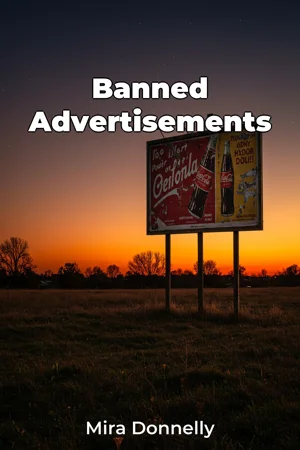
About This Book
Have you ever wondered why some advertisements vanish abruptly, sparking public outrage and debate? "Banned Advertisements" delves into the complex world of marketing mishaps, examining controversial ads pulled from media outlets due to public backlash, legal challenges, or cultural insensitivity. This book explores the ethical, social, and legal implications of advertising, offering a comprehensive analysis of the factors that lead to an ad’s downfall. The book centers on three major themes: the power of public opinion in shaping advertising standards, the legal boundaries that advertisers must navigate, and the evolving landscape of cultural sensitivities. These themes are crucial because they highlight the responsibilities advertisers have to their audiences, the legal system, and society at large. Understanding these elements provides vital insights into the checks and balances that govern the flow of information and influence in the modern world. Throughout history, advertising has reflected, and sometimes challenged, societal norms. This book provides historical context by tracing the evolution of advertising standards, from the relatively unregulated early days to the increasingly scrutinized present. Readers will gain an understanding of how events, technological advancements, and social movements have shaped the ethical and legal landscape of advertising. No prior knowledge of marketing or law is required; key concepts will be introduced clearly and accessibly. The central argument of "Banned Advertisements" is that the removal of an advertisement is not merely a business decision but a significant indicator of broader societal values and legal principles in action. This argument is important because it reframes the discussion around advertising, highlighting its role as a barometer of social change and a point of intersection between commerce, culture, and legality. The book is structured into three major parts. The first part introduces the core concepts of advertising ethics, basic advertising law, and cultural sensitivity in marketing. Real-world examples of both successful and unsuccessful campaigns will be used to illustrate these concepts. The second part delves into specific case studies of banned advertisements, categorized by the reasons for their removal: public outcry, legal violations, or cultural insensitivity. Each case study provides a detailed account of the ad, the controversy it generated, and its lasting impact. The final part analyzes the trends and patterns identified in the case studies, culminating in a discussion of the future of advertising and the challenges advertisers will face in an increasingly complex and interconnected world. Practical guidelines are offered for advertisers seeking to navigate these challenges responsibly. The analysis presented is based on an extensive review of advertising archives, legal documents, media reports, and public opinion surveys. The book also features interviews with advertising professionals, legal experts, and social commentators, providing a diverse range of perspectives on the issues at hand. “Banned Advertisements” connects to several other fields of study including media studies (exploring how media shapes public opinion), law (analyzing advertising regulations and legal precedents), and sociology (examining the cultural impact of advertising). These interdisciplinary connections strengthen the book's argument by providing a more holistic understanding of the role of advertising in society. The book provides an innovative approach to the subject by framing banned advertisements not as isolated incidents but as points of convergence where ethics, law, and culture collide. This perspective offers valuable insights for understanding the complex dynamics of advertising and its impact on society. Written in a clear and engaging style, the book avoids jargon and technical terms, making it accessible to a wide audience. The tone is objective and analytical, presenting information in a balanced and unbiased manner. The target audience includes students and professionals in marketing, advertising, public relations, law, media studies, and sociology as well as general readers interested in the power of advertising and its impact on society. This book would be valuable to them because it provides a comprehensive and nuanced understanding of the ethical, legal, and cultural considerations that shape the advertising landscape. This book adheres to the conventions of the business and social science genres by providing data-driven insights, engaging case studies, and practical implications for readers. The scope of "Banned Advertisements" is broad, covering a wide range of industries, products, and cultural contexts. However, it is intentionally limited to advertisements that have been formally banned or withdrawn due to significant controversy, focusing on the lessons that can be learned from these high-profile cases. The information in this book can be applied practically by advertisers seeking to create responsible and effective campaigns. It also provides valuable insights for consumers interested in understanding the power of advertising and its potential impact on their lives. "Banned Advertisements" also addresses ongoing debates about the role of advertising in society, including discussions about consumer privacy, data protection, and the impact of advertising on children. These controversies are important for understanding the challenges advertisers face in an increasingly complex and regulated environment.
Have you ever wondered why some advertisements vanish abruptly, sparking public outrage and debate? "Banned Advertisements" delves into the complex world of marketing mishaps, examining controversial ads pulled from media outlets due to public backlash, legal challenges, or cultural insensitivity. This book explores the ethical, social, and legal implications of advertising, offering a comprehensive analysis of the factors that lead to an ad’s downfall. The book centers on three major themes: the power of public opinion in shaping advertising standards, the legal boundaries that advertisers must navigate, and the evolving landscape of cultural sensitivities. These themes are crucial because they highlight the responsibilities advertisers have to their audiences, the legal system, and society at large. Understanding these elements provides vital insights into the checks and balances that govern the flow of information and influence in the modern world. Throughout history, advertising has reflected, and sometimes challenged, societal norms. This book provides historical context by tracing the evolution of advertising standards, from the relatively unregulated early days to the increasingly scrutinized present. Readers will gain an understanding of how events, technological advancements, and social movements have shaped the ethical and legal landscape of advertising. No prior knowledge of marketing or law is required; key concepts will be introduced clearly and accessibly. The central argument of "Banned Advertisements" is that the removal of an advertisement is not merely a business decision but a significant indicator of broader societal values and legal principles in action. This argument is important because it reframes the discussion around advertising, highlighting its role as a barometer of social change and a point of intersection between commerce, culture, and legality. The book is structured into three major parts. The first part introduces the core concepts of advertising ethics, basic advertising law, and cultural sensitivity in marketing. Real-world examples of both successful and unsuccessful campaigns will be used to illustrate these concepts. The second part delves into specific case studies of banned advertisements, categorized by the reasons for their removal: public outcry, legal violations, or cultural insensitivity. Each case study provides a detailed account of the ad, the controversy it generated, and its lasting impact. The final part analyzes the trends and patterns identified in the case studies, culminating in a discussion of the future of advertising and the challenges advertisers will face in an increasingly complex and interconnected world. Practical guidelines are offered for advertisers seeking to navigate these challenges responsibly. The analysis presented is based on an extensive review of advertising archives, legal documents, media reports, and public opinion surveys. The book also features interviews with advertising professionals, legal experts, and social commentators, providing a diverse range of perspectives on the issues at hand. “Banned Advertisements” connects to several other fields of study including media studies (exploring how media shapes public opinion), law (analyzing advertising regulations and legal precedents), and sociology (examining the cultural impact of advertising). These interdisciplinary connections strengthen the book's argument by providing a more holistic understanding of the role of advertising in society. The book provides an innovative approach to the subject by framing banned advertisements not as isolated incidents but as points of convergence where ethics, law, and culture collide. This perspective offers valuable insights for understanding the complex dynamics of advertising and its impact on society. Written in a clear and engaging style, the book avoids jargon and technical terms, making it accessible to a wide audience. The tone is objective and analytical, presenting information in a balanced and unbiased manner. The target audience includes students and professionals in marketing, advertising, public relations, law, media studies, and sociology as well as general readers interested in the power of advertising and its impact on society. This book would be valuable to them because it provides a comprehensive and nuanced understanding of the ethical, legal, and cultural considerations that shape the advertising landscape. This book adheres to the conventions of the business and social science genres by providing data-driven insights, engaging case studies, and practical implications for readers. The scope of "Banned Advertisements" is broad, covering a wide range of industries, products, and cultural contexts. However, it is intentionally limited to advertisements that have been formally banned or withdrawn due to significant controversy, focusing on the lessons that can be learned from these high-profile cases. The information in this book can be applied practically by advertisers seeking to create responsible and effective campaigns. It also provides valuable insights for consumers interested in understanding the power of advertising and its potential impact on their lives. "Banned Advertisements" also addresses ongoing debates about the role of advertising in society, including discussions about consumer privacy, data protection, and the impact of advertising on children. These controversies are important for understanding the challenges advertisers face in an increasingly complex and regulated environment.
"Banned Advertisements" explores the intriguing world of controversial marketing, dissecting ads pulled from the media spotlight due to public outcry, legal challenges, or cultural insensitivity. It examines the delicate balance advertisers must maintain between promoting products and respecting societal norms, highlighting advertising's role as a barometer of social change. The book reveals how public opinion wields significant power in shaping advertising standards, often leading to the swift removal of campaigns deemed offensive or unethical. Furthermore, it examines the legal boundaries advertisers must navigate, showcasing how violations can result in immediate and impactful consequences. The book progresses systematically, beginning with core concepts of advertising ethics, advertising law, and cultural sensitivity. It then presents specific case studies of banned advertisements, categorized by the reasons for their removal such as public outcry, legal violations, or cultural insensitivity. This book provides historical context through tracing the evolution of advertising standards, from the relatively unregulated early days to the increasingly scrutinized present. Finally, it analyzes trends and patterns identified in the case studies, discussing the future of advertising and the challenges advertisers will face.
Book Details
ISBN
9788235267092
Publisher
Publifye AS
Your Licenses
You don't own any licenses for this book
Purchase a license below to unlock this book and download the EPUB.
Purchase License
Select a tier to unlock this book
Need bulk licensing?
Contact us for enterprise agreements.