
About This Book
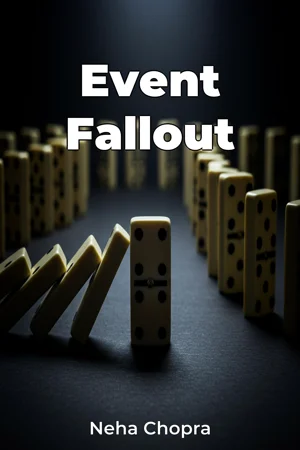
How can a single, seemingly isolated event trigger a cascade of consequences that reshape the world? "Event Fallout" explores the profound and often unforeseen ripple effects of brief but pivotal moments in both politics and science. This book delves into how specific incidents, from scientific breakthroughs to political decisions, have acted as catalysts, setting in motion a chain of events that continue to shape our present and future. We will examine the intricate connections between seemingly disparate fields, revealing how a discovery in one area can have significant repercussions in another, often with unintended consequences. The book is built around three core themes: the Butterfly Effect in policy-making, where small actions lead to large-scale global shifts; the unintended consequences of scientific innovation, where advancements, meant to improve lives, sometimes create new challenges; and finally, the concept of "legacy events," moments that define eras and leave a lasting impact on subsequent generations. These themes are vital because they underscore the interconnectedness of our world and the need for careful consideration of both short-term and long-term impacts of actions and decisions. The book provides a broad historical and scientific context, examining instances such as the discovery of penicillin, the Cuban Missile Crisis, and the development of the internet. It does not assume specialized knowledge. Each case study is presented with sufficient background information to allow the reader to understand the situation and its subsequent unfolding. The central argument of "Event Fallout" is that understanding the dynamics of these ripple effects is crucial for effective decision-making in an increasingly complex world. By analyzing past events, we can better anticipate and manage the potential fallout from current and future actions. This is not about assigning blame but about fostering a more informed and proactive approach to global problem-solving. "Event Fallout" is structured in three parts. The first part introduces the core concepts: the nature of ripple effects, the role of tipping points, and the concept of interconnectedness. The second part presents detailed case studies from both science and politics, illustrating how specific events have unfolded and their impacts have been felt across various domains. These chapters will explore events, analyze the short and long-term consequences, and evaluate the factors that exacerbated or mitigated these consequences. The final section synthesizes these cases, derives key principles for understanding and managing event fallout, and explores the implications for policy-making, scientific research, and individual action. We will consider how these insights can be applied to navigate complex challenges such as climate change, global health crises, and technological disruption. The book relies on a variety of evidence, including historical records, scientific publications, statistical data, and expert interviews. It synthesizes information from diverse sources to provide a comprehensive and nuanced understanding of each event. The book connects to fields such as sociology, economics, and environmental studies, highlighting the multifaceted nature of event fallout. This interdisciplinary approach allows for a more complete understanding of the complexities involved and reveals how different disciplines view and interpret the same event. "Event Fallout" offers a distinctive perspective by combining rigorous analysis with a clear and accessible writing style. The book is aimed at a broad audience, including students, policymakers, researchers, and anyone interested in understanding the forces that shape our world. It appeals to readers interested in current events, science, and history. The book acknowledges its limitations. While it provides a framework for understanding event fallout, it does not offer a predictive model. The focus is on retrospective analysis and the identification of patterns, rather than precise forecasting. The information in "Event Fallout" can be applied in various practical ways. Policy-makers can use the book's insights to develop more robust and resilient strategies. Scientists can use it to anticipate the broader implications of their research. Individuals can use it to make more informed decisions about their own lives and actions. The book addresses some of the ongoing debates in the fields of political science and science regarding the role of chance, the importance of individual agency, and the limits of prediction. "Event Fallout" does not attempt to resolve these debates but rather to offer a framework for understanding the different perspectives and their implications.
How can a single, seemingly isolated event trigger a cascade of consequences that reshape the world? "Event Fallout" explores the profound and often unforeseen ripple effects of brief but pivotal moments in both politics and science. This book delves into how specific incidents, from scientific breakthroughs to political decisions, have acted as catalysts, setting in motion a chain of events that continue to shape our present and future. We will examine the intricate connections between seemingly disparate fields, revealing how a discovery in one area can have significant repercussions in another, often with unintended consequences. The book is built around three core themes: the Butterfly Effect in policy-making, where small actions lead to large-scale global shifts; the unintended consequences of scientific innovation, where advancements, meant to improve lives, sometimes create new challenges; and finally, the concept of "legacy events," moments that define eras and leave a lasting impact on subsequent generations. These themes are vital because they underscore the interconnectedness of our world and the need for careful consideration of both short-term and long-term impacts of actions and decisions. The book provides a broad historical and scientific context, examining instances such as the discovery of penicillin, the Cuban Missile Crisis, and the development of the internet. It does not assume specialized knowledge. Each case study is presented with sufficient background information to allow the reader to understand the situation and its subsequent unfolding. The central argument of "Event Fallout" is that understanding the dynamics of these ripple effects is crucial for effective decision-making in an increasingly complex world. By analyzing past events, we can better anticipate and manage the potential fallout from current and future actions. This is not about assigning blame but about fostering a more informed and proactive approach to global problem-solving. "Event Fallout" is structured in three parts. The first part introduces the core concepts: the nature of ripple effects, the role of tipping points, and the concept of interconnectedness. The second part presents detailed case studies from both science and politics, illustrating how specific events have unfolded and their impacts have been felt across various domains. These chapters will explore events, analyze the short and long-term consequences, and evaluate the factors that exacerbated or mitigated these consequences. The final section synthesizes these cases, derives key principles for understanding and managing event fallout, and explores the implications for policy-making, scientific research, and individual action. We will consider how these insights can be applied to navigate complex challenges such as climate change, global health crises, and technological disruption. The book relies on a variety of evidence, including historical records, scientific publications, statistical data, and expert interviews. It synthesizes information from diverse sources to provide a comprehensive and nuanced understanding of each event. The book connects to fields such as sociology, economics, and environmental studies, highlighting the multifaceted nature of event fallout. This interdisciplinary approach allows for a more complete understanding of the complexities involved and reveals how different disciplines view and interpret the same event. "Event Fallout" offers a distinctive perspective by combining rigorous analysis with a clear and accessible writing style. The book is aimed at a broad audience, including students, policymakers, researchers, and anyone interested in understanding the forces that shape our world. It appeals to readers interested in current events, science, and history. The book acknowledges its limitations. While it provides a framework for understanding event fallout, it does not offer a predictive model. The focus is on retrospective analysis and the identification of patterns, rather than precise forecasting. The information in "Event Fallout" can be applied in various practical ways. Policy-makers can use the book's insights to develop more robust and resilient strategies. Scientists can use it to anticipate the broader implications of their research. Individuals can use it to make more informed decisions about their own lives and actions. The book addresses some of the ongoing debates in the fields of political science and science regarding the role of chance, the importance of individual agency, and the limits of prediction. "Event Fallout" does not attempt to resolve these debates but rather to offer a framework for understanding the different perspectives and their implications.
"Event Fallout" examines how pivotal moments in science and politics trigger far-reaching consequences, reshaping our world in unexpected ways. The book explores the interconnectedness of events, revealing how a seemingly isolated incident can spark a cascade of effects across different fields. For example, the discovery of penicillin revolutionized medicine but also contributed to the rise of antibiotic-resistant bacteria, highlighting the unintended consequences of scientific innovation. This book uniquely analyzes "legacy events" through the lens of ripple effects, offering insights valuable for policy-making and crisis management. It's structured around three core themes: the Butterfly Effect in policy, the unintended consequences of scientific innovation, and the lasting impact of legacy events. By examining historical cases like the Cuban Missile Crisis and the development of the internet, the book avoids jargon, presenting each event with sufficient background to understand its unfolding. The book progresses systematically, first introducing the core concepts of ripple effects, tipping points, and interconnectedness. It then presents detailed case studies from science and politics, analyzing short and long-term consequences. Finally, it synthesizes these cases to derive key principles for managing event fallout, offering a framework for navigating complex challenges like climate change.
Book Details
ISBN
9788235267085
Publisher
Publifye AS
Your Licenses
You don't own any licenses for this book
Purchase a license below to unlock this book and download the EPUB.
Purchase License
Select a tier to unlock this book
Need bulk licensing?
Contact us for enterprise agreements.