
About This Book
How have the seemingly rigid constraints of traditional poetic forms actually fostered innovation and artistic expression? "Form Constraints" delves into the intricate relationship between structure and creativity in poetry, arguing that limitations—far from stifling artistic vision—have instead served as a catalyst for poetic innovation. This exploration is significant because it challenges conventional assumptions about artistic freedom and illuminates how formal restrictions can enhance meaning, evoke emotion, and shape the very fabric of poetic language. This book explores three key concepts: the historical evolution of poetic forms and their associated rules; the cognitive impact of formal constraints on the creative process; and the ways in which poets have strategically subverted or adapted these constraints to achieve specific aesthetic effects. Understanding these topics allows readers to appreciate the nuanced interplay between form and content and to recognize the deliberate choices that poets make when working within, or against, established conventions. The book provides the historical backdrop necessary to understand the emergence and development of various poetic forms, from the sonnet and villanelle to the haiku and ghazal. Understanding the social, cultural, and literary contexts in which these forms arose is crucial for appreciating their inherent constraints and possibilities. The reader benefits from basic familiarity with poetic terminology and a general interest in literary history, though the book is written to be accessible to both seasoned poetry enthusiasts and newcomers alike. The central argument of "Form Constraints" posits that the act of writing within a prescribed form is not merely a technical exercise but a dynamic engagement with tradition, expectation, and the inherent possibilities of language. The book underlines the argument that formal constraints are not barriers to creativity but rather generative frameworks that challenge poets to discover new ways of expressing themselves. The book begins by introducing the core concepts of poetic form, meter, rhyme, and stanza structure. It then progresses through several major sections. First, it examines how specific forms, such as the sonnet, have evolved over time. Second, the book analyzes how poets throughout history have navigated these constraints, highlighting examples of both adherence to and deviation from established norms. Third, "Form Constraints" explores the psychological and cognitive dimensions of working within formal limitations, drawing on insights from cognitive science and literary theory. The book culminates by considering the ongoing relevance of traditional forms in contemporary poetry and exploring how poets continue to find new ways to utilize these structures. The arguments presented in "Form Constraints" are supported by a diverse range of evidence, including close readings of individual poems, historical analyses of poetic movements, and theoretical frameworks from literary criticism and cognitive science. The book draws upon archival materials, including original manuscripts and early printed editions, to illustrate the evolution of poetic forms and the creative decisions made by poets. "Form Constraints" connects to other fields such as music theory, which also deals with the interplay of structure and improvisation; cognitive psychology, which explores the relationship between creativity and constraint; and cultural studies, which examines how artistic forms reflect and shape social values. These interdisciplinary connections enhance the book's argument by providing a broader context for understanding the role of constraints in artistic expression. This book takes a unique approach by combining historical analysis with cognitive and theoretical perspectives. It moves beyond a purely descriptive account of poetic forms to explore the underlying mechanisms that make them generative and meaningful. The book is academic in its rigor but accessible in its style, aiming to engage a broad readership of students, scholars, and poetry enthusiasts. The target audience includes students and scholars of literature, creative writing students, and anyone with a general interest in poetry. This book will be valuable to them because it provides a deeper understanding of poetic form and its role in shaping literary meaning. It also offers practical insights for writers interested in experimenting with traditional forms. As a work of literary criticism and theory, "Form Constraints" adheres to the conventions of academic scholarship, including rigorous documentation, clear argumentation, and engagement with existing literature in the field. The scope of the book is limited to traditional poetic forms, with intentional constraints to exclude free verse and other non-formal approaches to poetry. The information in "Form Constraints" can be applied practically by writers seeking to improve their craft and by readers seeking a deeper appreciation of poetry. By understanding the principles of poetic form, writers can make more informed choices about how to structure their work, and readers can gain a richer understanding of the artistry involved in creating a poem. While there are ongoing debates about the relative merits of formal versus free verse poetry, "Form Constraints" does not seek to resolve this debate. Instead, it focuses on illuminating the unique possibilities and challenges of working within formal constraints, contributing to a more informed and nuanced understanding of the art of poetry.
How have the seemingly rigid constraints of traditional poetic forms actually fostered innovation and artistic expression? "Form Constraints" delves into the intricate relationship between structure and creativity in poetry, arguing that limitations—far from stifling artistic vision—have instead served as a catalyst for poetic innovation. This exploration is significant because it challenges conventional assumptions about artistic freedom and illuminates how formal restrictions can enhance meaning, evoke emotion, and shape the very fabric of poetic language. This book explores three key concepts: the historical evolution of poetic forms and their associated rules; the cognitive impact of formal constraints on the creative process; and the ways in which poets have strategically subverted or adapted these constraints to achieve specific aesthetic effects. Understanding these topics allows readers to appreciate the nuanced interplay between form and content and to recognize the deliberate choices that poets make when working within, or against, established conventions. The book provides the historical backdrop necessary to understand the emergence and development of various poetic forms, from the sonnet and villanelle to the haiku and ghazal. Understanding the social, cultural, and literary contexts in which these forms arose is crucial for appreciating their inherent constraints and possibilities. The reader benefits from basic familiarity with poetic terminology and a general interest in literary history, though the book is written to be accessible to both seasoned poetry enthusiasts and newcomers alike. The central argument of "Form Constraints" posits that the act of writing within a prescribed form is not merely a technical exercise but a dynamic engagement with tradition, expectation, and the inherent possibilities of language. The book underlines the argument that formal constraints are not barriers to creativity but rather generative frameworks that challenge poets to discover new ways of expressing themselves. The book begins by introducing the core concepts of poetic form, meter, rhyme, and stanza structure. It then progresses through several major sections. First, it examines how specific forms, such as the sonnet, have evolved over time. Second, the book analyzes how poets throughout history have navigated these constraints, highlighting examples of both adherence to and deviation from established norms. Third, "Form Constraints" explores the psychological and cognitive dimensions of working within formal limitations, drawing on insights from cognitive science and literary theory. The book culminates by considering the ongoing relevance of traditional forms in contemporary poetry and exploring how poets continue to find new ways to utilize these structures. The arguments presented in "Form Constraints" are supported by a diverse range of evidence, including close readings of individual poems, historical analyses of poetic movements, and theoretical frameworks from literary criticism and cognitive science. The book draws upon archival materials, including original manuscripts and early printed editions, to illustrate the evolution of poetic forms and the creative decisions made by poets. "Form Constraints" connects to other fields such as music theory, which also deals with the interplay of structure and improvisation; cognitive psychology, which explores the relationship between creativity and constraint; and cultural studies, which examines how artistic forms reflect and shape social values. These interdisciplinary connections enhance the book's argument by providing a broader context for understanding the role of constraints in artistic expression. This book takes a unique approach by combining historical analysis with cognitive and theoretical perspectives. It moves beyond a purely descriptive account of poetic forms to explore the underlying mechanisms that make them generative and meaningful. The book is academic in its rigor but accessible in its style, aiming to engage a broad readership of students, scholars, and poetry enthusiasts. The target audience includes students and scholars of literature, creative writing students, and anyone with a general interest in poetry. This book will be valuable to them because it provides a deeper understanding of poetic form and its role in shaping literary meaning. It also offers practical insights for writers interested in experimenting with traditional forms. As a work of literary criticism and theory, "Form Constraints" adheres to the conventions of academic scholarship, including rigorous documentation, clear argumentation, and engagement with existing literature in the field. The scope of the book is limited to traditional poetic forms, with intentional constraints to exclude free verse and other non-formal approaches to poetry. The information in "Form Constraints" can be applied practically by writers seeking to improve their craft and by readers seeking a deeper appreciation of poetry. By understanding the principles of poetic form, writers can make more informed choices about how to structure their work, and readers can gain a richer understanding of the artistry involved in creating a poem. While there are ongoing debates about the relative merits of formal versus free verse poetry, "Form Constraints" does not seek to resolve this debate. Instead, it focuses on illuminating the unique possibilities and challenges of working within formal constraints, contributing to a more informed and nuanced understanding of the art of poetry.
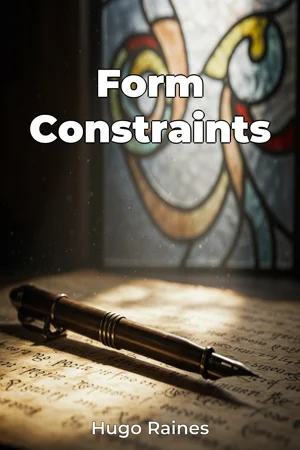
"Form Constraints" explores the surprising role of structure in poetry, arguing that constraints like meter, rhyme, and stanza structure are not limitations but catalysts for poetic innovation and artistic expression. By diving into literary criticism, the book reveals how poets have strategically leveraged formal rules to enhance meaning and evoke emotion. It's intriguing to consider how something as seemingly rigid as a sonnet or villanelle can actually unlock new avenues for creativity, and how historical poetic forms have evolved with their own associated rules. The book examines the evolution of poetic forms, analyzing how poets have both adhered to and subverted these constraints throughout history. "Form Constraints" uniquely combines historical analysis with insights from cognitive science to explore the psychological dimensions of working within formal limitations. Beginning with core concepts like meter and rhyme, the book progresses through examples such as the sonnet, analyzing how poets have navigated these forms.
Book Details
ISBN
9788235266835
Publisher
Publifye AS
Your Licenses
You don't own any licenses for this book
Purchase a license below to unlock this book and download the EPUB.
Purchase License
Select a tier to unlock this book
Need bulk licensing?
Contact us for enterprise agreements.