
About This Book
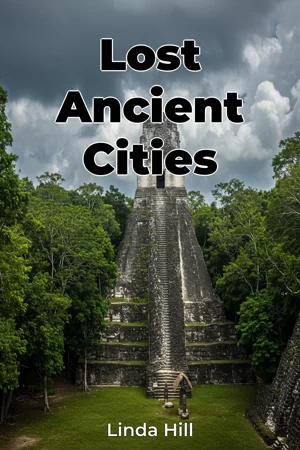
What if entire civilizations, teeming with life and innovation, vanished beneath the sands of time, swallowed by the sea, or hidden within impenetrable jungles? "Lost Ancient Cities" delves into the captivating stories of real metropolises erased from our collective memory, now revealed through archaeology, historical accounts, and cutting-edge research. This book explores not just the physical remnants of these lost worlds, but also the cultural, environmental, and societal factors that contributed to their rise and eventual decline. We will examine three central themes: the geographical and environmental circumstances that shaped these cities, the sociopolitical structures that governed them, and the often complex reasons for their abandonment or destruction. These themes are important because understanding the past is crucial to navigating the present. By studying how past civilizations thrived and failed, we can gain valuable insights into sustainable development, conflict resolution, and the resilience of human societies. The reader requires no prior knowledge of archaeology or ancient history to appreciate this book. Essential historical context will be provided for each city, outlining its chronological place in world history and its relationship to contemporary cultures. The book argues that the study of lost cities offers a unique lens through which to understand the cyclical nature of civilization, highlighting patterns of growth, innovation, and eventual collapse that resonate across cultures and time periods. These forgotten urban centers are not merely relics of the past but serve as critical case studies for comprehending the long-term dynamics of human civilization. The book is structured into three major sections. The first introduces the concept of the "lost city," exploring various definitions and methodologies used to uncover and interpret them. The second section examines specific case studies, dividing them into cities lost to natural disasters (such as earthquakes, volcanic eruptions, or climate change), cities abandoned due to social or political upheaval (including war, famine, or internal conflict), and cities deliberately concealed for strategic or religious reasons. Each case study will provide a detailed account of the city's history, its cultural significance, and the circumstances surrounding its disappearance. The third section integrates the findings from the case studies to identify common threads and patterns, culminating in a discussion of the lessons these lost cities offer for contemporary society. Evidence presented will include archaeological findings, analysis of ancient texts (in translation), environmental data, and comparative studies with contemporary societies. We will also incorporate new data from remote sensing technologies, such as LiDAR and satellite imagery, which have revolutionized the discovery and mapping of hidden urban landscapes. "Lost Ancient Cities" connects to several interdisciplinary fields. Firstly, it intersects with environmental science by examining the role of climate change and resource management in the fate of ancient urban centers. Secondly, it relates to political science by exploring the interplay of power, governance, and social stability in sustaining urban populations. Finally, it ties into sociology by studying the cultural and social dynamics that shaped these ancient societies and contributed to their resilience or eventual downfall. This book distinguishes itself through its holistic approach, integrating archaeological evidence with environmental and social analyses to provide a comprehensive understanding of each city’s rise and fall. The tone is informative and accessible, presenting complex historical information in a clear and engaging manner. It is intended for a broad audience, including history enthusiasts, archaeology buffs, students, and anyone interested in exploring the mysteries of the past. It builds on the conventions of historical non-fiction to appeal to the general public as well as academics seeking a broad yet detailed overview of this field. The book's scope is global, covering examples from various continents and time periods. However, it acknowledges the limitations inherent in focusing on a select number of case studies, chosen to represent a range of geographical locations, cultural contexts, and causes of abandonment. The insights within can be applied to contemporary urban planning, disaster preparedness, and cultural heritage preservation by understanding the key drivers of urban sustainability and resilience. While the archaeological community largely agrees on the physical locations and basic timelines of these lost cities, debates persist regarding the precise causes of their decline. "Lost Ancient Cities" will address these controversies, presenting different interpretations and encouraging critical thinking about the complexities of historical reconstruction.
What if entire civilizations, teeming with life and innovation, vanished beneath the sands of time, swallowed by the sea, or hidden within impenetrable jungles? "Lost Ancient Cities" delves into the captivating stories of real metropolises erased from our collective memory, now revealed through archaeology, historical accounts, and cutting-edge research. This book explores not just the physical remnants of these lost worlds, but also the cultural, environmental, and societal factors that contributed to their rise and eventual decline. We will examine three central themes: the geographical and environmental circumstances that shaped these cities, the sociopolitical structures that governed them, and the often complex reasons for their abandonment or destruction. These themes are important because understanding the past is crucial to navigating the present. By studying how past civilizations thrived and failed, we can gain valuable insights into sustainable development, conflict resolution, and the resilience of human societies. The reader requires no prior knowledge of archaeology or ancient history to appreciate this book. Essential historical context will be provided for each city, outlining its chronological place in world history and its relationship to contemporary cultures. The book argues that the study of lost cities offers a unique lens through which to understand the cyclical nature of civilization, highlighting patterns of growth, innovation, and eventual collapse that resonate across cultures and time periods. These forgotten urban centers are not merely relics of the past but serve as critical case studies for comprehending the long-term dynamics of human civilization. The book is structured into three major sections. The first introduces the concept of the "lost city," exploring various definitions and methodologies used to uncover and interpret them. The second section examines specific case studies, dividing them into cities lost to natural disasters (such as earthquakes, volcanic eruptions, or climate change), cities abandoned due to social or political upheaval (including war, famine, or internal conflict), and cities deliberately concealed for strategic or religious reasons. Each case study will provide a detailed account of the city's history, its cultural significance, and the circumstances surrounding its disappearance. The third section integrates the findings from the case studies to identify common threads and patterns, culminating in a discussion of the lessons these lost cities offer for contemporary society. Evidence presented will include archaeological findings, analysis of ancient texts (in translation), environmental data, and comparative studies with contemporary societies. We will also incorporate new data from remote sensing technologies, such as LiDAR and satellite imagery, which have revolutionized the discovery and mapping of hidden urban landscapes. "Lost Ancient Cities" connects to several interdisciplinary fields. Firstly, it intersects with environmental science by examining the role of climate change and resource management in the fate of ancient urban centers. Secondly, it relates to political science by exploring the interplay of power, governance, and social stability in sustaining urban populations. Finally, it ties into sociology by studying the cultural and social dynamics that shaped these ancient societies and contributed to their resilience or eventual downfall. This book distinguishes itself through its holistic approach, integrating archaeological evidence with environmental and social analyses to provide a comprehensive understanding of each city’s rise and fall. The tone is informative and accessible, presenting complex historical information in a clear and engaging manner. It is intended for a broad audience, including history enthusiasts, archaeology buffs, students, and anyone interested in exploring the mysteries of the past. It builds on the conventions of historical non-fiction to appeal to the general public as well as academics seeking a broad yet detailed overview of this field. The book's scope is global, covering examples from various continents and time periods. However, it acknowledges the limitations inherent in focusing on a select number of case studies, chosen to represent a range of geographical locations, cultural contexts, and causes of abandonment. The insights within can be applied to contemporary urban planning, disaster preparedness, and cultural heritage preservation by understanding the key drivers of urban sustainability and resilience. While the archaeological community largely agrees on the physical locations and basic timelines of these lost cities, debates persist regarding the precise causes of their decline. "Lost Ancient Cities" will address these controversies, presenting different interpretations and encouraging critical thinking about the complexities of historical reconstruction.
"Lost Ancient Cities" explores the captivating histories of metropolises swallowed by time, revealing their stories through archaeology and historical accounts. The book examines the geographical, sociopolitical, and environmental elements that influenced these civilizations' rise and decline, offering insights into sustainable development and societal resilience. Discover how some cities were lost to natural disasters, like potential climate shifts that mirror current environmental concerns, while others succumbed to sociopolitical upheaval, such as wars or internal conflicts. The book is structured into three sections, beginning with an introduction to the concept of "lost cities," then delving into specific case studies categorized by the reasons for their abandonment or concealment. Archaeological findings, ancient texts, and environmental data combine to illustrate each city's history and cultural significance. The book uniquely integrates these diverse sources, offering a comprehensive understanding of each city's trajectory. Ultimately, "Lost Ancient Cities" connects the past to the present, providing valuable lessons for contemporary society. The book uses varied historical examples to highlight recurring patterns of growth, innovation, and collapse across cultures. By studying these forgotten urban centers, readers can gain critical perspectives on urban sustainability, disaster preparedness, and the preservation of our collective cultural heritage.
Book Details
ISBN
9788235266828
Publisher
Publifye AS
Your Licenses
You don't own any licenses for this book
Purchase a license below to unlock this book and download the EPUB.
Purchase License
Select a tier to unlock this book
Need bulk licensing?
Contact us for enterprise agreements.