
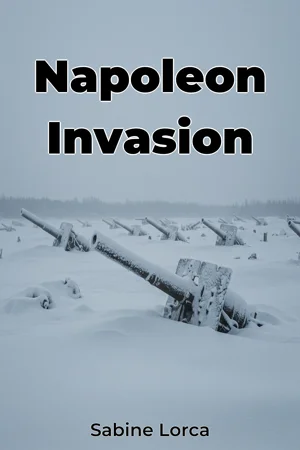
About This Book
Did Napoleon Bonaparte's ambition ultimately lead to his downfall amidst the vast expanse of Russia? This book, "Napoleon Invasion," delves into the heart of Napoleon's ill-fated 1812 campaign, exploring the strategic miscalculations, logistical nightmares, and environmental adversities that transformed what was intended as a swift victory into a catastrophic retreat. The core topics examined are Napoleon's initial strategic objectives, the brutal realities of the Russian winter, and the Russian army's tactical adaptations that turned the tide of the campaign. Understanding these elements is crucial not only for grasping the complexities of 19th-century warfare but also for appreciating the profound impact this campaign had on European history and the decline of Napoleon's empire. The book provides a detailed context, examining the political climate of early 19th-century Europe, Napoleon's expansionist policies, and the breakdown of the Franco-Russian alliance. No prior specialized knowledge is needed; instead, the book provides the reader with the necessary background on military tactics, logistics, and the socio-political dimensions of the era. The central argument of "Napoleon Invasion" posits that while Napoleon's military genius was undeniable, his underestimation of Russia's vastness, coupled with his failure to adequately prepare for the Russian winter, proved to be a fatal flaw. It demonstrates how these miscalculations, combined with the Russian army’s strategy of attrition and scorched-earth tactics, ultimately led to the disintegration of the Grande Armée. This argument is crucial because it challenges simplistic portrayals of Napoleon as an invincible commander and highlights the crucial role of environmental and logistical factors in military history. The book's structure will begin by laying the groundwork with an introduction to Napoleon's strategic objectives and the state of the Grande Armée at the outset of the campaign. It will then explore the advance into Russia, analyzing key battles such as Borodino and examining the logistical challenges faced by the invading forces. The heart of the book will focus on the devastating retreat from Moscow, detailing the impact of the Russian winter, disease and starvation on the Grande Armée. It will culminate in an assessment of the campaign's strategic consequences, discussing its impact on Napoleon's reputation and the subsequent collapse of his empire. The book draws upon a wide range of primary and secondary sources, including military dispatches, personal memoirs of soldiers and officers from both sides, and analyses of weather data and epidemiological reports. Unique data includes detailed reconstruction of French army supply lines. The book connects to other areas of study such as environmental history, logistics, and political science. The environmental history aspect demonstrates the impact of climate on warfare. Logistics provide insight into supply chain management and resource allocation in extreme conditions. Political science highlights the complex interplay of alliances, rivalries, and national interests that shaped the conflict. "Napoleon Invasion" distinguishes itself through its comprehensive analysis of the environmental and logistical factors that contributed to the French defeat. While many books focus on the military tactics and leadership decisions, this book emphasizes the crucial role of the Russian winter and the logistical challenges faced by the Grande Armée. Written in a fact-based style, the book is intended for readers with an interest in military history, European history, and the Napoleonic era. It will appeal to those seeking a detailed and nuanced understanding of the 1812 campaign, moving beyond traditional narratives of military genius to explore the complex interplay of factors that determined its outcome. As a military history book, the book maintains a detailed chronological account of the campaign, including battle analyses, troop movements, and casualty figures. The scope of the book is intentionally limited to the 1812 Russian campaign, excluding detailed discussions of other Napoleonic conflicts allowing for a more in-depth analysis. The lessons learned from Napoleon's invasion of Russia have real-world applications for understanding the importance of logistics, environmental awareness, and adaptable strategies in modern military planning and disaster management. The book will touch on ongoing debates surrounding Napoleon's leadership and strategic decisions, exploring alternative explanations for the French defeat and assessing the relative importance of various contributing factors.
Did Napoleon Bonaparte's ambition ultimately lead to his downfall amidst the vast expanse of Russia? This book, "Napoleon Invasion," delves into the heart of Napoleon's ill-fated 1812 campaign, exploring the strategic miscalculations, logistical nightmares, and environmental adversities that transformed what was intended as a swift victory into a catastrophic retreat. The core topics examined are Napoleon's initial strategic objectives, the brutal realities of the Russian winter, and the Russian army's tactical adaptations that turned the tide of the campaign. Understanding these elements is crucial not only for grasping the complexities of 19th-century warfare but also for appreciating the profound impact this campaign had on European history and the decline of Napoleon's empire. The book provides a detailed context, examining the political climate of early 19th-century Europe, Napoleon's expansionist policies, and the breakdown of the Franco-Russian alliance. No prior specialized knowledge is needed; instead, the book provides the reader with the necessary background on military tactics, logistics, and the socio-political dimensions of the era. The central argument of "Napoleon Invasion" posits that while Napoleon's military genius was undeniable, his underestimation of Russia's vastness, coupled with his failure to adequately prepare for the Russian winter, proved to be a fatal flaw. It demonstrates how these miscalculations, combined with the Russian army’s strategy of attrition and scorched-earth tactics, ultimately led to the disintegration of the Grande Armée. This argument is crucial because it challenges simplistic portrayals of Napoleon as an invincible commander and highlights the crucial role of environmental and logistical factors in military history. The book's structure will begin by laying the groundwork with an introduction to Napoleon's strategic objectives and the state of the Grande Armée at the outset of the campaign. It will then explore the advance into Russia, analyzing key battles such as Borodino and examining the logistical challenges faced by the invading forces. The heart of the book will focus on the devastating retreat from Moscow, detailing the impact of the Russian winter, disease and starvation on the Grande Armée. It will culminate in an assessment of the campaign's strategic consequences, discussing its impact on Napoleon's reputation and the subsequent collapse of his empire. The book draws upon a wide range of primary and secondary sources, including military dispatches, personal memoirs of soldiers and officers from both sides, and analyses of weather data and epidemiological reports. Unique data includes detailed reconstruction of French army supply lines. The book connects to other areas of study such as environmental history, logistics, and political science. The environmental history aspect demonstrates the impact of climate on warfare. Logistics provide insight into supply chain management and resource allocation in extreme conditions. Political science highlights the complex interplay of alliances, rivalries, and national interests that shaped the conflict. "Napoleon Invasion" distinguishes itself through its comprehensive analysis of the environmental and logistical factors that contributed to the French defeat. While many books focus on the military tactics and leadership decisions, this book emphasizes the crucial role of the Russian winter and the logistical challenges faced by the Grande Armée. Written in a fact-based style, the book is intended for readers with an interest in military history, European history, and the Napoleonic era. It will appeal to those seeking a detailed and nuanced understanding of the 1812 campaign, moving beyond traditional narratives of military genius to explore the complex interplay of factors that determined its outcome. As a military history book, the book maintains a detailed chronological account of the campaign, including battle analyses, troop movements, and casualty figures. The scope of the book is intentionally limited to the 1812 Russian campaign, excluding detailed discussions of other Napoleonic conflicts allowing for a more in-depth analysis. The lessons learned from Napoleon's invasion of Russia have real-world applications for understanding the importance of logistics, environmental awareness, and adaptable strategies in modern military planning and disaster management. The book will touch on ongoing debates surrounding Napoleon's leadership and strategic decisions, exploring alternative explanations for the French defeat and assessing the relative importance of various contributing factors.
"Napoleon Invasion" meticulously examines Napoleon Bonaparte's disastrous 1812 campaign in Russia, highlighting the critical intersection of military strategy, environmental factors, and logistical capabilities. The book argues that Napoleon's underestimation of Russia's vastness and the brutal Russian winter, combined with the Russian army’s scorched-earth tactics, led to the disintegration of the Grande Armée. Readers gain insight into how logistical nightmares and environmental adversities transformed Napoleon's ambition into a catastrophic retreat, impacting European history and leading to the decline of Napoleon's empire. This detailed account explores the political climate of early 19th-century Europe and the breakdown of the Franco-Russian alliance, providing necessary background on military tactics and socio-political dimensions. The book progresses chronologically, starting with Napoleon's strategic objectives, analyzing key battles like Borodino, and focusing on the devastating retreat from Moscow. By drawing upon military dispatches, memoirs, and weather data, the book emphasizes the Russian winter's crucial role; for example, disease and starvation decimated the Grande Armée far more than direct combat losses. Unique in its approach, "Napoleon Invasion" distinguishes itself by comprehensively analyzing environmental and logistical factors alongside traditional military narratives. The book assesses the campaign's strategic consequences and touches on debates surrounding Napoleon's leadership, making it valuable for those seeking a nuanced understanding of the 1812 campaign and its broader implications.
Book Details
ISBN
9788235266392
Publisher
Publifye AS
Your Licenses
You don't own any licenses for this book
Purchase a license below to unlock this book and download the EPUB.
Purchase License
Select a tier to unlock this book
Need bulk licensing?
Contact us for enterprise agreements.