
About This Book
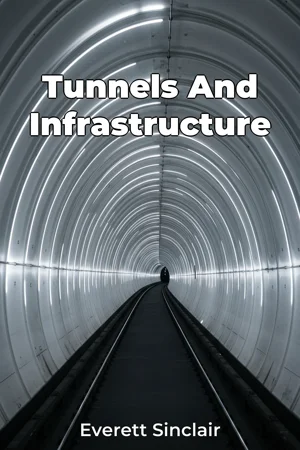
Have you ever considered the intricate world beneath our feet, the hidden infrastructure that allows modern cities to function? "Tunnels And Infrastructure" delves into the design, engineering, and construction of underground tunnels used for transport and utilities, offering a comprehensive exploration of this often-overlooked aspect of urban development and technological achievement. This book will first focus on transport tunnels, then utility tunnels and finally the integration and future of both. This book is important because it addresses the increasing need for sustainable infrastructural solutions in growing urban environments. As cities expand, the demand for efficient transport and reliable utility networks intensifies. Underground tunnels offer a viable solution to alleviate surface congestion, minimize environmental impact, and enhance the resilience of urban infrastructure against natural disasters and security threats. We explore the historical context of tunneling, from ancient aqueducts to modern-day subway systems, and also touch on relevant social and economic factors, such as the impact of tunneling projects on communities and the importance of cost-effective construction techniques. A basic understanding of engineering principles is helpful, the book is structured to be accessible to readers with diverse backgrounds. The central argument of this book is that a holistic approach to tunnel design and construction, integrating technological innovation with environmental and social considerations, is essential for realizing the full potential of underground infrastructure. By studying this, we will be equipped to make informed decisions about the development of sustainable and resilient urban environments. The book begins with an overview of tunneling methods and materials, including both traditional techniques and cutting-edge technologies like tunnel boring machines (TBMs) and advanced concrete mixtures. From there, it examines the planning and design phases. This includes geological surveying, risk assessment, and structural engineering considerations. It moves on to explore specific applications of tunnels in transportation, water management, and energy distribution. We will delve into case studies of successful and unsuccessful tunnel projects from around the world, analyzing the factors that contributed to their outcomes. Finally, the book addresses the future of tunneling, considering emerging trends such as automation, modular construction, and the integration of smart technologies. The arguments presented are backed by extensive research from academic journals, industry reports, and on-site observations. We will analyze data from real-world tunnel projects, including geological surveys, construction records, and performance evaluations. In addition, expert interviews with engineers, urban planners, and policymakers will be included to provide diverse perspectives and insights. "Tunnels And Infrastructure" intersects with several other fields, including urban planning, environmental science, and materials science. The book looks at the integration of tunnels into overall city design, the effect of tunneling on ecosystems, and the development of sustainable, high-performance construction materials. These interdisciplinary connections enrich the book's analysis, offering a more holistic understanding of the role of tunnels in modern society. What sets this book apart is its integrated approach, which goes beyond the technical aspects of tunnel design to consider the broader social, economic, and environmental implications. It emphasizes the importance of collaboration between engineers, planners, and communities in creating sustainable and resilient underground infrastructure. The tone is informative and analytical, presenting complex information in a clear and accessible manner. While grounded in scientific principles and engineering practices, the writing style avoids technical jargon and uses real-world examples to illustrate key concepts. This book targets a broad audience, including students and professionals in civil engineering, architecture, urban planning, and construction management. It is also valuable for policymakers, investors, and anyone interested in the future of urban infrastructure and sustainable development. Keeping with conventions of the architecture and technology genres, the book features detailed diagrams, photographs, and case studies to illustrate key concepts and real-world applications. The scope of the book is limited to the design and construction of tunnels for transport and utilities. It does not cover the use of tunnels for mining or other specialized purposes. The information can be applied in practical contexts such as planning and designing infrastructure projects, evaluating the feasibility of tunneling solutions, and developing sustainable construction practices. There are ongoing debates surrounding the cost-effectiveness, environmental impact, and social equity of tunnel projects. The book explores these debates, offering balanced perspectives and highlighting the need for careful consideration of all stakeholders' interests.
Have you ever considered the intricate world beneath our feet, the hidden infrastructure that allows modern cities to function? "Tunnels And Infrastructure" delves into the design, engineering, and construction of underground tunnels used for transport and utilities, offering a comprehensive exploration of this often-overlooked aspect of urban development and technological achievement. This book will first focus on transport tunnels, then utility tunnels and finally the integration and future of both. This book is important because it addresses the increasing need for sustainable infrastructural solutions in growing urban environments. As cities expand, the demand for efficient transport and reliable utility networks intensifies. Underground tunnels offer a viable solution to alleviate surface congestion, minimize environmental impact, and enhance the resilience of urban infrastructure against natural disasters and security threats. We explore the historical context of tunneling, from ancient aqueducts to modern-day subway systems, and also touch on relevant social and economic factors, such as the impact of tunneling projects on communities and the importance of cost-effective construction techniques. A basic understanding of engineering principles is helpful, the book is structured to be accessible to readers with diverse backgrounds. The central argument of this book is that a holistic approach to tunnel design and construction, integrating technological innovation with environmental and social considerations, is essential for realizing the full potential of underground infrastructure. By studying this, we will be equipped to make informed decisions about the development of sustainable and resilient urban environments. The book begins with an overview of tunneling methods and materials, including both traditional techniques and cutting-edge technologies like tunnel boring machines (TBMs) and advanced concrete mixtures. From there, it examines the planning and design phases. This includes geological surveying, risk assessment, and structural engineering considerations. It moves on to explore specific applications of tunnels in transportation, water management, and energy distribution. We will delve into case studies of successful and unsuccessful tunnel projects from around the world, analyzing the factors that contributed to their outcomes. Finally, the book addresses the future of tunneling, considering emerging trends such as automation, modular construction, and the integration of smart technologies. The arguments presented are backed by extensive research from academic journals, industry reports, and on-site observations. We will analyze data from real-world tunnel projects, including geological surveys, construction records, and performance evaluations. In addition, expert interviews with engineers, urban planners, and policymakers will be included to provide diverse perspectives and insights. "Tunnels And Infrastructure" intersects with several other fields, including urban planning, environmental science, and materials science. The book looks at the integration of tunnels into overall city design, the effect of tunneling on ecosystems, and the development of sustainable, high-performance construction materials. These interdisciplinary connections enrich the book's analysis, offering a more holistic understanding of the role of tunnels in modern society. What sets this book apart is its integrated approach, which goes beyond the technical aspects of tunnel design to consider the broader social, economic, and environmental implications. It emphasizes the importance of collaboration between engineers, planners, and communities in creating sustainable and resilient underground infrastructure. The tone is informative and analytical, presenting complex information in a clear and accessible manner. While grounded in scientific principles and engineering practices, the writing style avoids technical jargon and uses real-world examples to illustrate key concepts. This book targets a broad audience, including students and professionals in civil engineering, architecture, urban planning, and construction management. It is also valuable for policymakers, investors, and anyone interested in the future of urban infrastructure and sustainable development. Keeping with conventions of the architecture and technology genres, the book features detailed diagrams, photographs, and case studies to illustrate key concepts and real-world applications. The scope of the book is limited to the design and construction of tunnels for transport and utilities. It does not cover the use of tunnels for mining or other specialized purposes. The information can be applied in practical contexts such as planning and designing infrastructure projects, evaluating the feasibility of tunneling solutions, and developing sustainable construction practices. There are ongoing debates surrounding the cost-effectiveness, environmental impact, and social equity of tunnel projects. The book explores these debates, offering balanced perspectives and highlighting the need for careful consideration of all stakeholders' interests.
"Tunnels And Infrastructure" explores the hidden world beneath our cities, examining the design, engineering, and construction of tunnels for transport and utilities. It addresses the growing need for sustainable infrastructure in expanding urban environments. Tunnels offer solutions to surface congestion, minimize environmental impact, and enhance urban resilience. The book highlights the historical evolution of tunneling and its connection to social and economic factors. For example, modern subway systems evolved from ancient aqueducts, demonstrating the enduring need for underground solutions. The book uniquely integrates technological innovation with environmental and social considerations. The book begins with tunneling methods and materials, including traditional techniques and modern technologies like tunnel boring machines. It examines planning and design phases, including geological surveying and risk assessment. Case studies from around the world, both successful and unsuccessful, illustrate the factors influencing project outcomes. It progresses from transport tunnels to utility tunnels, then to the integration and future of both. Ultimately, this comprehensive approach helps readers make informed decisions about developing sustainable and resilient urban environments.
Book Details
ISBN
9788235265760
Publisher
Publifye AS
Your Licenses
You don't own any licenses for this book
Purchase a license below to unlock this book and download the EPUB.
Purchase License
Select a tier to unlock this book
Need bulk licensing?
Contact us for enterprise agreements.