
About This Book
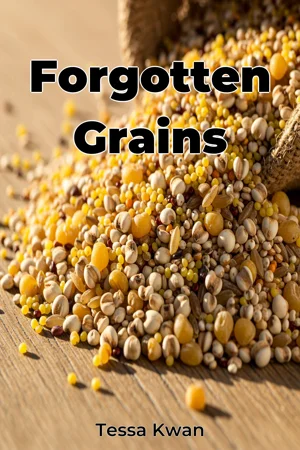
Have you ever wondered what grains our ancestors thrived on before the dominance of wheat, rice, and corn? "Forgotten Grains" delves into the resurgence of ancient grains like amaranth, millet, quinoa, sorghum and others, exploring their nutritional value, historical significance, and potential to transform modern diets and agricultural practices. These grains, once staples in various cultures, are now being rediscovered for their resilience, unique flavors, and health benefits. This book addresses critical questions surrounding food security and dietary diversity in the face of climate change and increasing health concerns. The exploration of these grains is important because it offers sustainable alternatives to conventional crops, enriching both our palates and our planet. By understanding the properties and potential applications of these forgotten grains, we can contribute to a more sustainable and nutritionally balanced food system. We begin with an exploration of the history of these grains, tracing their origins and cultivation across different civilizations. We then transition into a detailed analysis of their nutritional profiles, highlighting their high protein content, fiber, essential amino acids, and micronutrients. This section will provide scientific evidence supporting the health benefits of incorporating these grains into our diets, drawing from studies in biology, life sciences and nutritional science. The central argument of "Forgotten Grains" is that these ancient grains represent a vital resource for enhancing food security, promoting biodiversity, and improving human health. Their inherent resilience to adverse environmental conditions and their rich nutritional composition make them indispensable components of a sustainable and healthy food future. This argument carries significant weight in a world grappling with the challenges of climate change, malnutrition, and the ecological impacts of monoculture farming. The book is structured in three major parts. The first section introduces the concept of ancient grains and their relevance in modern agriculture and nutrition. The second part delves into specific varieties of forgotten grains, such as amaranth, millet, sorghum, teff, and quinoa, each chapter covering its history, cultivation, nutritional properties, and culinary uses. The final section culminates in a discussion of the practical applications of these grains, including their role in sustainable agriculture, food innovation, and dietary recommendations for various health conditions. We conclude with real-world case studies of farmers and communities successfully integrating forgotten grains into their food systems. The evidence presented throughout the book is drawn from a variety of sources, including academic research papers, agricultural studies, nutritional analyses, and historical records. We also include interviews with farmers, chefs, and nutritionists who are actively involved in promoting the use of these grains. The book integrates insights from biology, cooking, and life sciences to provide a holistic understanding of the subject. "Forgotten Grains" also connects to other fields such as environmental science, economics, and public health. For instance, the environmental impact of cultivating these grains compared to conventional crops is examined, alongside the economic opportunities they present for smallholder farmers. The book's discussion on public health explores how these grains can contribute to addressing nutritional deficiencies. This book distinguishes itself by adopting an interdisciplinary approach, combining scientific rigor with practical applications and culinary insights. The writing style aims to be accessible to a broad audience while maintaining academic accuracy. We prioritize clear, concise language and compelling storytelling to engage readers and convey complex information effectively. The target audience includes health-conscious individuals, food enthusiasts, chefs, farmers, nutritionists, and anyone interested in sustainable agriculture and dietary diversity. It will also appeal to students and researchers in food science, agriculture, and nutrition. This book offers valuable information and practical guidance for anyone looking to incorporate these grains into their diet or promote their cultivation. As a work of non-fiction, "Forgotten Grains" adheres to the genre's conventions of accuracy, objectivity, and evidence-based analysis. The book's scope is broad, covering a range of ancient grains and their applications across different contexts. While the book offers a comprehensive overview, it acknowledges that the field of ancient grain research is constantly evolving, and further studies are needed to fully understand their potential. The information presented in “Forgotten Grains” can be applied in numerous ways. Readers can learn how to incorporate these grains into their daily meals, experiment with new recipes, and support farmers who are cultivating them sustainably. Nutritionists can use the information to develop dietary recommendations for their clients, while policymakers can explore the potential of these grains to address food security challenges. While the benefits of ancient grains are widely recognized, there are also ongoing debates about their scalability and accessibility. Some argue that promoting these grains could lead to increased demand and higher prices, making them less accessible to low-income populations. The book addresses these concerns by exploring strategies for ensuring equitable access to these nutritious foods.
Have you ever wondered what grains our ancestors thrived on before the dominance of wheat, rice, and corn? "Forgotten Grains" delves into the resurgence of ancient grains like amaranth, millet, quinoa, sorghum and others, exploring their nutritional value, historical significance, and potential to transform modern diets and agricultural practices. These grains, once staples in various cultures, are now being rediscovered for their resilience, unique flavors, and health benefits. This book addresses critical questions surrounding food security and dietary diversity in the face of climate change and increasing health concerns. The exploration of these grains is important because it offers sustainable alternatives to conventional crops, enriching both our palates and our planet. By understanding the properties and potential applications of these forgotten grains, we can contribute to a more sustainable and nutritionally balanced food system. We begin with an exploration of the history of these grains, tracing their origins and cultivation across different civilizations. We then transition into a detailed analysis of their nutritional profiles, highlighting their high protein content, fiber, essential amino acids, and micronutrients. This section will provide scientific evidence supporting the health benefits of incorporating these grains into our diets, drawing from studies in biology, life sciences and nutritional science. The central argument of "Forgotten Grains" is that these ancient grains represent a vital resource for enhancing food security, promoting biodiversity, and improving human health. Their inherent resilience to adverse environmental conditions and their rich nutritional composition make them indispensable components of a sustainable and healthy food future. This argument carries significant weight in a world grappling with the challenges of climate change, malnutrition, and the ecological impacts of monoculture farming. The book is structured in three major parts. The first section introduces the concept of ancient grains and their relevance in modern agriculture and nutrition. The second part delves into specific varieties of forgotten grains, such as amaranth, millet, sorghum, teff, and quinoa, each chapter covering its history, cultivation, nutritional properties, and culinary uses. The final section culminates in a discussion of the practical applications of these grains, including their role in sustainable agriculture, food innovation, and dietary recommendations for various health conditions. We conclude with real-world case studies of farmers and communities successfully integrating forgotten grains into their food systems. The evidence presented throughout the book is drawn from a variety of sources, including academic research papers, agricultural studies, nutritional analyses, and historical records. We also include interviews with farmers, chefs, and nutritionists who are actively involved in promoting the use of these grains. The book integrates insights from biology, cooking, and life sciences to provide a holistic understanding of the subject. "Forgotten Grains" also connects to other fields such as environmental science, economics, and public health. For instance, the environmental impact of cultivating these grains compared to conventional crops is examined, alongside the economic opportunities they present for smallholder farmers. The book's discussion on public health explores how these grains can contribute to addressing nutritional deficiencies. This book distinguishes itself by adopting an interdisciplinary approach, combining scientific rigor with practical applications and culinary insights. The writing style aims to be accessible to a broad audience while maintaining academic accuracy. We prioritize clear, concise language and compelling storytelling to engage readers and convey complex information effectively. The target audience includes health-conscious individuals, food enthusiasts, chefs, farmers, nutritionists, and anyone interested in sustainable agriculture and dietary diversity. It will also appeal to students and researchers in food science, agriculture, and nutrition. This book offers valuable information and practical guidance for anyone looking to incorporate these grains into their diet or promote their cultivation. As a work of non-fiction, "Forgotten Grains" adheres to the genre's conventions of accuracy, objectivity, and evidence-based analysis. The book's scope is broad, covering a range of ancient grains and their applications across different contexts. While the book offers a comprehensive overview, it acknowledges that the field of ancient grain research is constantly evolving, and further studies are needed to fully understand their potential. The information presented in “Forgotten Grains” can be applied in numerous ways. Readers can learn how to incorporate these grains into their daily meals, experiment with new recipes, and support farmers who are cultivating them sustainably. Nutritionists can use the information to develop dietary recommendations for their clients, while policymakers can explore the potential of these grains to address food security challenges. While the benefits of ancient grains are widely recognized, there are also ongoing debates about their scalability and accessibility. Some argue that promoting these grains could lead to increased demand and higher prices, making them less accessible to low-income populations. The book addresses these concerns by exploring strategies for ensuring equitable access to these nutritious foods.
"Forgotten Grains" explores the exciting resurgence of ancient grains like amaranth, millet, and quinoa, highlighting their potential to revolutionize modern diets and agricultural practices. Once vital staples, these grains are now being rediscovered for their unique nutritional profiles and resilience. Did you know that many of these grains boast higher protein and fiber content compared to common grains like wheat and rice? Furthermore, their cultivation often requires less water and fewer pesticides, making them a sustainable alternative for our planet. The book progresses from the historical origins of these grains to an in-depth analysis of their nutritional and health benefits, drawing from biology, life sciences, and nutritional science. It emphasizes the role of dietary diversity and food security, especially in the face of climate change. With an interdisciplinary approach, it combines scientific research with practical applications, showing how these forgotten grains can contribute to a more sustainable and nutritionally balanced food system. The book concludes with real-world examples and case studies, demonstrating the impact of these grains on various communities.
Book Details
ISBN
9788235265753
Publisher
Publifye AS
Your Licenses
You don't own any licenses for this book
Purchase a license below to unlock this book and download the EPUB.
Purchase License
Select a tier to unlock this book
Need bulk licensing?
Contact us for enterprise agreements.