
About This Book
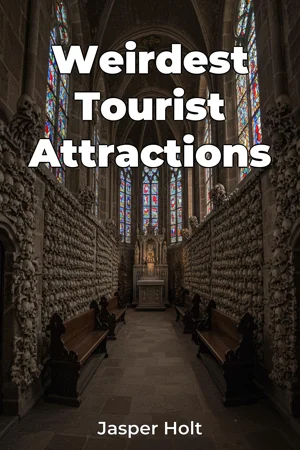
Have you ever wondered why some tourist attractions defy conventional beauty or historical significance, yet still draw crowds? "Weirdest Tourist Attractions" explores the peculiar allure of destinations that captivate visitors precisely because of their oddness, challenging our understanding of what makes a place worth visiting. This book delves into the history, cultural context, and psychological factors that contribute to the appeal of these unusual sites. We will examine the phenomenon of "dark tourism," where sites associated with death, disaster, or the macabre become popular destinations. We will analyze why people are drawn to places like Chernobyl, the Catacombs of Paris, or the Sedlec Ossuary, considering the human fascination with mortality and the desire to bear witness to history's darker chapters. Furthermore, the book investigates the rise of intentionally constructed oddities, such as underground theme parks, colossal roadside attractions, and buildings designed with no practical purpose other than to be noticed. The central argument posits that these bizarre attractions serve as cultural mirrors, reflecting our anxieties, curiosities, and the human need for novelty and spectacle. They offer an alternative form of tourism, one that often prioritizes the unusual and unexpected over traditional sightseeing. This is important because it sheds light on how societies construct and consume history and culture. The book begins by introducing the concept of "weird tourism" and outlining the various categories of attractions that fall under this umbrella. It then dedicates chapters to specific types of attractions: abandoned landmarks (ghost towns, forgotten industrial complexes), sites of tragedy (battlefields, memorial sites), and intentionally bizarre constructions (art installations, themed environments). Each chapter provides historical context, explores the site's unique features, and analyzes its appeal to tourists. The book culminates in a discussion of the broader implications of weird tourism, exploring its economic impact, ethical considerations, and potential for cultural preservation. The research is based on a combination of primary sources, including on-site observations and interviews with both tourists and local residents, as well as secondary sources such as historical documents, travel guides, and academic articles. Statistical data regarding visitor numbers and economic impact will also be presented. "Weirdest Tourist Attractions" connects to several other fields of study, including sociology (examining social behaviors and motivations), psychology (exploring human curiosity and the appeal of the macabre), and economics (analyzing the tourism industry and its impact on local economies). These interdisciplinary connections enrich the book's argument by providing a more comprehensive understanding of the phenomenon. The book adopts a narrative non-fiction approach, combining factual information with engaging storytelling to bring these unusual destinations to life. The writing style is accessible and engaging, making the book suitable for a broad audience. The target audience includes travel enthusiasts, history buffs, cultural critics, and anyone interested in the unusual and unexpected. The book offers a unique perspective on the tourism industry and the human desire for novelty and spectacle. It will appeal to readers who are looking for something beyond the typical travel guide or history book. As a work of non-fiction, the book adheres to the principles of accuracy, objectivity, and transparency. All sources are properly cited, and any potential biases are acknowledged. The book's scope is limited to attractions that are genuinely accessible to the public and have a demonstrable history of attracting visitors. It does not delve into urban legends or purely fictional locations. The information presented in "Weirdest Tourist Attractions" has real-world applications for tourism professionals, urban planners, and cultural heritage managers. It can inform strategies for promoting unconventional destinations, preserving unusual landmarks, and managing the impact of tourism on local communities. While the book primarily celebrates the value and appeal of weird tourist attractions, it also addresses some controversies. For example, the ethics of dark tourism are debated, particularly regarding the exploitation of tragic events. This book aims to contribute to a more nuanced understanding of these complex issues.
Have you ever wondered why some tourist attractions defy conventional beauty or historical significance, yet still draw crowds? "Weirdest Tourist Attractions" explores the peculiar allure of destinations that captivate visitors precisely because of their oddness, challenging our understanding of what makes a place worth visiting. This book delves into the history, cultural context, and psychological factors that contribute to the appeal of these unusual sites. We will examine the phenomenon of "dark tourism," where sites associated with death, disaster, or the macabre become popular destinations. We will analyze why people are drawn to places like Chernobyl, the Catacombs of Paris, or the Sedlec Ossuary, considering the human fascination with mortality and the desire to bear witness to history's darker chapters. Furthermore, the book investigates the rise of intentionally constructed oddities, such as underground theme parks, colossal roadside attractions, and buildings designed with no practical purpose other than to be noticed. The central argument posits that these bizarre attractions serve as cultural mirrors, reflecting our anxieties, curiosities, and the human need for novelty and spectacle. They offer an alternative form of tourism, one that often prioritizes the unusual and unexpected over traditional sightseeing. This is important because it sheds light on how societies construct and consume history and culture. The book begins by introducing the concept of "weird tourism" and outlining the various categories of attractions that fall under this umbrella. It then dedicates chapters to specific types of attractions: abandoned landmarks (ghost towns, forgotten industrial complexes), sites of tragedy (battlefields, memorial sites), and intentionally bizarre constructions (art installations, themed environments). Each chapter provides historical context, explores the site's unique features, and analyzes its appeal to tourists. The book culminates in a discussion of the broader implications of weird tourism, exploring its economic impact, ethical considerations, and potential for cultural preservation. The research is based on a combination of primary sources, including on-site observations and interviews with both tourists and local residents, as well as secondary sources such as historical documents, travel guides, and academic articles. Statistical data regarding visitor numbers and economic impact will also be presented. "Weirdest Tourist Attractions" connects to several other fields of study, including sociology (examining social behaviors and motivations), psychology (exploring human curiosity and the appeal of the macabre), and economics (analyzing the tourism industry and its impact on local economies). These interdisciplinary connections enrich the book's argument by providing a more comprehensive understanding of the phenomenon. The book adopts a narrative non-fiction approach, combining factual information with engaging storytelling to bring these unusual destinations to life. The writing style is accessible and engaging, making the book suitable for a broad audience. The target audience includes travel enthusiasts, history buffs, cultural critics, and anyone interested in the unusual and unexpected. The book offers a unique perspective on the tourism industry and the human desire for novelty and spectacle. It will appeal to readers who are looking for something beyond the typical travel guide or history book. As a work of non-fiction, the book adheres to the principles of accuracy, objectivity, and transparency. All sources are properly cited, and any potential biases are acknowledged. The book's scope is limited to attractions that are genuinely accessible to the public and have a demonstrable history of attracting visitors. It does not delve into urban legends or purely fictional locations. The information presented in "Weirdest Tourist Attractions" has real-world applications for tourism professionals, urban planners, and cultural heritage managers. It can inform strategies for promoting unconventional destinations, preserving unusual landmarks, and managing the impact of tourism on local communities. While the book primarily celebrates the value and appeal of weird tourist attractions, it also addresses some controversies. For example, the ethics of dark tourism are debated, particularly regarding the exploitation of tragic events. This book aims to contribute to a more nuanced understanding of these complex issues.
"Weirdest Tourist Attractions" explores the captivating world of unusual tourism, delving into destinations that attract visitors due to their oddity rather than conventional appeal. It examines why places like the Catacombs of Paris or colossal roadside attractions become must-see sites, challenging our understanding of why we travel. The book highlights the phenomenon of "dark tourism," where sites associated with death and disaster draw crowds, reflecting our fascination with mortality. This exploration of bizarre attractions posits that they serve as cultural mirrors, reflecting our anxieties and curiosities. The book uncovers how societies construct and consume history and culture through these unusual sites. Beginning with an introduction to "weird tourism," the book progresses through categories like abandoned landmarks and intentionally bizarre constructions, providing historical context and analyzing their appeal. This narrative non-fiction approach combines factual information with engaging storytelling, making it valuable for travel enthusiasts and history buffs alike.
Book Details
ISBN
9788235265685
Publisher
Publifye AS
Your Licenses
You don't own any licenses for this book
Purchase a license below to unlock this book and download the EPUB.
Purchase License
Select a tier to unlock this book
Need bulk licensing?
Contact us for enterprise agreements.